White-Faced Capuchin Facts
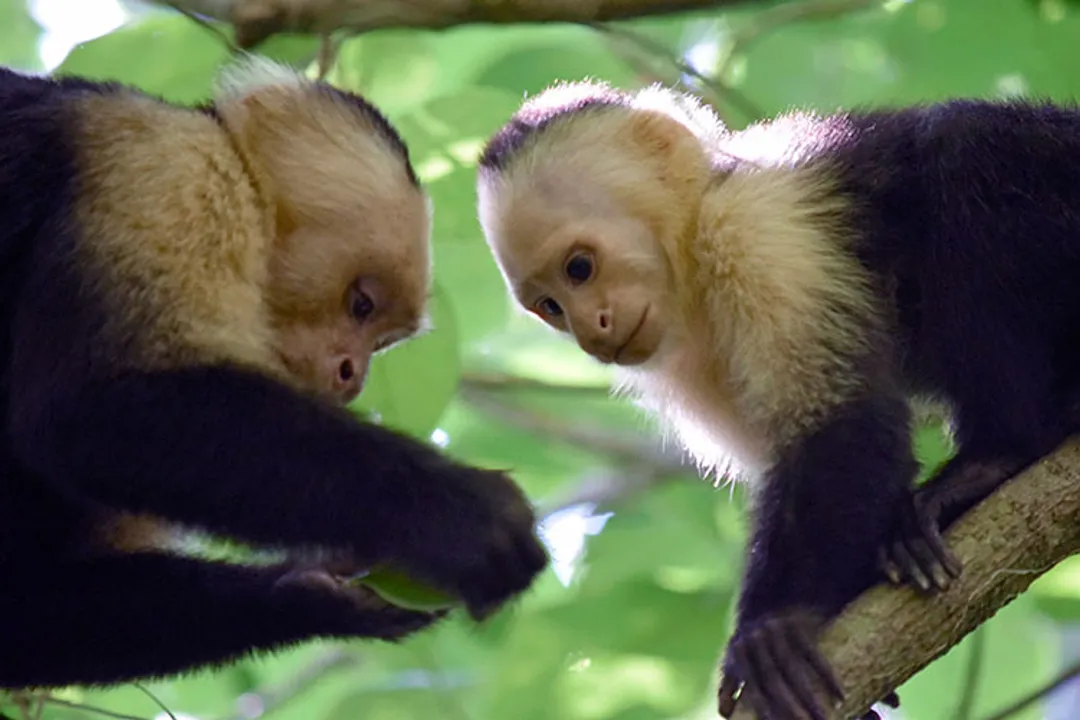
The white-faced capuchin, known scientifically in its various forms by names such as Cebus capucinus or Cebus imitator, is one of the most visually striking and behaviorally complex primates found in the New World. These monkeys are famous throughout Central and South America, easily recognizable by their contrasting fur, lively demeanor, and remarkable intelligence, which has led researchers to study them intensely. While the Panamanian white-faced capuchin (C. imitator) and the Colombian white-throated capuchin (C. capucinus) are now often categorized separately, for much of the 20th century, they were considered the same species or subspecies, and some primatologists still hold that view. Regardless of the exact classification, the characteristics shared by these populations paint a portrait of a highly adaptable and clever animal.
# Appearance
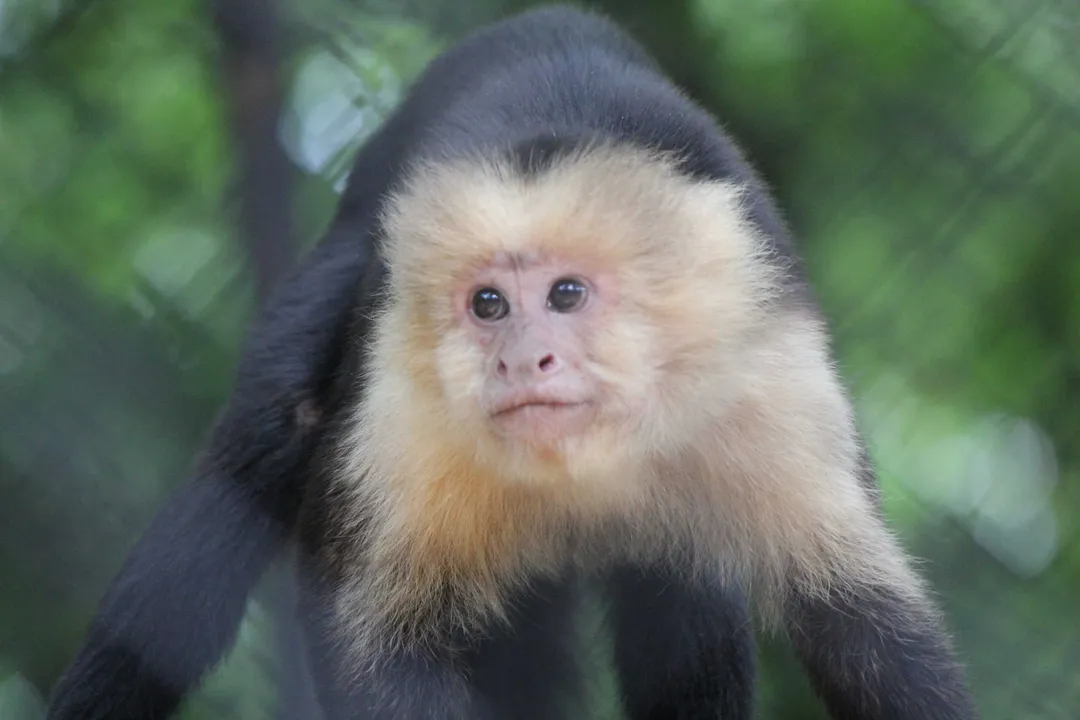
The defining characteristic of this group is, naturally, the coloration that gives them their common names: white-faced, white-throated, or white-headed. Their bodies are predominantly covered in black or brownish-black fur, which provides a sharp contrast to the pale yellow or white fur adorning their chest, shoulders, neck, upper arms, and face perimeter. A distinctive feature on the top of their round heads is a patch of black fur, sometimes described as resembling a beanie or cowl—a pattern that inspired the "Capuchin" part of their name, evoking the hooded robes of Capuchin friars. The center of the face is often hairless, exposing pink skin.
These monkeys are classified as medium-sized primates. Weights vary somewhat between sources, but generally fall in the range of about 3 to 4 kilograms (roughly 6.4 to 8.6 pounds) for adults. Sexual dimorphism is present, with males typically being larger than females by about 27% to 30%. Body length, excluding the tail, usually ranges from 33.5 to 45.3 cm (about 13 to 18 inches). Their tail is perhaps their most useful physical adaptation for arboreal life; it is semi-prehensile and often longer than their head and body combined, utilized for postural support, grasping objects, and helping them balance when foraging underneath branches.
# Geographic Home
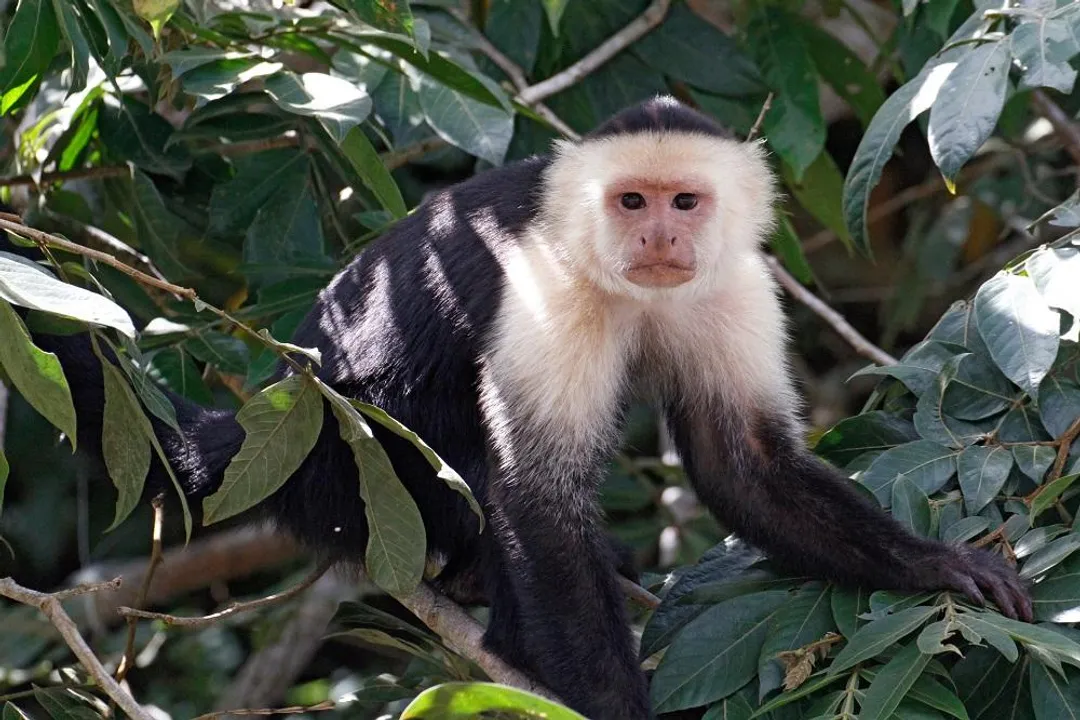
White-faced capuchins are Neotropical monkeys found across Central and northern South America. The distribution spans from parts of Honduras and Nicaragua, through Costa Rica and Panama (where they are found in various national parks like Manuel Antonio and Soberania). In South America, they inhabit regions of Colombia and Ecuador.
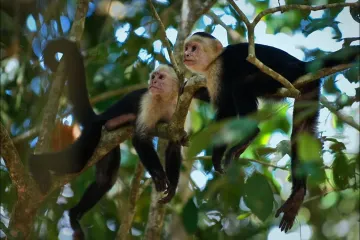
They are remarkably adaptable creatures, capable of thriving in a wide variety of forest types, including mature and secondary growth, wet lowland regions, dry deciduous forests, and even mangrove swamps. They are most frequently observed in the forest canopy, often residing 15 to 20 meters high. However, they are known to forage on the ground more frequently than many other New World monkeys. Their ability to survive across diverse habitats, including fragmented forest patches, is one reason the Panamanian species is considered relatively resilient to some environmental changes.
# Dietary Habits
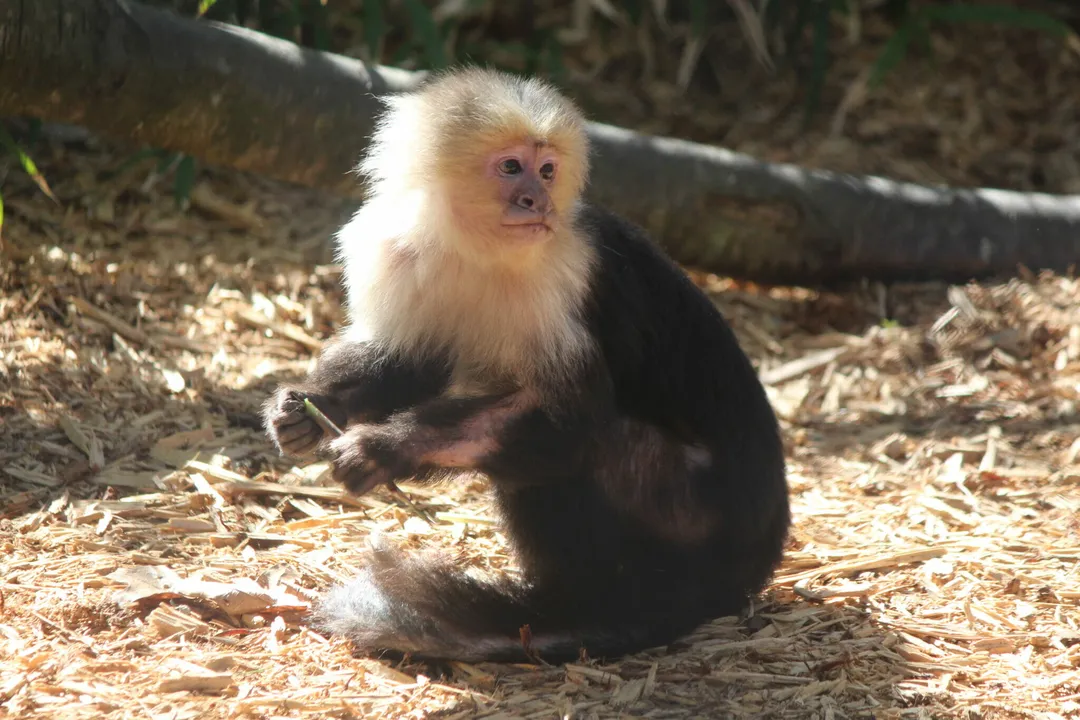
As omnivores, the capuchin diet is varied and opportunistic, meaning they will sample many different things they find. Fruit makes up a significant portion of their intake, often accounting for 50% to 70% of their calories. They show a preference for ripe fruits, which they test by smelling and prodding, and favorites include figs and mangoes. Interestingly, they often eat only the pulp and juice, discarding the seeds and fibers, a habit that makes them critical seed dispersers in their ecosystems.
Beyond fruit, they consume plant matter like leaves, flowers, and seeds. They are also highly adept hunters and foragers for animal protein. Their menu includes insects (like beetle larvae, ants, wasps, and caterpillars), snails, crabs, frogs, lizards, bird eggs, and even small vertebrates such as tree rats, baby coatis, small birds, magpies, and squirrels. The composition of their diet shifts with the seasons; while fruits are abundant during the rainy season, insects and vertebrates become a particularly important part of their diet when fruits like figs are the only options available in the dry season. Their knack for accessing hard-to-reach food is inextricably linked to their notable intelligence. The consistent drive to secure necessary calories, especially when seasonal scarcity demands unlocking hard-shelled items, suggests their tool use is a necessary behavior for caloric balance across fluctuating environmental conditions, not just a demonstration of cleverness when food is readily available.
# Social Organization
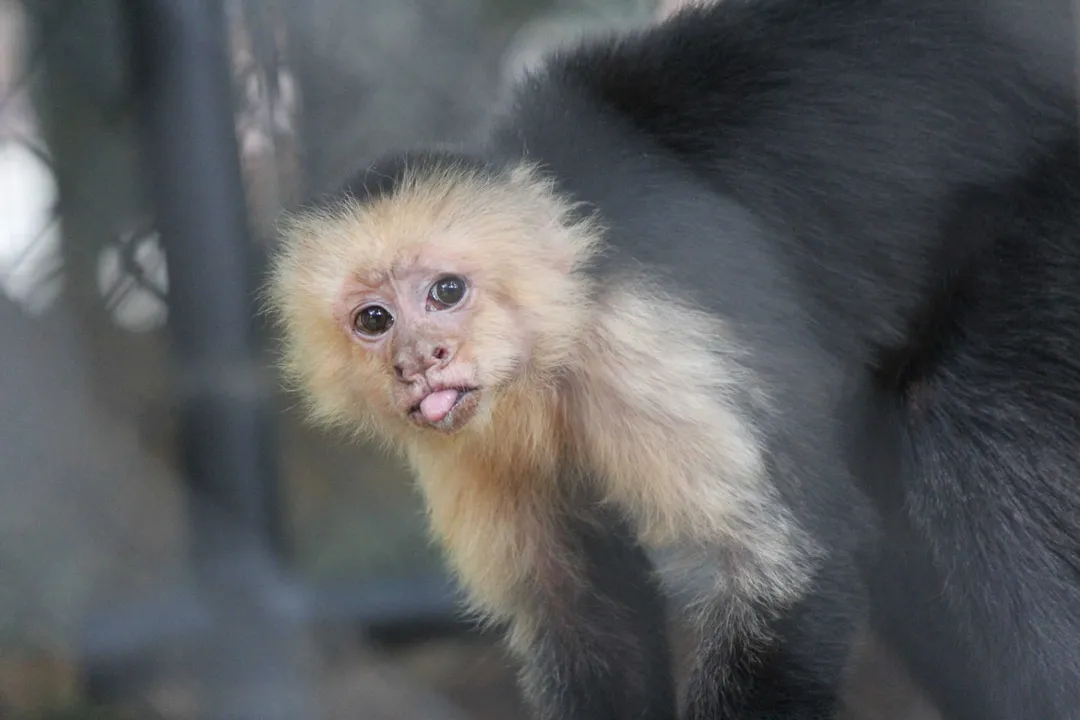
White-faced capuchins are intensely social, living in troops that average between 10 and 20 individuals, though groups can occasionally reach up to 40 members. The troop structure is generally led by a single dominant alpha male who gains priority access to resources.
The dynamics of residency are clearly separated by sex: females are philopatric, remaining with the group they were born into for their entire lives. In contrast, males are emigrants. Young males usually leave their natal group around the age of four years, sometimes migrating alone, but more often in a coalition with related males for safety during the move and for later defense. This often means that the core of the troop is made up of related females and their offspring, with immigrant males holding the top rank. Female relationships are heavily reinforced through grooming and play, with strong bonds forming between maternal kin.
Interactions between different troops are generally hostile and confrontational, usually initiated by the males defending access to their group's females. The social fabric within the group is complex, relying on alliances and rank, which the monkeys seem to understand exceptionally well.
# Exceptional Minds
These monkeys are frequently cited as being among the most intelligent of all New World monkeys, a trait thought to be an adaptation supporting their varied and sometimes difficult feeding habits.
# Tool Use
The use of tools sets Cebus capuchins apart from some other groups, like the robust capuchins. Researchers have documented them using stones as hammers and logs as * anvils* to crack open hard nuts, such as coconuts, and process invertebrates like snails. They also use sticks as probes to investigate crevices or even as weapons, such as beating snakes to defend themselves or to get the snake to release an infant.
# Social Learning and Rituals
Learning is paramount for survival, and young capuchins learn essential skills through observing experienced adults. They are very proactive in seeking information, often staring intently at others handling rare or difficult food items. However, social learning isn't always perfect; infants have been observed confusing the act of scrubbing abrasive fruit against a branch to remove irritating hairs with the adult practice of self-anointing—rubbing repellent or medicinal plant substances onto their fur—leading to itchy mistakes.
Their social lives include bizarre, ritualized behaviors that seem to serve primarily as intense social bonding mechanisms. These rituals, which can include prying open another's mouth, clasping hands, or even poking fingers into another's eye socket, are believed to be powerful expressions of trust precisely because they carry a significant risk of damage or infection. When a new alpha male takes over, he may commit infanticide, which drives females to intensely support the stable alpha male to protect their remaining or future offspring. This "common enemy" psychology unites troops rapidly during external threats. It's interesting to note that after tense intergroup contests, subordinate males from opposing groups have been seen engaging in affiliative behaviors like dancing or having sex, perhaps testing potential future alliances or assessing opportunities for future group migration. An unusual, recently documented tradition among one population of Panamanian capuchins involved males repeatedly abducting infant howler monkeys, carrying them on their backs in a behavior with no clear benefit, tragically resulting in the infants' deaths. Observers of these troops might gain insight into male group stability by noting which non-parental males are most frequently seen carrying the youngest male infants, as this is likely an attempt to cement future alliances for when they must disperse.
# Life Cycle
Capuchins follow a polygynandrous mating system where both males and females have multiple partners, though the alpha male typically sires the majority of the young. Breeding is somewhat seasonal, peaking between January and April in some regions. Following a gestation period of about five to six months, a female usually gives birth to a single infant, though twins are rare.
Infants are dependent on their mothers, nursing for several months and being carried on her back for the first six weeks. However, their development involves extensive alloparenting, where other group members, both male and female, actively care for the infant, sometimes competing to carry them. This care extends beyond the mother, allowing the infant to bond with and learn from a variety of adults. Independence is generally reached around four years of age, though females may not have their first successful birth until closer to seven years old, while males reach sexual maturity later, around 7 to 10 years.
Their lifespan is considerable for a New World monkey; in the wild, they can live 16 to 25 years, but in captivity, they regularly reach 45 to 55 years.
# Conservation Status
The conservation status assigned to white-faced capuchins appears to depend on the specific subspecies being referenced. The IUCN currently lists the Colombian white-throated capuchin as Vulnerable, anticipating at least a 30% population reduction due to ongoing threats. Similarly, the Panamanian white-faced capuchin is also listed as Vulnerable. Conversely, some sources list the general "White-Faced Capuchin" as Least Concern, noting a generally stable population, though acknowledging a decrease.
Major threats remain consistent across the range: extensive deforestation leading to habitat loss and fragmentation is a primary concern. They are also hunted, sometimes as crop pests, or illegally captured for the exotic pet trade, and exploited for use in entertainment and laboratory research. Despite these pressures, their ecological importance as seed and pollen dispersers means their preservation is key to the health and regeneration of tropical forests. International agreements like CITES, which lists them under Appendix II, aim to regulate trade to prevent extinction.
Related Questions
#Citations
White-Faced Capuchin Animal Facts - Cebus Capucinus
White Faced Capuchin | Southwick's Zoo
Panamanian white-faced capuchin - Wikipedia
Colombian White-Throated Capuchin, Cebus capucinus
Meet the Capuchin Monkey: Curious, Creative, and Vengeful
Colombian white-faced capuchin - Apenheul
White-faced capuchin | Research Starters - EBSCO
Capuchin Monkey: Facts, Habitat, and Behavior | See The Wild
Top 15 Facts About White-Faced Capuchin Monkeys in Guatemala