What mechanism allows behavioral variation like tool use traditions to spread non-genetically?
Answer
Social learning
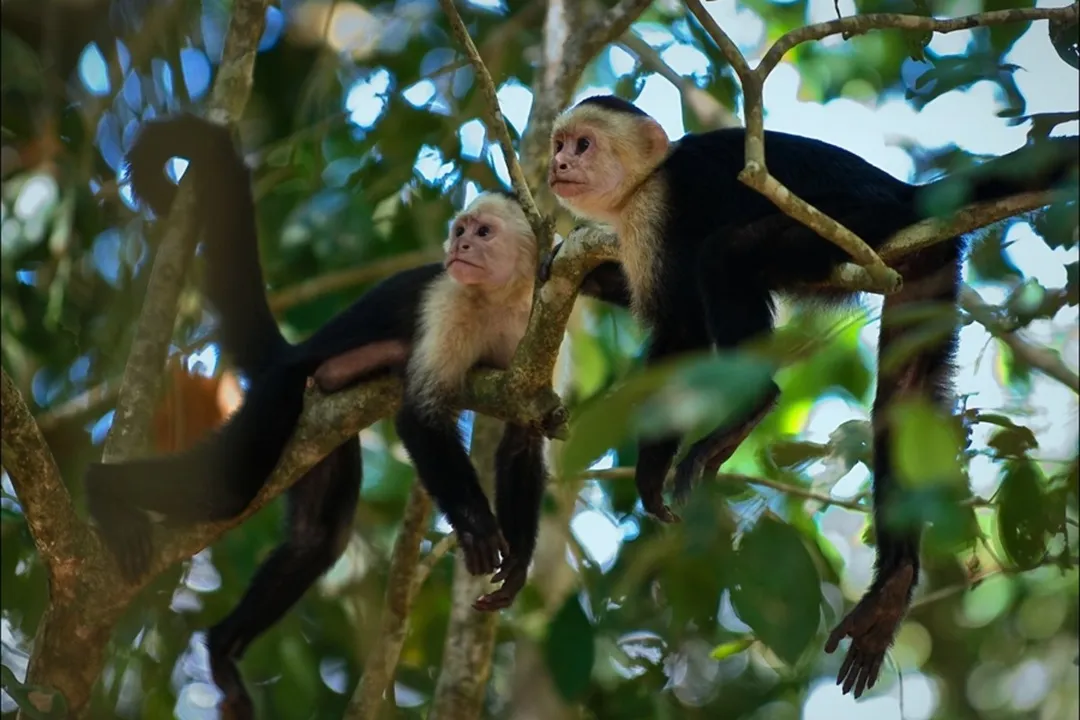
A crucial aspect of white-faced capuchin adaptation lies in their capacity for cultural transmission, which involves the non-genetic spread of learned behaviors throughout the group. This process, termed social learning, means that if an individual discovers an advantageous technique—such as a new way to process a difficult food source—that knowledge can be acquired by others through observation and imitation. This facilitates rapid behavioral variation and adaptation across the group, allowing the entire population to benefit from a single individual's innovation without waiting for beneficial genetic mutations to arise and become widespread.
Related Questions
What specific stone tool technique do white-faced capuchins use stones for in the wild?What aspect of evolution is suggested to outpace anatomical evolution in capuchins?Approximately when did the *Sapajus* genus diverge from the *Cebus* genus?How did the *Cebus* lineage achieve ecological dominance despite their relatively small size?What mechanism allows behavioral variation like tool use traditions to spread non-genetically?What aspect of the white-faced capuchin's ecology is reflected in its palate and jaw structure?What regions describe the distribution of the white-faced capuchin?Selection pressure on which capability may become a primary driver of evolutionary success in capuchins?What sequence is observed when studying wild capuchin stone tool use traditions?What is the likely role of the sharp contrast between white fur and dark skin around the eyes?