What primary food sources do juvenile yellow anacondas typically consume before reaching adult size?
Answer
Rodents, small birds, and fish
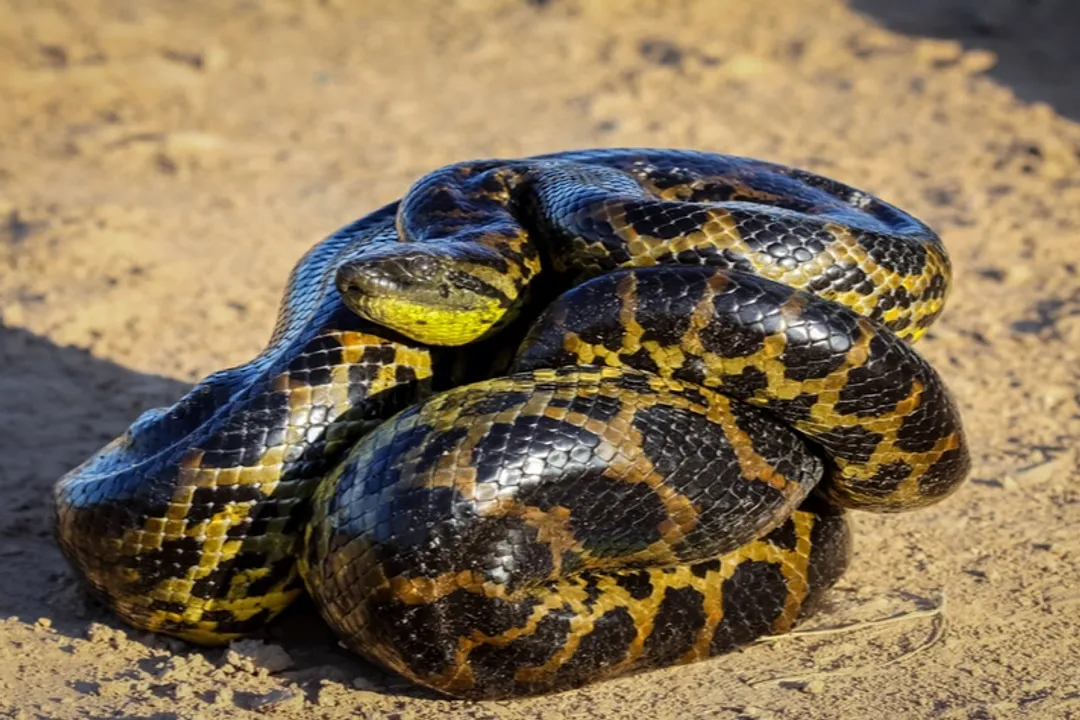
The prey spectrum for the yellow anaconda undergoes a significant shift corresponding to its growth stages. Juveniles, being smaller and needing to establish mass, start by consuming items readily available in their immediate aquatic surroundings that require less energy to subdue. This initial diet is comprised of smaller components, specifically including rodents, small birds, and fish. As the snake grows larger and requires exponentially more energy to maintain its muscular structure, it must transition to targeting substantially larger prey items like caimans and capybaras.
#Videos
Feeding Yellow Anaconda 2013 - YouTube
Related Questions
In which South American region is the yellow anaconda's diet intrinsically linked to its semiaquatic existence?Which snake is mentioned as overshadowing the yellow anaconda, *Eunectes notaeus*, in common perception?What are the notable wild meals targeted by fully grown adult yellow anacondas?What proportional guideline do experienced keepers often follow regarding the size of prey offered to captive anacondas?What mechanical action do yellow anacondas use to dispatch prey after an initial strike?What common captive prey items are listed as standard fare for large adult yellow anacondas?Why is the feeding frequency of an adult yellow anaconda in the wild relatively infrequent?What primary food sources do juvenile yellow anacondas typically consume before reaching adult size?What specific captive food items are appropriate for younger or smaller yellow anaconda specimens?How does a yellow anaconda's ability to retreat to water potentially influence its digestive process compared to dry-land snakes?What essential principle must keepers maintain when transitioning prey types from the Pantanal wild diet to captive rations?