What primary environmental factor led to the disappearance of *Arsinoitherium* from the fossil record?
Answer
Shrinking specialized swamp environments due to climate shifts
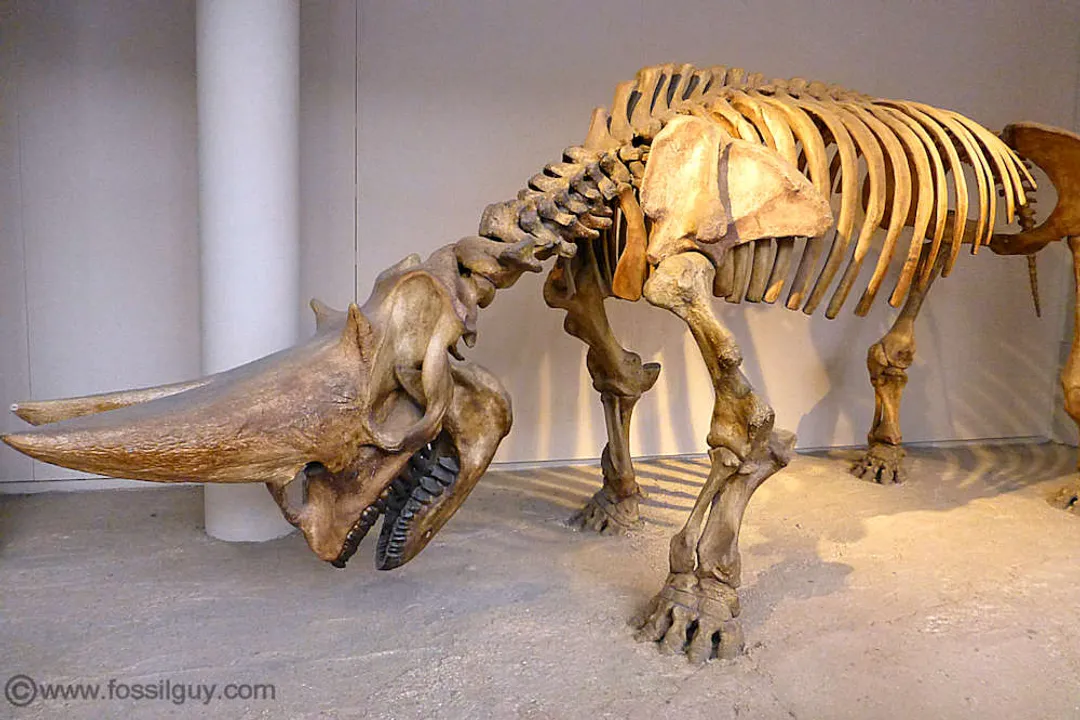
The extinction of *Arsinoitherium* is strongly correlated with macro-level changes occurring towards the close of the Oligocene epoch. As global climate patterns shifted, the northern African landscape, particularly the Fayum region, began a trend toward becoming progressively drier and cooler. This climatic change directly resulted in the shrinking and degradation of the vast, specialized swamp and marsh ecosystems that were absolutely necessary to support such a highly adapted, bulky herbivore. The loss of its specific ecological niche proved fatal, as its specialized features provided no advantage in a forthcoming grassland environment.
Related Questions
What was the maximum estimated weight for the bulky *Arsinoitherium*?To which extinct order does *Arsinoitherium* belong, classifying it separately from true rhinos?During which epochs did *Arsinoitherium* thrive, according to fossil dating?What likely covered the substantial, two-pronged horns of *Arsinoitherium*?Where are the fossils of *Arsinoitherium* primarily recovered, indicating its primary habitat?Which distant mammalian relatives share an evolutionary neighborhood with *Arsinoitherium*?What was the probable dietary preference of *Arsinoitherium* given its habitat and teeth structure?What is the likely origin of the name *Arsinoitherium*?What non-defensive/display function might the basal structure of the horns have provided in its swampy habitat?What primary environmental factor led to the disappearance of *Arsinoitherium* from the fossil record?