What is the likely origin of the name *Arsinoitherium*?
Answer
After a lake in ancient Egypt
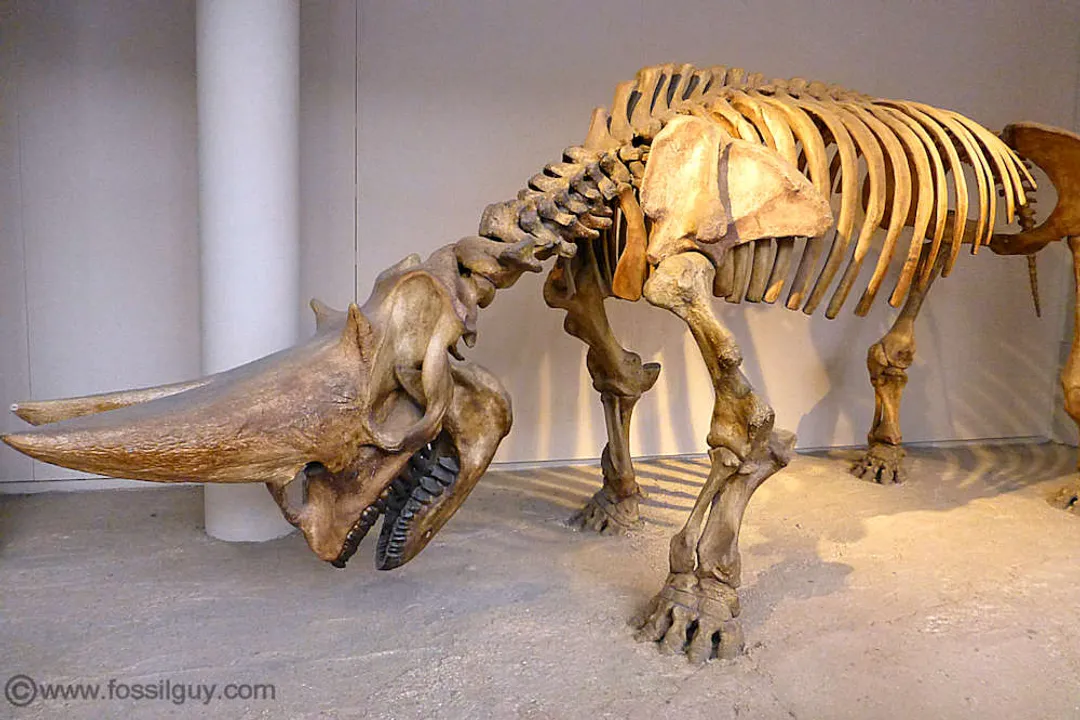
The nomenclature applied to this prehistoric creature provides a direct geographical link to the region where it flourished. The name *Arsinoitherium* literally translates to "Arsinoe's beast." This designation was given in honor of a specific lake located in ancient Egypt, which was named Arsinoe. This naming convention ties the identification of the animal directly to its primary fossil-bearing region, the Fayum area.
Related Questions
What was the maximum estimated weight for the bulky *Arsinoitherium*?To which extinct order does *Arsinoitherium* belong, classifying it separately from true rhinos?During which epochs did *Arsinoitherium* thrive, according to fossil dating?What likely covered the substantial, two-pronged horns of *Arsinoitherium*?Where are the fossils of *Arsinoitherium* primarily recovered, indicating its primary habitat?Which distant mammalian relatives share an evolutionary neighborhood with *Arsinoitherium*?What was the probable dietary preference of *Arsinoitherium* given its habitat and teeth structure?What is the likely origin of the name *Arsinoitherium*?What non-defensive/display function might the basal structure of the horns have provided in its swampy habitat?What primary environmental factor led to the disappearance of *Arsinoitherium* from the fossil record?