What are the unique features of Arsinoitherium?
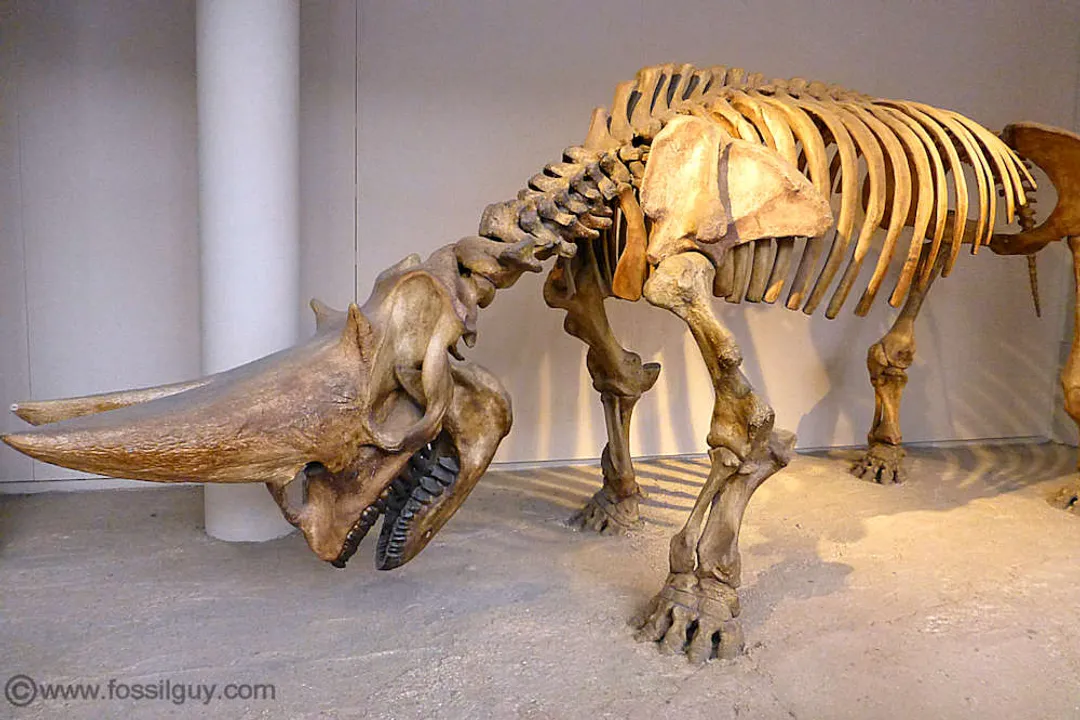
The appearance of Arsinoitherium immediately conjures images of something both familiar and alien, a creature that roamed the Earth long before the modern rhinoceros evolved its famous facial armament. This massive, herbivorous mammal, whose name means "Arsinoe's beast" after a lake in ancient Egypt, stands out in the paleontological record primarily due to its extraordinary headgear. [1][2] Living during the late Eocene and early Oligocene epochs, between about 36 and 27 million years ago, this animal represents a very distinct lineage of large Cenozoic mammals. [1][7][8]
# Paired Horns
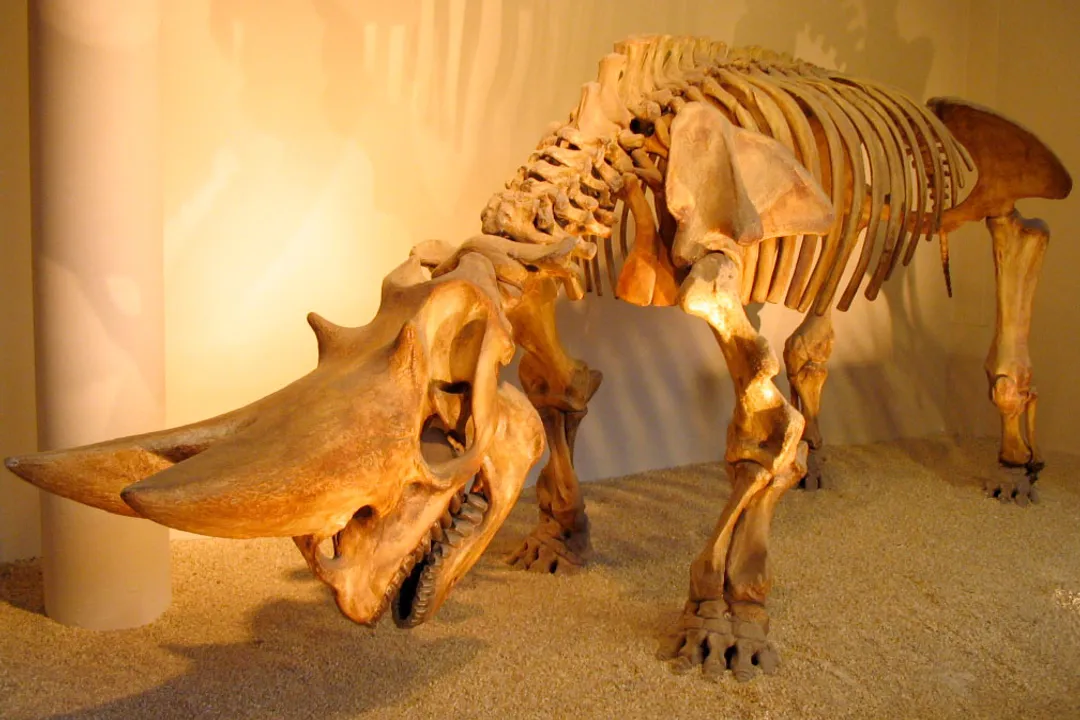
The most striking feature, the one that secures its place in the hall of prehistoric oddities, is the presence of two colossal horns projecting from the snout. [4][10] These horns were positioned directly above the nasal and frontal bones, unlike the single horns seen in many later rhinos. [1][8] They were substantial structures, likely covered in a thick sheath of keratin—the same material that makes up modern fingernails and rhino horns. [9][10] However, the internal structure and growth pattern likely differed from true rhinoceroses. [9] While they resembled rhino horns, they were an example of convergent evolution, developing similar solutions for defense or display in separate evolutionary lines. [4][5]
These horns were perhaps the most significant element for species recognition and sexual display among individuals. [6] The sheer mass and structure suggest they could absorb significant impact. Considering Arsinoitherium inhabited the marshy, often waterlogged environments of ancient North Africa, a charging impact against a large crocodile, such as the contemporary Crocodylus tharicus, would have required immense structural integrity. [1][2][4] It is interesting to consider that if an animal weighing several tons were to charge across soft, muddy ground, the impact force transmitted through those basal horn structures might have been less about piercing and more about sheer blunt force trauma, perhaps even serving as effective, if cumbersome, shovels for clearing tough reeds near the water's edge. [1][6]
# Evolutionary Isolation
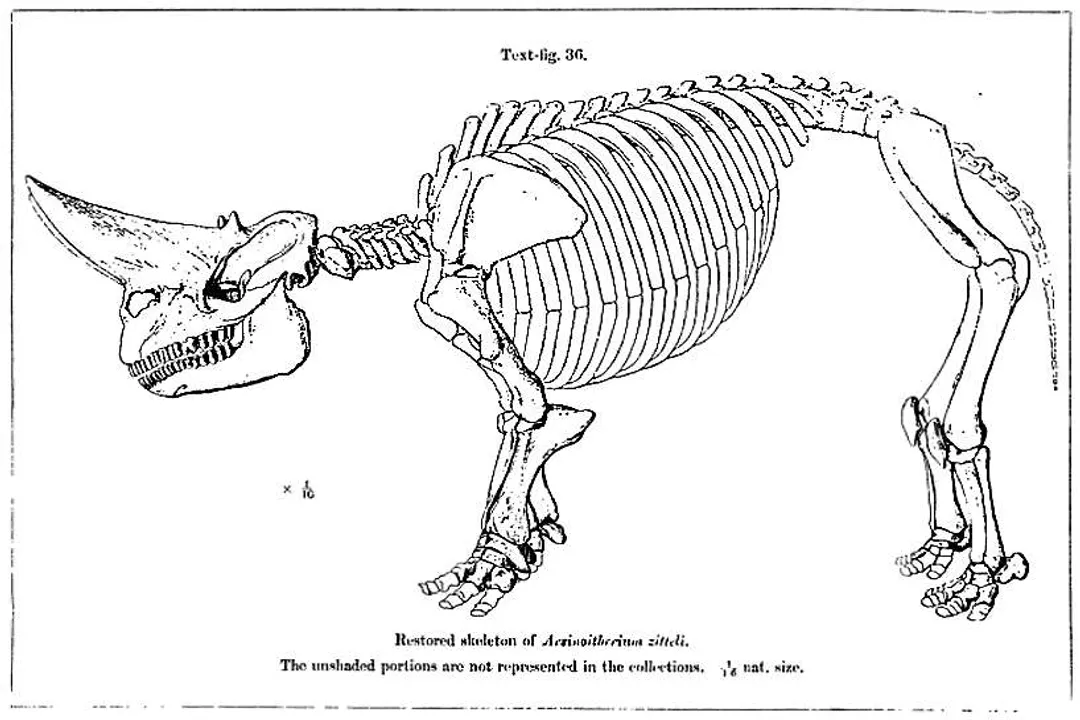
Arsinoitherium is not a direct ancestor of modern rhinoceroses, despite the superficial similarity caused by its horns. [4] It belongs to an extinct order called Embrithopoda. [1][7] This places it in a distant evolutionary neighborhood, often considered related, albeit distantly, to elephants (Proboscidea) and sea cows (Sirenia). [1][3][7] This evolutionary placement makes Arsinoitherium a remarkable side branch of mammalian evolution, demonstrating how unique body plans can arise and thrive before later, more familiar groups take dominance. [7] Its relative, Palaeoamasia, shows a slightly different horn structure, suggesting the development of large horns was a trend within this specific, isolated group. [8]
# Physical Build
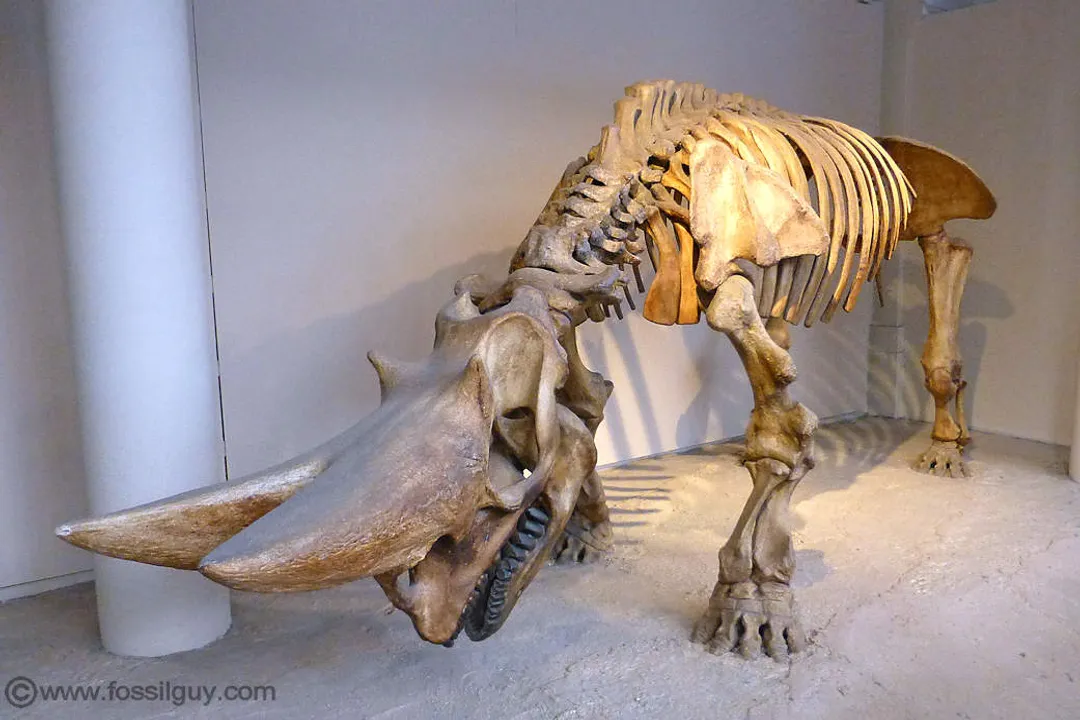
Physically, the animal was built for bulk, often reaching the size of a large modern white rhinoceros, though some estimates push its weight to around 4 tons. [2][3][4] It possessed a robust body, short, powerful legs, and a relatively short neck to support its heavy head. [4] This bulky physique suggests a creature well-adapted to moving through dense vegetation or perhaps spending considerable time semi-aquatically, much like early relatives of elephants might have done. [1][2] The skeletal structure points toward an animal that was heavy-set and perhaps not built for speed across dry, open plains. [4]
| Feature | Description Summary | Epoch Lived |
|---|---|---|
| Order | Embrithopoda | Late Eocene to Early Oligocene |
| Size Estimate | Up to 4 metric tons | ~36 to 27 Million Years Ago |
| Horns | Two large, keratin-sheathed structures | North Africa (Fayum) |
| Habitat | Swamps and Floodplains | Moist, tropical/subtropical |
| Diet | Herbivore, soft vegetation | Preyed upon by large carnivores |
# Swamp Habitat
The fossils of Arsinoitherium are primarily recovered from the Fayum Depression in Egypt, dating its peak activity to periods when this region was far wetter than it is today. [1][7][8] The environment was characterized by extensive swamps, marshes, and lush floodplains. [2][4] This setting perfectly explains the creature’s build and its likely diet of soft aquatic or semi-aquatic plants. [1][6] Living near water offered protection from the larger terrestrial predators of the time, although it certainly still faced dangers from massive crocodilians inhabiting those same waters. [5] The reliance on such a specific, moist ecosystem is a common factor in the extinction of many specialized Cenozoic mammals once the climate shifted. [1]
# Feeding Mechanics
As a strict herbivore, Arsinoitherium would have consumed large quantities of vegetation daily to sustain its immense body mass. [3][6] While the teeth suggest a capacity for grinding, the structure of the skull and the location of its habitat imply a preference for softer fare over tough grasses, which were not widespread during its time. [1] Its massive jaw and grinding molars were adapted to process this bulk diet of swamp flora. [2] Think of it less as browsing high branches like a giraffe, and more as systematically clearing low-lying, water-loving vegetation—a specialized mega-grazer of the ancient wetlands. [6]
# Extinction Context
The disappearance of Arsinoitherium from the fossil record coincides with significant global climate shifts towards the end of the Oligocene epoch. [1] As northern Africa became progressively drier and cooler, the vast, specialized swamp environments that supported these giants began to shrink. [2] While its exact extinction cause is likely tied to habitat loss, it serves as a potent example of how highly adapted large mammals can struggle when their specific ecological niche vanishes. [1] The specialized nature of its dual horns, while magnificent, did not provide the versatility needed to adapt to a grassland environment, unlike other contemporaries that might have been pre-adapted for more generalized feeding. [4]
Related Questions
#Citations
Arsinoitherium
Arsinoitherium - Prehistoric Earth: A Natural History Wiki
Arsinoitherium Animal Facts
Arsinoitherium - The Twin Horned Mammal
Science & Nature - Sea Monsters - Fact File: Arsinoitherium
ARSINOITHERIUM: The Double-Horned Beast
Arsinoitherium | Odd-Toed Ungulate, Perissodactyl, Eocene
Meet Arsinoitherium, the double-horned marvel of ancient ...
The horns of Arsinoitherium: covered in skin or augmented ...
Arsinoitherium Facts: The Ancient Horned Behemoth