What likely covered the substantial, two-pronged horns of *Arsinoitherium*?
Answer
A thick sheath of keratin
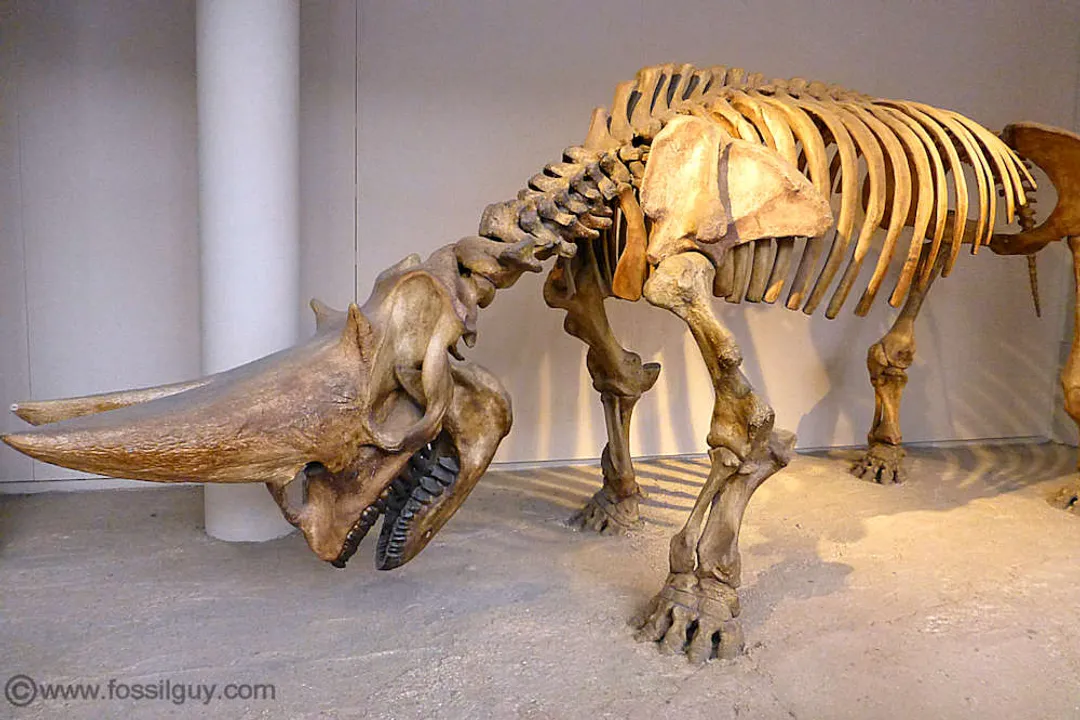
The defining feature of *Arsinoitherium* was its pair of colossal horns projecting from the snout, situated over the nasal and frontal bones. These structures were substantial and powerful. While they physically resembled the horns of true rhinoceroses, they were likely covered in a thick sheath made of keratin. Keratin is the same fibrous structural protein that constitutes modern human fingernails and the horns found on extant rhinos. However, the internal structure and growth pattern of *Arsinoitherium*'s horns are believed to have differed significantly from those of true rhinoceroses.
Related Questions
What was the maximum estimated weight for the bulky *Arsinoitherium*?To which extinct order does *Arsinoitherium* belong, classifying it separately from true rhinos?During which epochs did *Arsinoitherium* thrive, according to fossil dating?What likely covered the substantial, two-pronged horns of *Arsinoitherium*?Where are the fossils of *Arsinoitherium* primarily recovered, indicating its primary habitat?Which distant mammalian relatives share an evolutionary neighborhood with *Arsinoitherium*?What was the probable dietary preference of *Arsinoitherium* given its habitat and teeth structure?What is the likely origin of the name *Arsinoitherium*?What non-defensive/display function might the basal structure of the horns have provided in its swampy habitat?What primary environmental factor led to the disappearance of *Arsinoitherium* from the fossil record?