What are the physical features of a Bernese Mountain Dog?
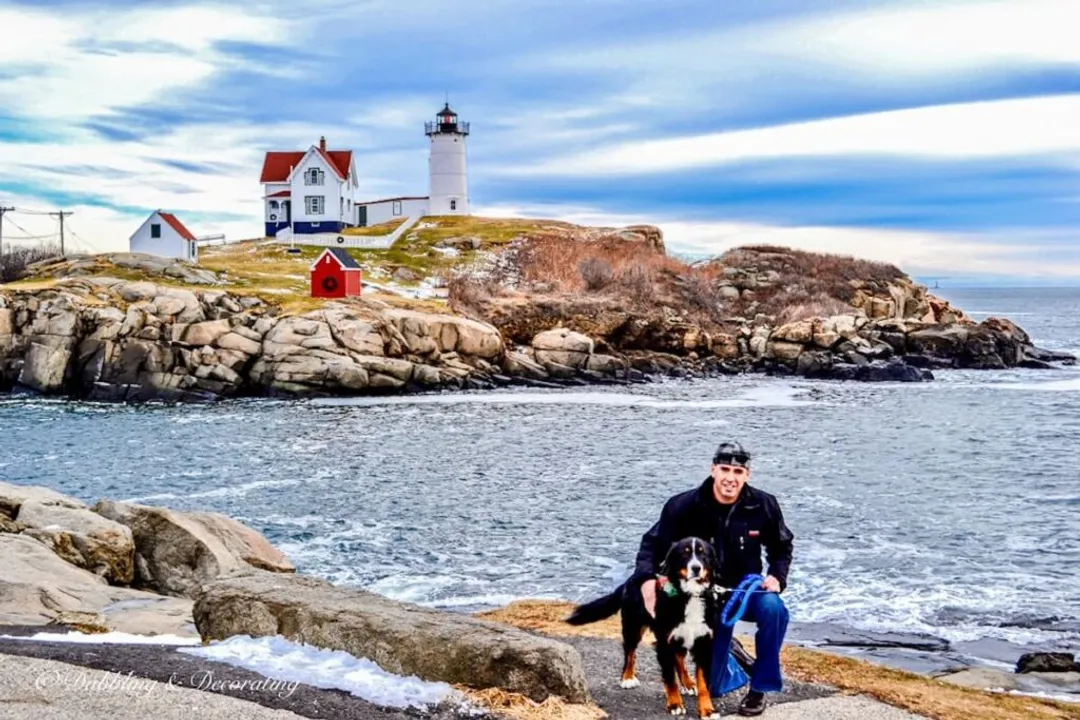
The Bernese Mountain Dog is instantly recognizable, evoking the image of a powerful yet friendly giant hailing from the Swiss Alps. Their physical presence speaks directly to their history as multi-purpose farm dogs, used for drafting carts, herding livestock, and guarding property. [4][5][9] Understanding their physical makeup reveals why they excelled in these demanding roles, combining strength with a good-natured bearing. [1][5]
# General Stature
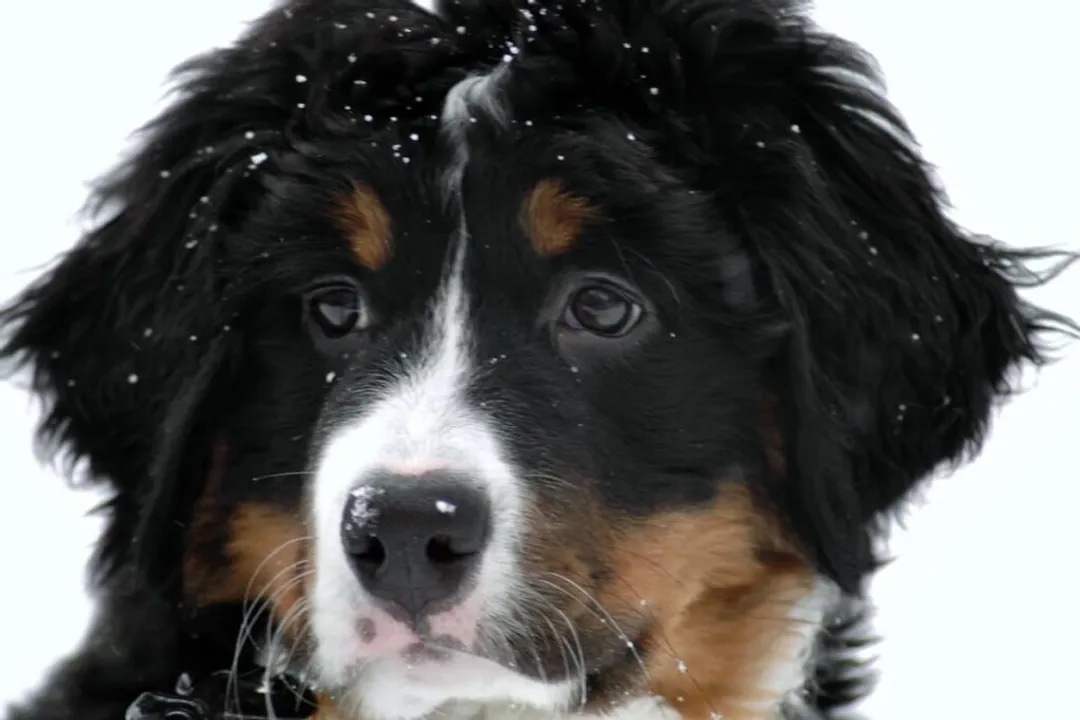
This breed is classified as a large, heavy dog, possessing significant bone structure and muscular development. [1][3] The overall look should be sturdy and well-balanced, avoiding any appearance of being coarse or clumsy. [3] When observing a well-conditioned Bernese, one should note the sheer substance; their weight is substantial, which is directly related to the heavy hauling they were historically expected to perform on European farms, suggesting that an overly light build indicates a deviation from the breed's original purpose. [1][5]
There are clear physical differences between the sexes. The male Bernese Mountain Dog generally stands taller and is heavier than the female. [1][3] An adult male typically weighs between 80 and 115 pounds and stands 25 to 27.5 inches at the shoulder. [1] Females are usually in the range of 70 to 95 pounds, with a height between 23 and 26 inches. [1] Despite this size disparity, both sexes should maintain the look of well-built working dogs. [3]
# Coat Coloring
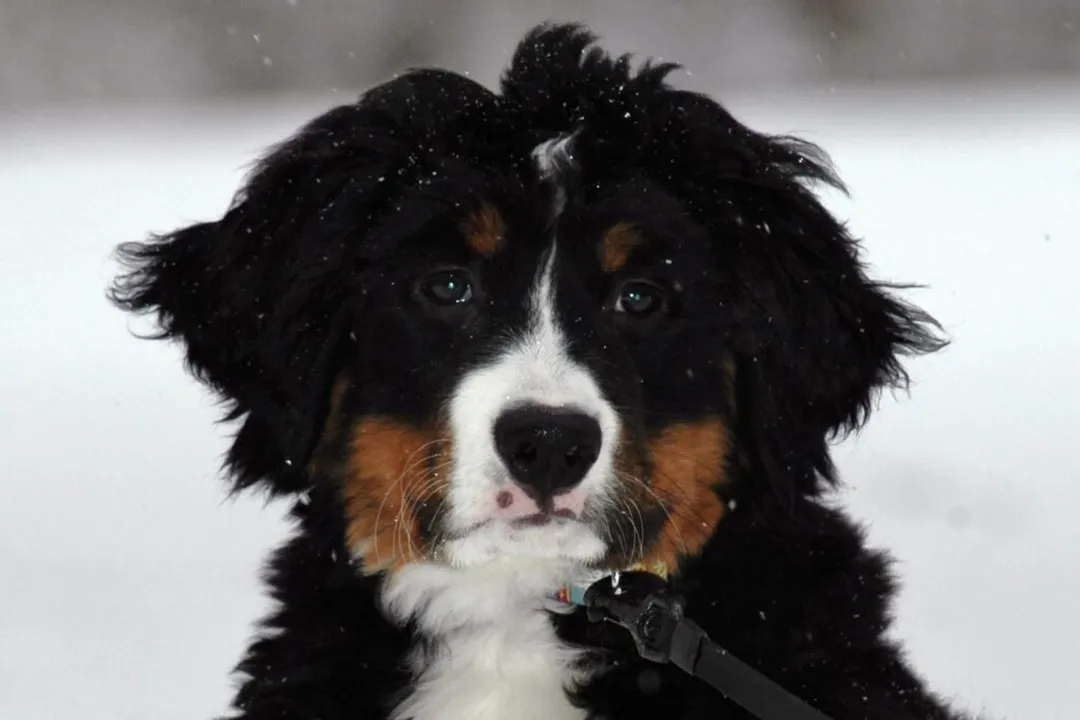
Perhaps the most distinguishing characteristic of the Bernese Mountain Dog is its striking, characteristic tri-color coat. [1][4][5][6] The coloring must consist of three distinct colors: black, rust (or rich reddish-brown), and white. [1][3][5]
The black color forms the base coat, covering the majority of the body. [3][5] Overlaying this black are the rust markings, which appear as distinct points or areas of color. [3] These rust markings are typically found on the cheeks, above the eyes, on the sides of the chest, on the legs, and underneath the tail. [1][5] Finally, the white markings serve as accents. [3]
Ideal white markings include:
- A white blaze running up the center of the face. [1][5]
- White on the chest, ideally forming what is often described as a Swiss cross or the classic "Swiss mark". [3][5]
- White tips on the feet and tail. [1][3]
It is worth noting that the precise distribution and intensity of these colors are scrutinized in breed standards. A common point of distinction is the amount of white on the chest and face, and the richness of the rust points. [3][5] If you are examining a dog's coat density, remember this is a double coat. [1][6] The undercoat is thick and woolly, designed to provide insulation against harsh alpine weather, while the outer coat is longer and slightly wavy or straight. [1][3] When feeling the coat, a healthy BMD should have a noticeable undercoat density, which you can gently feel when petting; if it feels sparse, particularly in cooler climates, it may indicate a grooming or health issue affecting the insulating layer. [1]
# Head Features
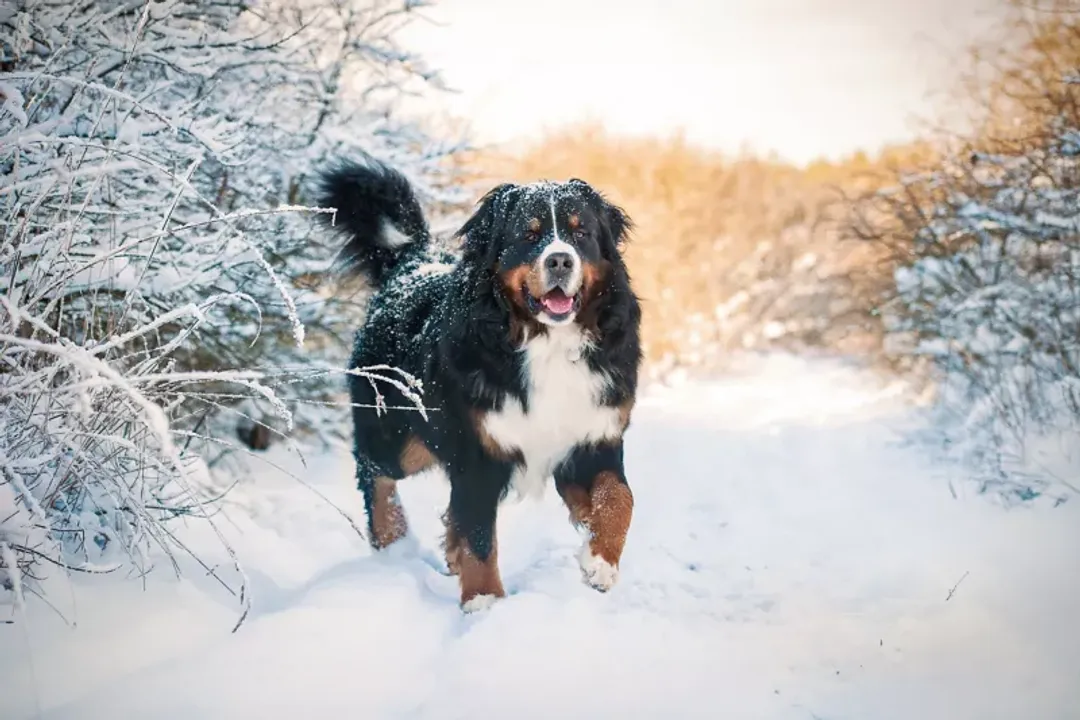
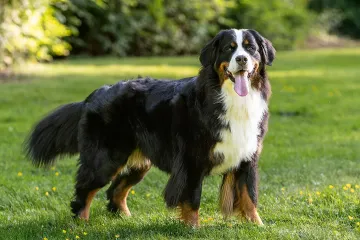
The head of the Bernese Mountain Dog should convey an impression of intelligence and gentleness, matching their temperament. [1][3] The skull is broad and slightly rounded, though it should not be too exaggerated or domed. [3] The muzzle should be strong, straight, and neither too long nor too short when compared to the skull. [1][3]
The eyes are dark brown and medium-sized, set in an almond shape. [1][3] They should look out with an intelligent and friendly expression. [3] The ears are the classic drop style—triangular in shape, setting high on the head, and hanging close to the cheeks. [1][3] They should not be too large or heavy. [3]
# Body Proportions
Structural soundness is crucial for a dog bred for heavy work. The Bernese is a dog built for endurance, meaning they need depth and power without appearing clumsy. [3][5] They are moderately long in body; the ideal proportion is generally described as being slightly longer than they are tall when measured from the forechest to the rear point of the buttocks. [3]
The topline, or the line running from the withers to the croup, should be firm and level, maintaining a strong back profile. [3][5] The chest needs to be deep, indicating good lung capacity, reaching down to about the level of the elbow. [3] They should have well-sprung ribs, providing the necessary volume for a working dog’s physique. [3] The forequarters are well-muscled, and the rear angulation is moderate, allowing for a powerful, balanced stride. [3]
# Extremities and Tail
The legs and feet must correspond to the dog's overall size and weight. They should possess strong, straight bone structure. [3] The forelegs are straight when viewed from the front. [3] The feet are compact and round, with well-arched toes, sometimes exhibiting dewclaws, particularly on the hind legs, which are often left intact. [1][3]
The tail is bushy and carried low when the dog is relaxed or standing still. [3][5] It should ideally reach the hock, or slightly below it. [3] When the dog is alert or moving, the tail is carried up, but it should never curl over the back in a tight sickle shape. [3] The long, profuse feathering on the tail contributes to the breed’s majestic silhouette. [1]
When observing movement, the Bernese Mountain Dog should display a strong, balanced, and free gait. [3] Their trot should cover ground efficiently, reflecting their heritage as a steady worker rather than a flashy sprinter. [5] This combination of powerful structure, weatherproof coat, and moderate angulation makes them physically suited for both the mountain terrain and the farmyard environment they originated from. [3][5]
Related Questions
#Citations
Bernese Mountain Dog - American Kennel Club
Bernese Mountain Dog (Berner): Characteristics & Care
Illustrated Commentary on Breed Standard | BMDCF
Bernese Mountain Dog Breed - Hill's Pet Nutrition
Bernese Mountain Dog - All About Dogs - Orvis
Bernese Mountain Dog Breed Guide - BorrowMyDoggy
Bernese Mountain Dog Breed Information | Purina UK
Bernese Mountain Dog Temperament and Health: 25 Years With ...
Large Breed Spotlight: Bernese Mountain Dogs