What are unique facts about shoebills?
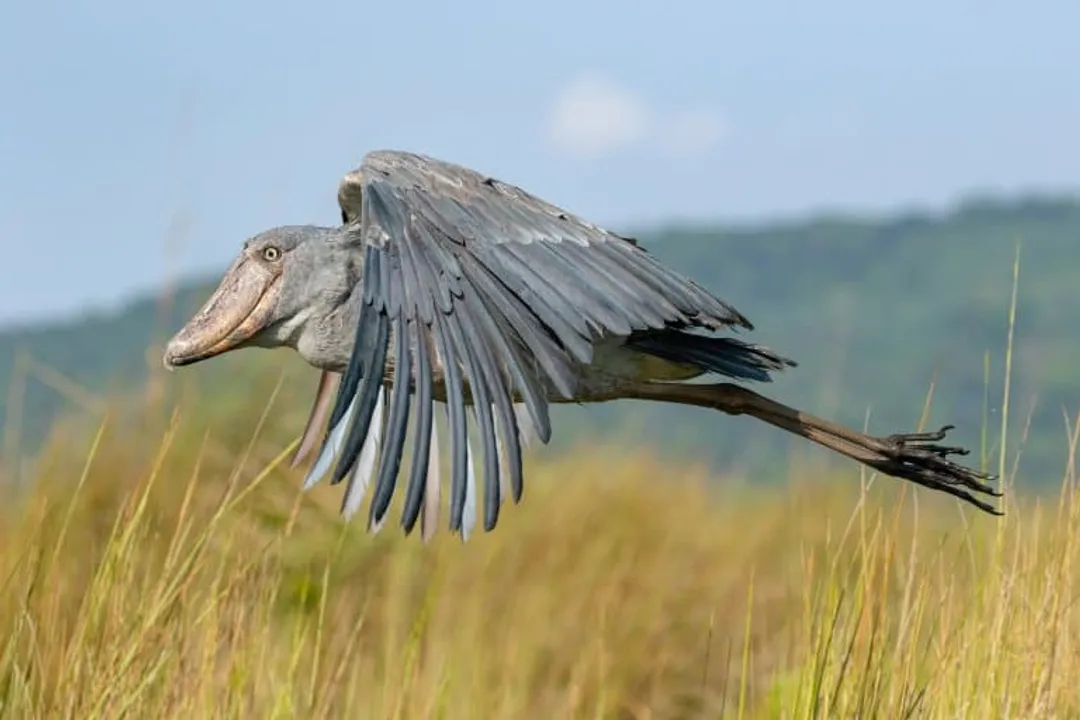
The Shoebill, Balaeniceps rex, is arguably one of the world’s most visually arresting and misunderstood birds. Standing as tall as five feet with a wingspan nearing eight feet, its massive, shoe-shaped bill—often described as resembling a Dutch clog—dominates its prehistoric-looking face. [1][3][5][8] This large, grey wading bird, also known by names like the whale-headed stork or abu markub ("Father of a Slipper") in Arabic, carries a reputation that swings wildly between terrifying menace and stoic patience. [2][5][8] Yet, beneath the imposing exterior lies a complex bird whose classification, habits, and family structure reveal just how specialized it has become for its swampy existence. [1]
# Taxonomic Kinship
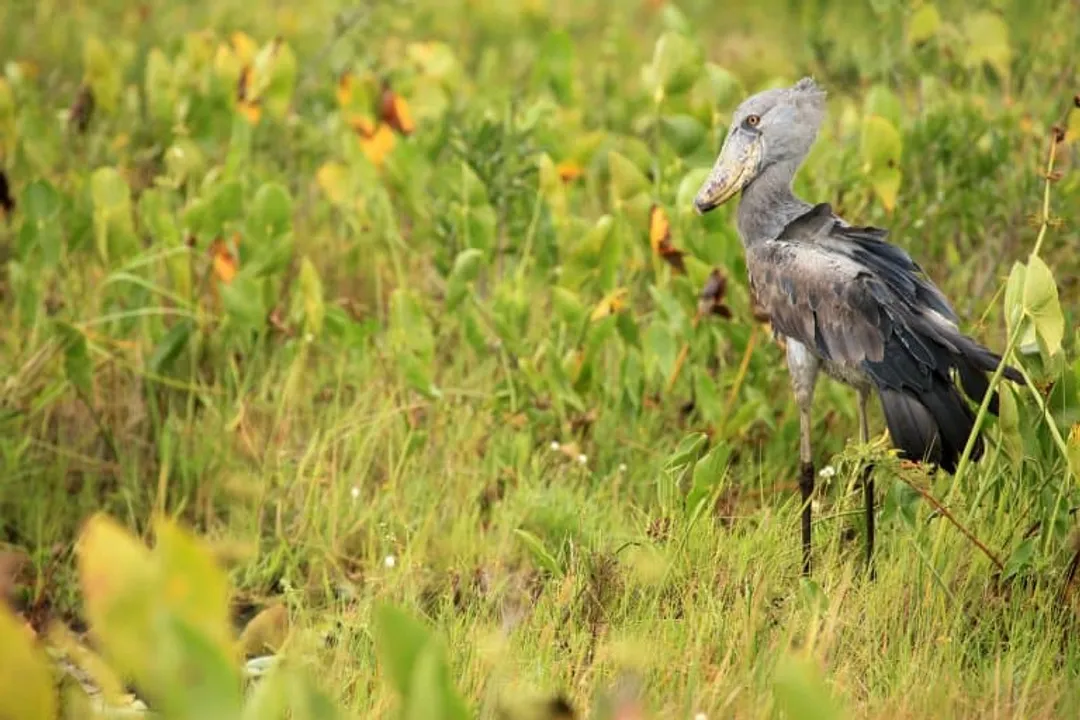
For a long time, the Shoebill was firmly placed within the order Ciconiiformes alongside true storks. [1][3] This was understandable, given its stork-like stature, long legs, and the shared behavior of urohidrosis, or defecating on the legs to aid cooling, a trait also utilized by true storks. [3][8] However, modern genetic and osteological analysis has shifted its position significantly. [1] Current evidence strongly suggests the Shoebill belongs in the order Pelecaniformes, aligning it more closely with pelicans and herons. [1][8] Intriguingly, molecular studies have identified its closest living relative not as a heron or a pelican, but as the far more unassuming hamerkop. [1][2]
# Bill Size
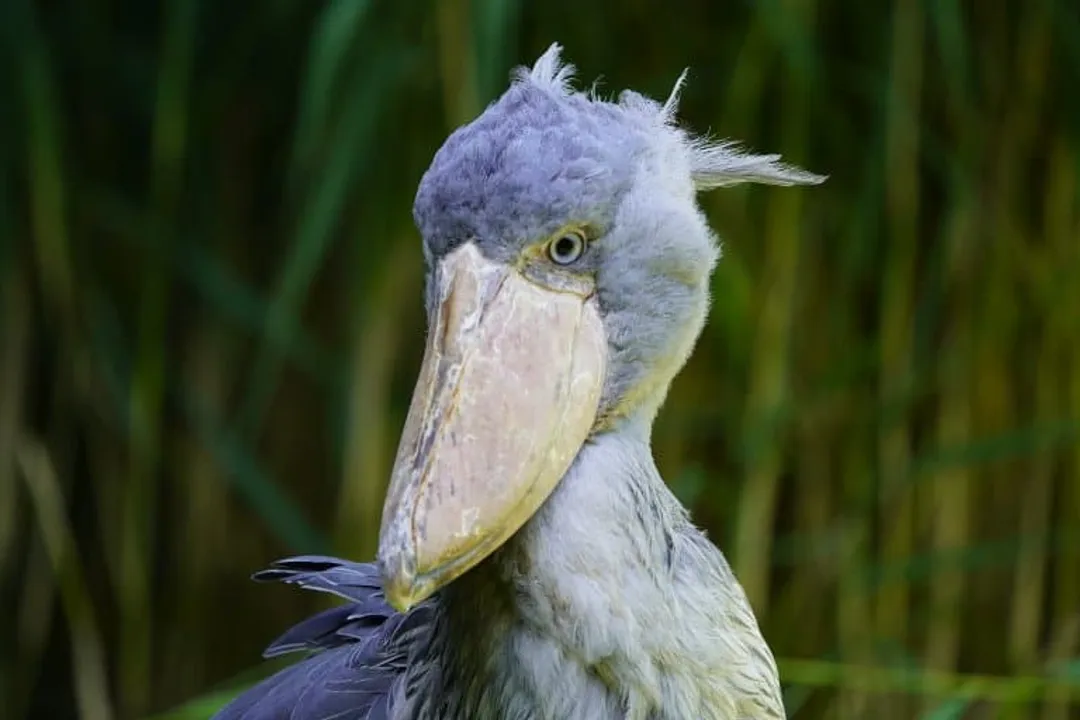
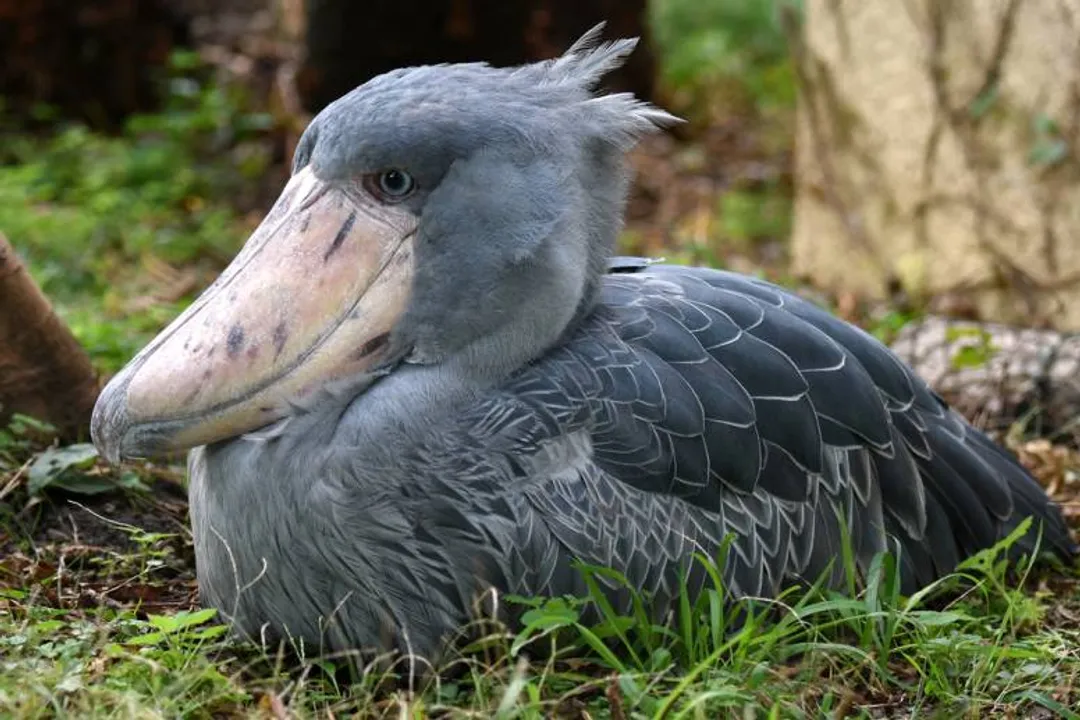
The signature feature, the bill, is truly gargantuan in proportion to the bird’s head. [1][8] The exposed culmen (the upper length) can stretch between 7.4 and 9.4 inches, giving it the third-longest bill among living birds, potentially surpassing pelicans in circumference. [1] This enormous structure is tan with erratic greyish markings and is equipped with razor-sharp edges and a pronounced, sharp hook, or nail, at the tip. [1][5] This tool is not merely for show; it is engineered to capture and process substantial prey items. [1] The bill also plays a vital functional role beyond hunting, serving as a container to ferry water back to the nest to cool eggs during high temperatures, around 30–33 °C (86–91 °F). [1]
# Stillness Hunting
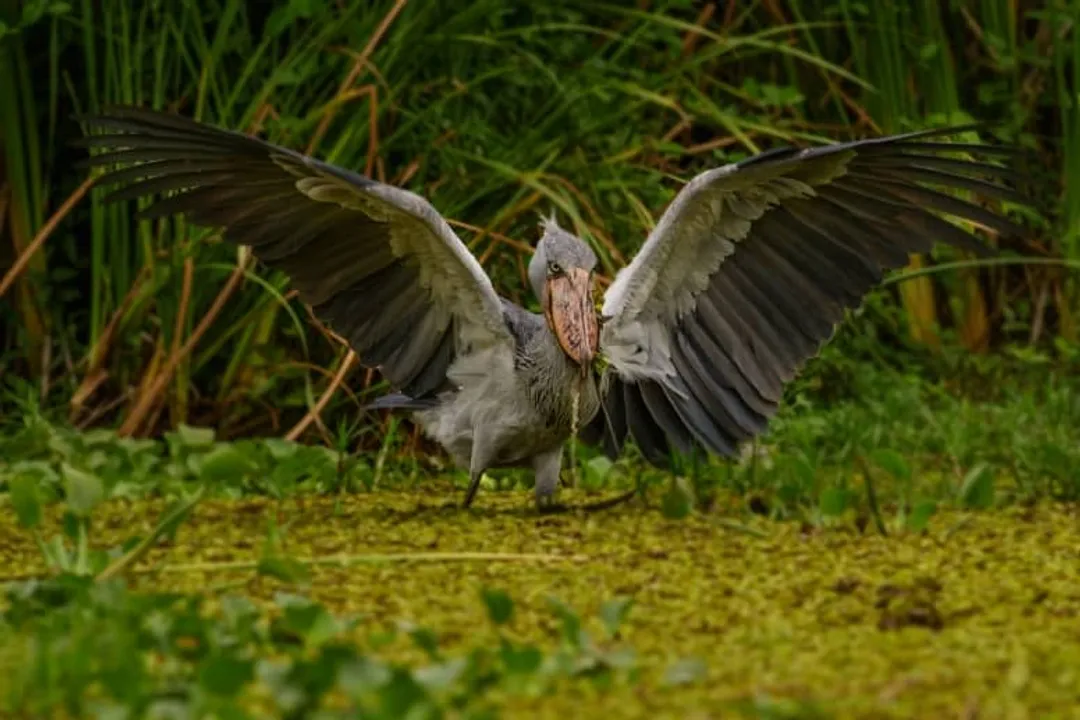
The Shoebill is renowned for its almost eerie stillness while foraging, often described as statue-like, remaining motionless for extended periods in the dense freshwater marshes it calls home. [1][2][5] This patient, lurking approach is entirely visual; the bird is not known to hunt by touch or tactile probing. [1] Shoebills particularly favor hunting in poorly oxygenated waters, as this forces fish like lungfish and catfish to surface for air more frequently, increasing the odds of a successful strike. [1][5] When prey is finally detected, the attack is explosive: the bird violently lunges or collapses forward onto its target, engulfing it with the massive bill, frequently snatching up water and vegetation in the process. [3][5] A fascinating symbiotic, albeit accidental, relationship exists with hippopotamuses; the large mammals help the Shoebill by bulldozing paths through the dense papyrus and forcing submerged fish to the surface, providing the bird with easier targets. [2][5] When you consider that the Shoebill must rely solely on sight to strike prey hidden in murky, low-visibility swamp water, its effectiveness becomes remarkable. This strategy is highly specialized, succeeding about 60% of the time, but it requires the prey to make a mistake—coming to the surface for air—making the habitat choice itself a critical part of the predatory success. [1]
# Cooling Methods
Life in the hot, tropical wetlands of central Africa demands efficient thermoregulation, and the Shoebill employs two distinct methods to keep cool. [3] The first is gular fluttering, where the bird vibrates the muscles in its throat to dissipate heat, a technique also shared with pelicans and storks. [3] The second, more unusual method involves urohidrosis, the act of urinating directly onto its own legs. [3][8] The evaporation of this liquid from the legs provides a chilling effect on the bird, a unique adaptation that briefly confused taxonomists into linking it with true storks. [8]

# Vocalizations
Despite their intimidating appearance, Shoebills are generally silent birds, reserving loud vocalizations for specific contexts. [1][5] The most famous sound is bill-clattering, which they perform during greetings or courtship rituals, a rapid noise sometimes compared to a machine gun. [1][5] Beyond this, adults have been recorded emitting a cow-like moo or a high-pitched whine near the nest. [1][5] Young chicks, conversely, produce a noise described as uncannily similar to human hiccups when soliciting food. [1][5] Further social signaling includes bowing, which is noted as a form of greeting and social bonding with familiar individuals. [4]
# Brutal Chicks
The solitary nature of the Shoebill extends into their breeding cycle, where monogamous pairs fiercely defend large territories rather than nesting colonially like many other large wading birds. [1][5][8] After a 30-day incubation period shared by both parents, who diligently cool the eggs, the nest may contain one to three chicks. [1][5] However, the reality upon hatching is starkly unforgiving: only one chick typically survives. [1][5][8] The older, stronger chick engages in intense bullying and fighting, often leading to the death of its younger siblings through direct aggression or food deprivation—a practice known as siblicide. [2][5][8] The second or third egg is essentially an insurance policy; if the first chick dies or is weak, the second acts as a 'back-up' clutch, but parents do not replace chicks if the initial clutch fails completely. [1][5] For those interested in understanding reproductive bottlenecks in wildlife, observing the environmental factors that influence this early competition is key. For instance, conservation managers in areas experiencing fluctuating water levels should note that immature birds prefer nesting sites with rising water, while adults prefer receding water; therefore, managing water stability during the crucial early chick-rearing phase is essential to maximize the chance of that single survivor fledging successfully. [1]

# Conservation Status
The Shoebill is officially classified as Vulnerable on the IUCN Red List, with population estimates generally falling between 3,300 and 8,000 mature individuals globally. [1][3][5][8] They are most numerous across the swamps of South Sudan, Uganda, Zambia, and Tanzania. [1] The primary threats they face are anthropogenic, centered heavily on habitat destruction and degradation. [3][5] Agricultural expansion, cattle grazing, the draining of swamps for projects like canals, and pollution from industries like oil and tanning all contribute to the loss of their preferred papyrus wetland habitat. [1][3][8] Disturbance from humans, including hunting for food or simply for being perceived as a bad omen, further compounds the pressure. [3][5] Furthermore, the bird’s desirability to private collectors—with reports suggesting prices of $10,000 or more on the black market—fuels illegal capture, which is particularly devastating given their extremely rare breeding success in captivity. [5][8] The Shoebill is listed under CITES Appendix II, signifying that international trade is regulated to prevent further population decline. [1]
#Videos
5 Facts About Shoebills - YouTube
Related Questions
#Citations
Strange and Interesting Facts: Shoebill Storks (requested by r/lilxurkie)
Shoebill, facts and photos | National Geographic
14 Menacing Shoebill Stork Facts - Fact Animal
5 Fascinating Facts About the Shoebill – SafariBookings
5 Facts About Shoebills - YouTube
10 Surprising Facts About Shoebill Storks - Mental Floss
Shoebill - Wikipedia
Shoebill | San Diego Zoo Animals & Plants