What is unique about Northern Harriers?

The Northern Harrier immediately captures attention because of its distinct, almost buoyant flight pattern as it patrols open country. Unlike many other birds of prey that soar high or perch conspicuously, the harrier seems perpetually busy, flying low over fields and marshes with its wings held in a slight, shallow V-shape, known as a dihedral. [1][5] This flight style is key to identifying them, often described as skimming just inches above the vegetation, creating a visual that separates it clearly from falcons or accipiters. [1][5]
# Buoyant Flight
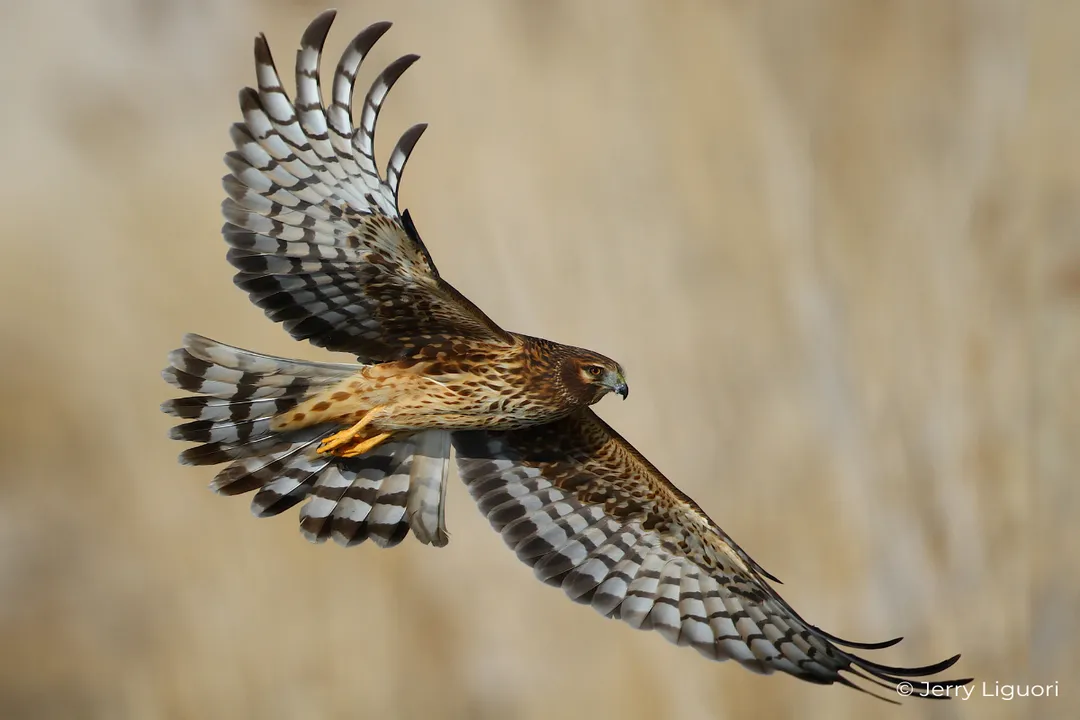
The characteristic motion is often slow and deliberate, a tireless search pattern that covers vast stretches of low ground cover. [1] When soaring higher, they hold their long wings steady or flap them in a relaxed manner. [2] The wings themselves are long and slender relative to the body, and they possess a noticeably long tail, both features contributing to this steady, buoyant quality in the air. [2][5] This specific flight modality is directly linked to how they hunt, enabling them to surprise ground-dwelling prey. [1]
# Distinct Marks
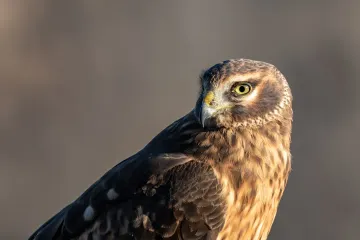
Several physical features make the Northern Harrier unmistakable once observed closely. The most reliable marker, visible across all ages and sexes, is a prominent white rump patch. [1][5] This patch is often visible from above or below as the bird flies low. [5] Another highly unique feature, shared with owls but rare among diurnal raptors, is the presence of facial feathering that creates a distinct facial disc. [2][3] This structure is thought to help funnel sound to their ears, giving them an enhanced auditory sense for locating prey hidden in dense cover. [2]
When comparing size, the Northern Harrier is relatively slender, with males generally appearing slightly smaller than females. [3] They are medium-sized raptors known for their long wings and tails. [2]
# Sex Plumage
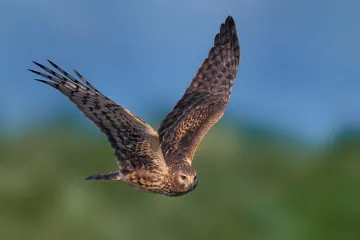
The plumage differences between adult males and females—a trait known as sexual dimorphism—are dramatic in the Northern Harrier, often leading observers to believe they are looking at two different species. [1][5]
The adult male is slender and often appears pale or "ghostly" in flight. [5] His back and head are a light, clear gray, contrasting sharply with black wingtips. [2][5] This coloration provides excellent camouflage against the sky when viewed from below against bright light. [2]
In contrast, the female is significantly darker and browner, especially the juvenile female which is strongly streaked with brown above and on the chest. [1][2] Adult females retain a dusky brown coloration across much of their body, though they still possess the defining white rump patch. [2] This strong contrast means an observer may need to pay close attention to flight style and the rump patch if the lighting obscures the exact color saturation of the body feathers. [5]
# Low Hunting
The primary hunting strategy employed by the Northern Harrier is a direct function of its unique flight form. They systematically patrol open areas, flying very close to the ground, sometimes seeming to barely clear the tops of grasses or reeds. [1][5] They are searching for small birds, mice, voles, shrews, frogs, and insects hiding below. [1] When prey is detected, the harrier often ceases flapping, hovers momentarily, and then drops straight down with talons extended to seize the meal. [1] This technique requires the low, steady flight that their wing structure facilitates. [5]
If you are searching for a Harrier, remember that they often hunt most actively in the early morning or late afternoon, especially when there is a gentle breeze that aids their low-level maneuvering over wide expanses. [1]
# Open Habitat
Harriers show a strong preference for open, treeless environments where they have room to perform their characteristic searching flight. [1][4] Their favored habitats include freshwater and saltwater marshes, wet meadows, prairies, and large tracts of grassland or agricultural fields like hayfields. [1][7][8] They require dense ground cover for nesting but open space for hunting. [4] In states like Pennsylvania, their habitat often centers around brushy fields, old pastures, or wet meadows. [4] New York observations also point toward fields and freshwater marshes. [7]
A key aspect of their habitat relationship is their dependence on undisturbed ground cover for reproductive success. Nests are typically constructed on the ground, concealed within dense grasses or cattails. [3]
If you are birding in a region like the Mid-Atlantic or Northeast US, note that the presence of expansive, unmowed hayfields during late summer often offers better Harrier viewing opportunities than traditional, thick coastal marsh edge, as agricultural fields provide consistent, low-growing cover for voles. [4][7]
# Nesting Behavior
The nesting habits of the Northern Harrier cement their ties to these open environments. They are one of the few raptors that consistently builds a substantial nest on the ground, usually concealed beneath dense clumps of vegetation, such as cattails or thick grasses. [3] This ground-nesting strategy makes them particularly vulnerable to disturbance from early mowing or other human activities within their chosen fields and marshes. [6] While they are widespread, successful breeding populations are often monitored closely by conservation agencies in states like New Jersey and Massachusetts, reflecting their sensitivity to habitat management practices. [6][8]
# Status Range
The species, Circus cyaneus, maintains a broad distribution across the Northern Hemisphere. [3] However, within North America, specific regional populations face conservation challenges. [4][6][7][8] For instance, in several northeastern and mid-Atlantic states, the Northern Harrier is listed as a species of special concern or even threatened. [4][6][7][8] The primary driver behind these state-level concerns is the ongoing loss or poor management of the exact open habitats—marshes and grasslands—they need for both foraging and nesting. [4][7] Monitoring their presence and breeding success in these smaller geographic areas provides important data on the health of these specific open ecosystems. [6]
While they are classified scientifically within the Accipitridae family, much like the familiar hawks and eagles, their functional ecology sometimes mirrors that of nocturnal hunters. The combination of their owl-like facial disc and their dedicated, low-level searching flight pattern creates a unique niche among North American diurnal raptors, one perfectly suited for locating small, scurrying prey hidden in thick vegetation. [2][3]
Related Questions
#Citations
Northern Harrier
Northern harrier
Northern Harrier | Game Commission
Northern Harrier Fact Sheet
Northern harrier - Conserve Wildlife Foundation of NJ
Northern Harrier - NYSDEC
Northern Harrier