What are the unique features of bandicoots?
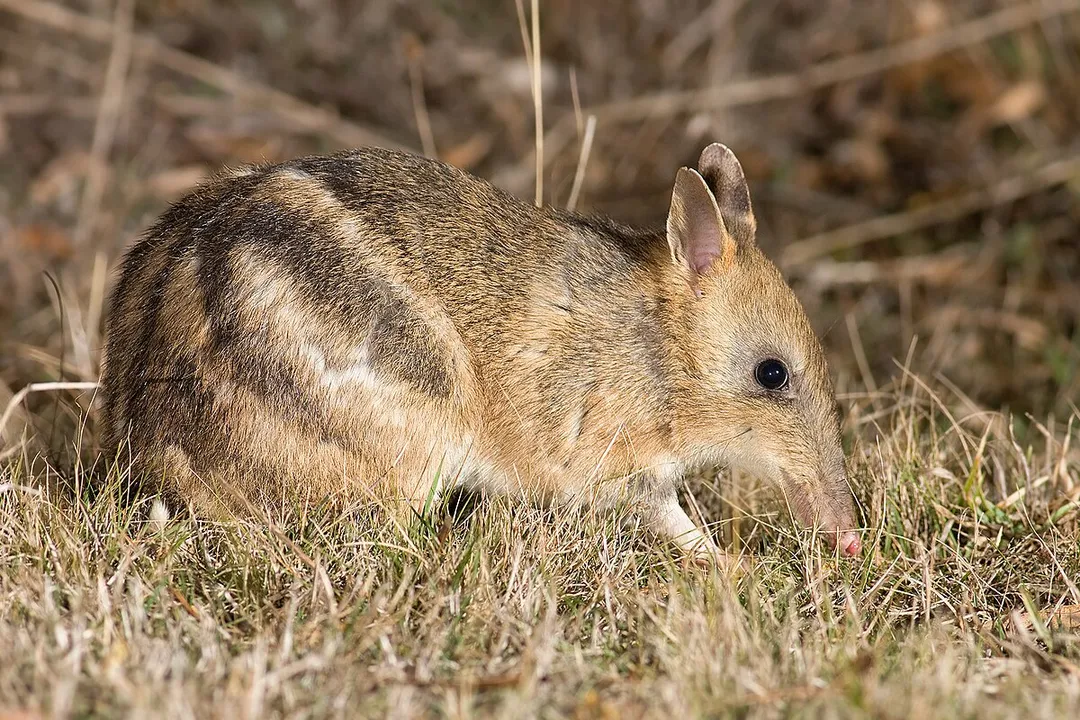
The bandicoot, a small, fascinating marsupial endemic to the Australia–New Guinea region, holds a surprisingly complex place in the animal kingdom. With more than 20 recognized species, these creatures are often lumped together, but a closer look reveals a suite of unique features that set them apart from their hopping cousins, like kangaroos. They are terrestrial and primarily active after sunset, making them dedicated nocturnal residents of the forest floor.
# Defining Features
Superficially, a bandicoot might remind some of a small dog or perhaps a tiny kangaroo, but its most defining characteristic is its elongated, pointed snout. This prominent nose is remarkably similar to that of an elephant shrew, though the two mammal groups are only distantly related. This specialized snout, paired with sharp claws, marks the bandicoot as a dedicated fossorial digger.
Physically, bandicoots are stout, generally covered in coarse fur that ranges in color from grey-browns to black, golden, or even white, allowing them to blend into the dappled light of their habitat. Adults typically range from about 30 to 43 cm in head-body length and weigh between 500 and 1,900 grams, though some species, like the Northern Brown Bandicoot, can reach up to 2.1 kg. Their hind legs are powerful and longer than their front limbs, built for quick leaps, and their hind foot even shows a resemblance to that of a kangaroo. A subtler but critical physical feature is their low body temperature and basal metabolic rate, which are key adaptations for surviving in Australia’s often hot and dry climates.
One of the most telling details in their anatomy is seen in their feet: they possess syndactyly, meaning two of their hind digits are fused, emerging with two claws from one toe. This unique foot structure, rather than hindering them, is actually adapted for meticulous grooming, helping them remove external pests like ticks.
# Marsupial Peculiarities
As marsupials, bandicoots share the characteristic of raising altricial young in a pouch, but they exhibit two key differences that are highly unusual for their order.
First, consider the pouch itself. While many marsupials have pouches that open toward the front or top, the female bandicoot's pouch opens rearward. This is a marvelous adaptation directly linked to their lifestyle: as they root and dig vigorously for food, the backward-facing opening prevents dirt and debris from fouling the developing young inside.
Second, bandicoots possess a placental feature more often associated with placental mammals. They develop a small chorioallantoic placenta in addition to the typical marsupial choriovitelline placenta. This brief uterine connection allows for an incredibly short gestation period, often cited as only about 12 days—one of the shortest of any mammal. The babies are born extremely underdeveloped, crawling immediately to the safety of the rear-opening pouch to complete their development on a teat for about 50 days. This rapid development cycle is thought to be an adaptation to environments where resources fluctuate, though it also means the mother might resort to cannibalism if food becomes scarce.
These physical specializations—the digging snout, the rear-opening pouch, and the unique foot structure—all converge to support their primary method of survival: excavating the soil for sustenance.
# Lifestyle and Ecological Role
Bandicoots spend their active hours, which are mostly nocturnal, digging for a wide variety of food. Their diet marks them as opportunistic omnivores, consuming everything from invertebrates like grubs, worms, beetles, and spiders, to plant matter such as roots, tubers, fungi, seeds, berries, and fruit. Their keen sense of smell aids them in locating these hidden snacks in the dark.
When they forage, they leave behind their signature calling card: a series of small, conical holes often called "snout pokes". This ceaseless digging is not just about feeding; it makes them critical ecosystem engineers. By turning over the soil, bandicoots increase the rate of leaf litter decomposition, aid in soil production, and promote nutrient cycling in forests and woodlands. Furthermore, they are vital in dispersing the spores of mycorrhizal fungi, which are keystone species for plant health.
Behaviorally, bandicoots are typically solitary and territorial. They use scent marking, secreted from a gland behind the ear, to delineate their foraging areas. Males tend to defend significantly larger territories (up to 40 ha) than females (around 1–4 ha). During the day, they retreat to camouflaged nests made of grass and leaves, sometimes found in shallow holes where they may even kick soil over the entrance to waterproof them during rain. If startled, their reaction is extreme: they can leap six feet into the air while emitting a loud, high-pitched, whistling squeak—one of at least four distinct vocalizations they use for communication.
# Conservation Concerns
Despite their industrious nature and vital ecological role, many bandicoot populations are facing significant pressure. Since European settlement, species distribution has been heavily contracted due to habitat loss from land clearing, urbanization, and competition from introduced herbivores like rabbits and deer. Introduced predators such as foxes and cats also pose a major threat. It is sad to note that of the estimated 12 species present in Australia at the time of settlement, approximately half are now either extinct or seriously threatened. For example, the Southern Brown Bandicoot is endangered and has a patchy distribution, as does the Eastern Barred Bandicoot, which has been eliminated from mainland Australia in many areas.
The existence of road signs featuring a bandicoot pictograph in some regions is a stark reminder of the danger they face, particularly because they are most active at night, coinciding with increased vehicle traffic.
# A Shared Ancestry and Distinct Niche
While the bandicoot family (Peramelemorphia) has recently seen its classification become more complex, broadly speaking, it is separated from bilbies—though they are both Australasian marsupials. The Southern Brown Bandicoot, for instance, is shyer and sticks closely to its preferred dense heath shelter, rarely venturing far from its nest area (often staying within half a hectare). This tendency to stay within a small home range, while helping them avoid spreading introduced pests like paralysis ticks as widely as more nomadic animals, also makes them vulnerable to localized disturbances like intense bushfires destroying their limited shelter options.
Ultimately, the bandicoot is a fantastic example of evolutionary specialization. Its entire physical makeup—from the probing nose to the dirt-proof pouch—is dedicated to its role as a highly efficient, soil-disturbing, nocturnal omnivore, performing crucial groundwork for the health of the Australian forest floor. Protecting these small mammals requires recognizing that their value isn't just in their cuteness, but in the essential "gardening" services they provide to the ecosystem, which in turn supports the broader flora.
If you happen to find these creatures in your backyard, remember they are beneficial predators of unwanted garden pests like grubs and earwigs, and their digging aerates the soil. Instead of reaching for chemicals, you might try natural deterrents like flooding the area with bright light or using strong-smelling substances like chicken manure, as bandicoots generally dislike both. This small effort supports a creature that works tirelessly, turning over the earth beneath our feet.
#Videos
What Are The Unique Features Of Bandicoots?
Related Questions
#Citations
Bandicoots (Facts & Photos)
Bandicoot | Habitat & Facts
Bandicoot Facts | Australia South Wildlife Guide
Bandicoot
What Are The Unique Features Of Bandicoots?
Bandicoot
Bandicoot Facts For Kids | AstroSafe Search
Bandicoots
Bandicoots | Native animals - Environment and Heritage