What are the physical features of the shoebill stork?

The shoebill stork, Balaeniceps rex, commands attention immediately upon sighting, less for flashy colors and more for its sheer, prehistoric structure. It is a bird that seems carved from ancient wood, combining immense scale with an almost statue-like stillness that hides its lethal efficiency. [1][2] Distinguishing this species relies entirely on recognizing several highly specialized physical characteristics that set it apart from other large wading birds like herons or pelicans. [6]
# Stature and Scale
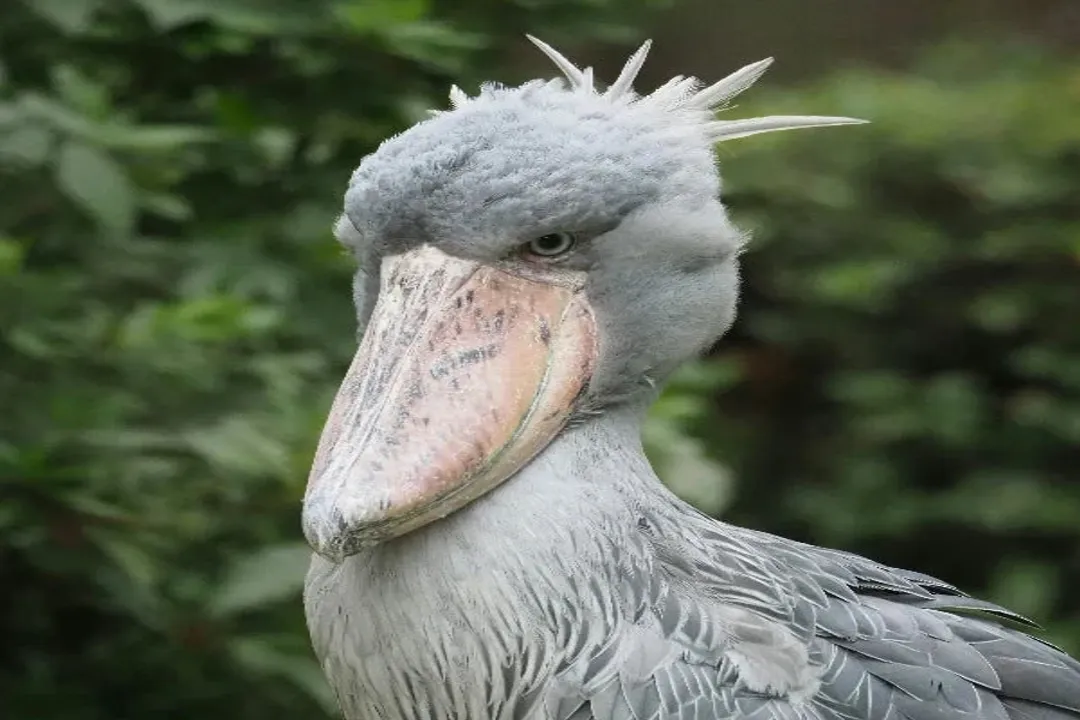
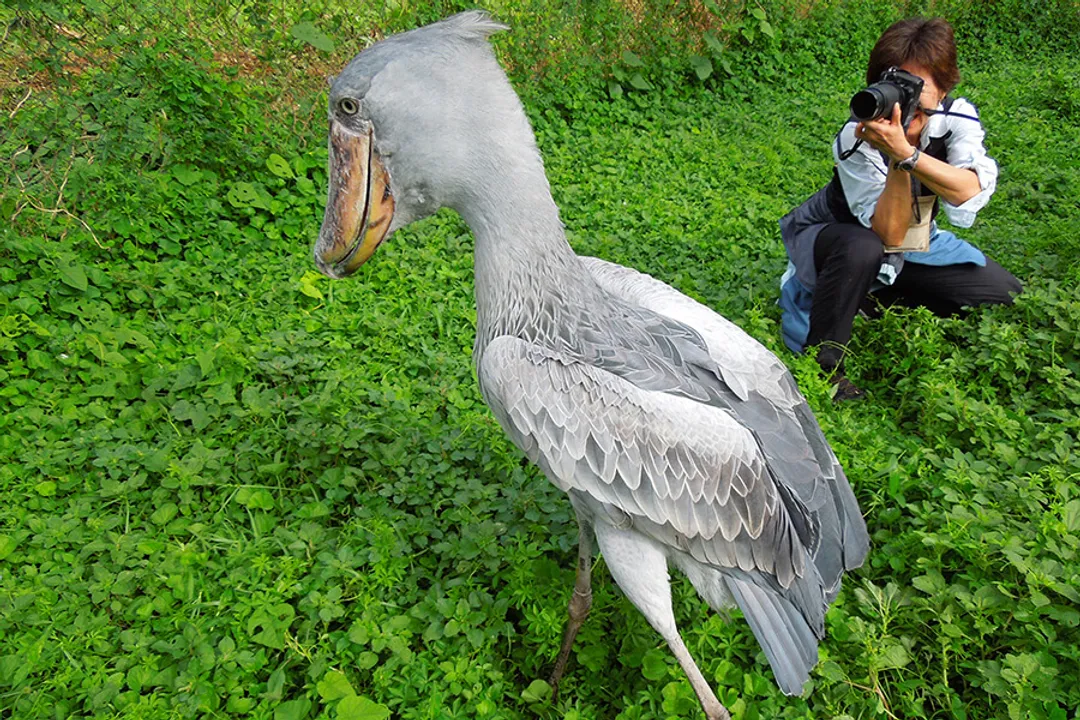
The overall impression of the shoebill is one of imposing height and bulk. Standing tall, these birds can reach heights between 1.1 to 1.5 meters (about 3.6 to 4.9 feet). [1][5] When measured by weight, they typically fall in the range of 4 to 5.5 kilograms (8.8 to 12.1 pounds). [1][3] This considerable size contributes to their slow, deliberate movements when they are not hunting. [6]
Their wingspan is also impressive, often stretching out to 2.6 meters (over 8.5 feet). [1] Despite their bulky appearance, when in flight, they hold their heads and necks retracted like herons, rather than outstretched like storks or pelicans. [2][6] The legs are notably long and robust, designed for wading in soft, muddy substrates. [1] These dark grey or black legs support their weight while they patiently stalk prey in dense wetlands. [5]
# The Beak
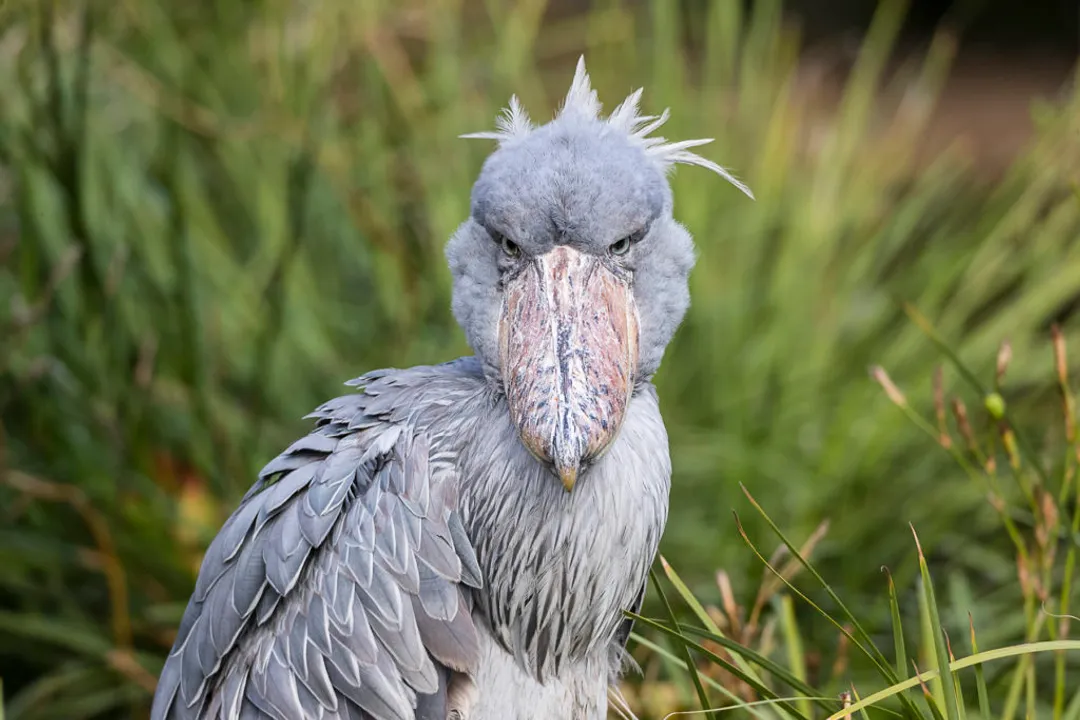
The most defining physical feature, the one that gives the bird its common name, is its colossal bill. [9] The shoebill possesses the largest bill relative to its body size of any bird. [1] It is not merely large; it is uniquely shaped, resembling a Dutch wooden shoe or clog, hence the common name. [9]
This massive structure is wide, deep, and laterally compressed. [1] The bill is generally a horn color, often yellowish with dark mottling or spots. [1][4] Crucially, the upper mandible terminates in a sharp, hooked point. [2] This sharp hook is essential for gripping slippery prey like lungfish and aquatic snakes, suggesting a mechanism not just for scooping, but for securing and dispatching meals with a powerful final stab or squeeze. [1] The edges of the mandibles are also described as being relatively sharp. [2] It is worth noting the sheer mass of this tool; while a heron’s bill is a slender dagger, the shoebill’s bill acts more like a heavy-duty trap or vise. [1][3] The construction allows the bird to hold large quantities of water and mud along with its captured meal, which it then must expel before swallowing. [2]

# Plumage Details
In terms of coloration, the shoebill is much less flamboyant than many tropical birds. Its plumage is predominantly a uniform slaty-blue-grey color. [1][5] This muted coloration serves as excellent camouflage within the papyrus swamps and marshlands where it resides. [6]
While the body feathers are generally consistent, observers might notice a slight, wispy crest of feathers on the back of the head, particularly when the bird is agitated or excited. [1] For immature birds, the coloration tends to be duller and browner than the adults’ stark slate-grey. [1] The feathers themselves are described as somewhat fluffy or shaggy, contributing to its ancient, slightly unkempt look. [1]
# Head and Neck Structure
The head of the shoebill is large, a feature necessary to anchor the enormous bill. [2] The eyes are positioned forward on the head, giving the bird excellent binocular vision—a feature highly advantageous for judging the distance to prey beneath the water's surface. [1] This forward placement differs noticeably from many birds whose eyes are situated further on the sides of the head. [1]
The neck is relatively thick when compared to the elongated, slender necks of cranes or herons. [2] A fascinating aspect of its physical configuration is its ability to retract this neck. When standing still for long periods, which is often its primary hunting strategy, the shoebill often appears hunched over, tucking its head down close to its body. [2] This posture, combined with its vertical stance, reinforces the look of a static, weathered statue until it strikes. [6]

# Posture and Movement
The physical features of the shoebill dictate a very particular manner of movement, both on land and in the air. On the ground, their long legs carry them with a slow, measured pace suitable for navigating shallow, dense vegetation. [5]
Their specialized feet are also noteworthy. While they are large wading birds, they possess moderately large toes which help distribute their weight, preventing them from sinking too deeply into the soft mud of their swamp environments. [1] Think of it as having natural snowshoes for the mire. [1]
When they do take to the air, the flight is described as strong but generally slow. [6] This flight pattern is an energetic expenditure, which explains why they conserve energy by remaining motionless for extended periods on the ground. The contrast between their massive, beak-heavy head and the powerful, measured wingbeats required to keep that bulk aloft underscores the evolutionary trade-off made for securing such specialized prey. [1] An interesting observation for field guides might be to note that a bird seen in flight often appears to be gliding more than actively flapping, a sign of conserving the energy needed to power that large frame. [6]
# Integrating Physical Traits for Spotting
Understanding these physical characteristics is key to successfully locating a shoebill in the field. Because their body plumage blends so well with the grey-brown tones of dried reeds and shadows, the best initial identifiers are often the shape and the stance. [6] If you observe a large, grey bird standing absolutely motionless for minutes on end, and you can make out that massive, angular silhouette against the reeds, you are likely looking at a shoebill, even if the fine details of the beak are obscured by distance or shadow. [5] The combination of extreme verticality and the "hunch" when resting is a strong physical clue that separates it from a Grey Heron, which typically holds its neck in a more pronounced S-curve when still. [2]
The sheer size of the bill also means that when the bird is moving its head—perhaps looking around or preening—that huge block shape is visible even at a great distance where feather details are lost. This physical anomaly, the oversized bill, becomes the most reliable beacon for identification in its often densely vegetated home. [4]
#Videos
Shoebill Stork Facts Dinosaur Bird! AMAZING! - YouTube
Related Questions
#Citations
Shoebill - Wikipedia
Shoebill | San Diego Zoo Animals & Plants
Balaeniceps rex (shoebill) | INFORMATION | Animal Diversity Web
Shoebill stork - The Dallas World Aquarium
Shoebill Stork Size and Facts | Rwanda Safaris Tours
Facts About Shoebill Storks - Size, Height, Habitat, Sound & Image
Facts About Shoebill Stork - Kenlink Tours
Shoebill Stork Facts Dinosaur Bird! AMAZING! - YouTube
Shoebill Stork: Bird Named For Its Beak Shape | PeckPerk