What makes a potoo owl unique?
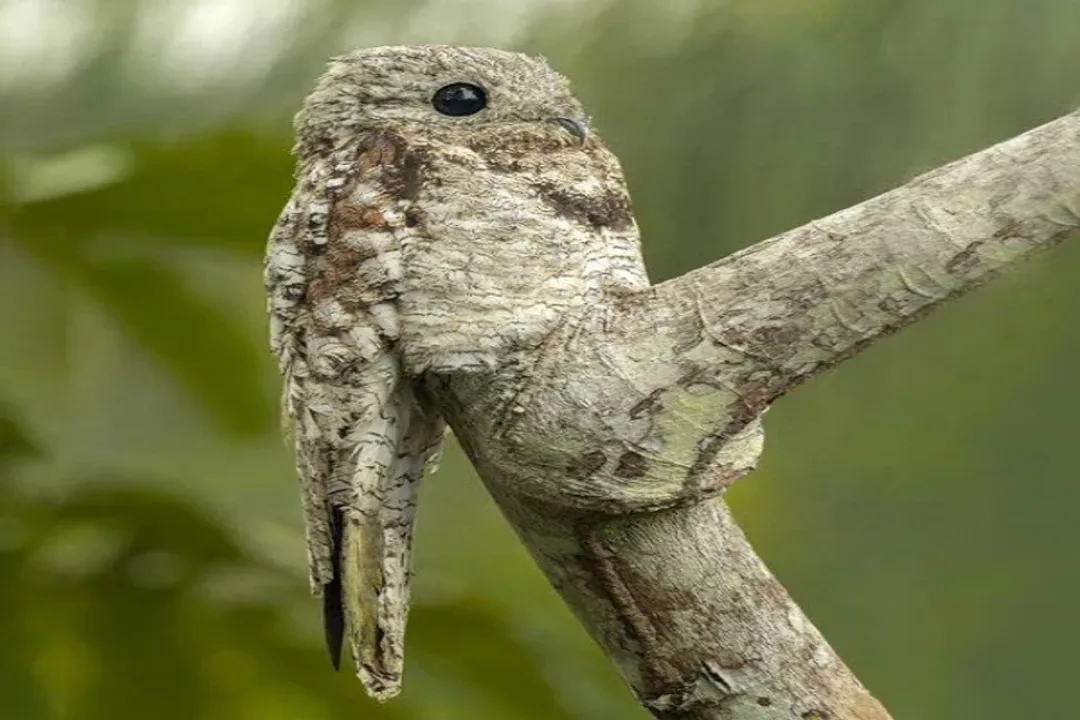
The world of birds harbors countless creatures that defy easy categorization, but few achieve the level of bizarre uniqueness found in the potoo. These birds, native to the tropical regions of Central and South America, are often called "ghost birds" or "nightjars," but it is their near-perfect ability to vanish into their surroundings that truly sets them apart. They are masters of disguise, making an encounter with one a matter of sheer luck unless they choose to reveal themselves.
# Not Owls
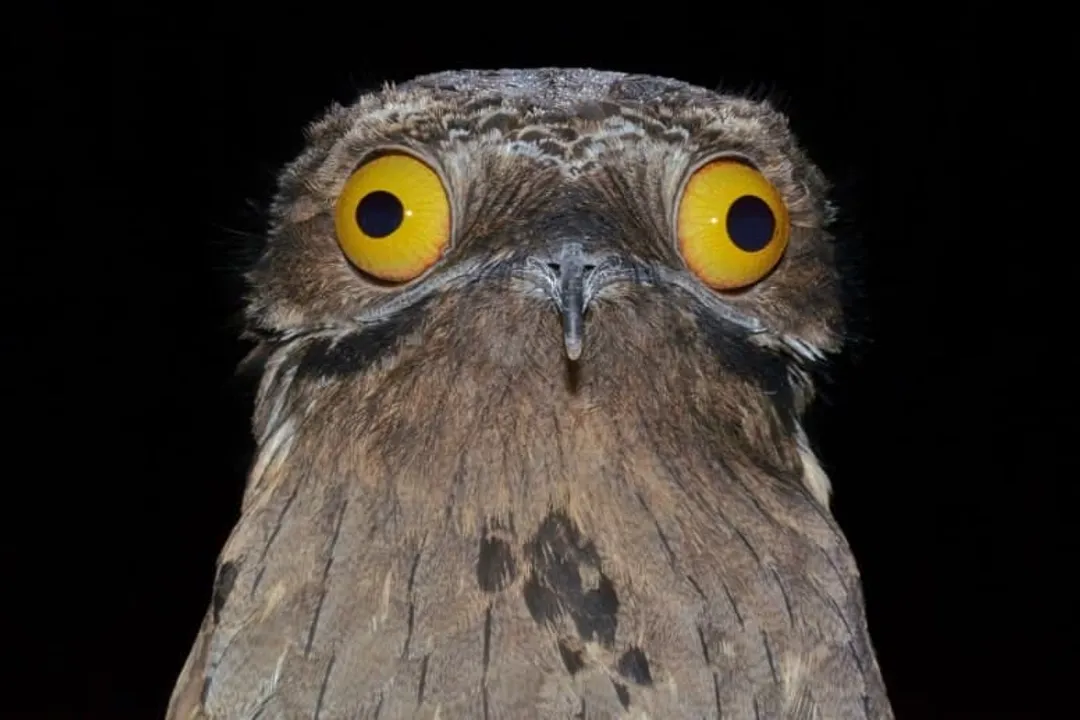
One of the first points of clarification needed when discussing potoos is their common mislabeling. Despite sometimes being referred to as "potoo owls," they are, in fact, not owls at all. They belong to the family Nyctibiidae, which places them in a different avian order altogether. While both owls and potoos share the trait of being nocturnal hunters, their evolutionary paths separated long ago. Owls are part of the order Strigiformes, whereas potoos are related more closely to nightjars and frogmouths. This distinction is critical; observing a potoo reveals adaptations that are distinct from the heavy-bodied, silent-flying raptors we traditionally associate with the "owl" moniker.
# Branch Mimicry
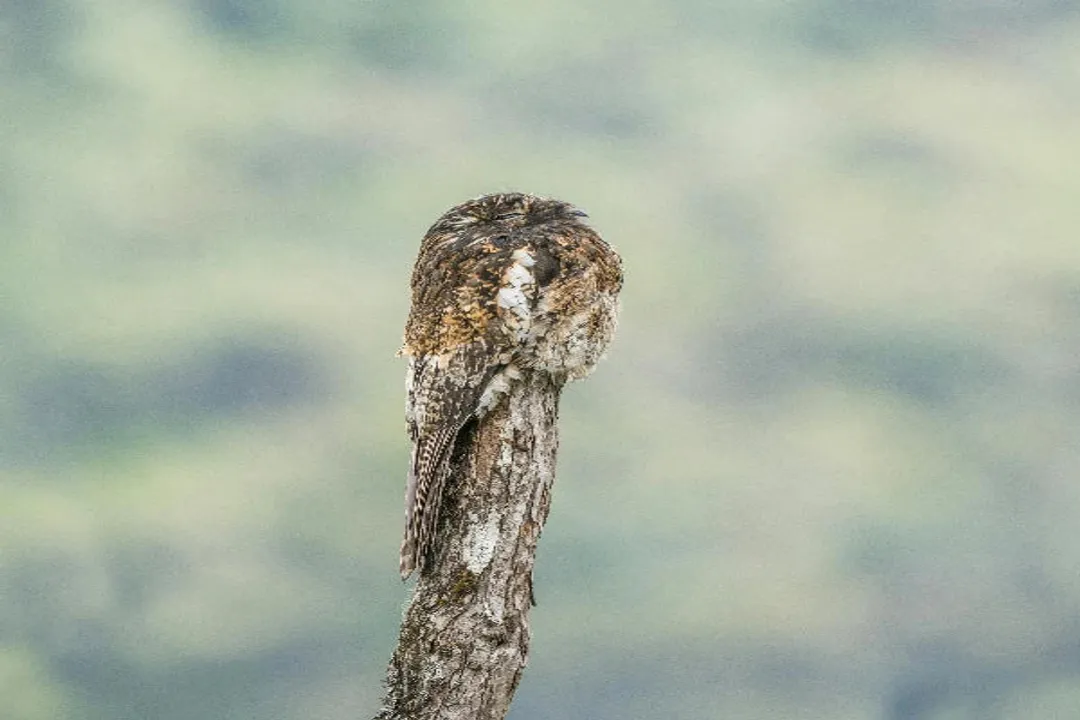
The potoo's most celebrated feature is its incredible, almost unbelievable, camouflage. When threatened or resting during the day, the bird adopts an astonishing posture: it stretches its body vertically, points its beak toward the sky, and freezes, becoming virtually indistinguishable from a broken tree stump or an upward-pointing dead branch. This is not simply about coloration, although their mottled gray and brown plumage certainly helps them blend into bark textures. It is the behavior that completes the illusion. A living branch does not fidget, and neither does a potoo during its daylight vigil. They rely on immobility, sometimes holding this stiff, upright pose for hours on end. This remarkable display is a defense mechanism developed to evade daytime predators, essentially making them invisible while they sleep or rest, hiding in plain sight. One must appreciate the physiological control required to maintain such rigidity; this isn't simply passive blending but an active, sustained performance of inanimate wood.
# Facial Features
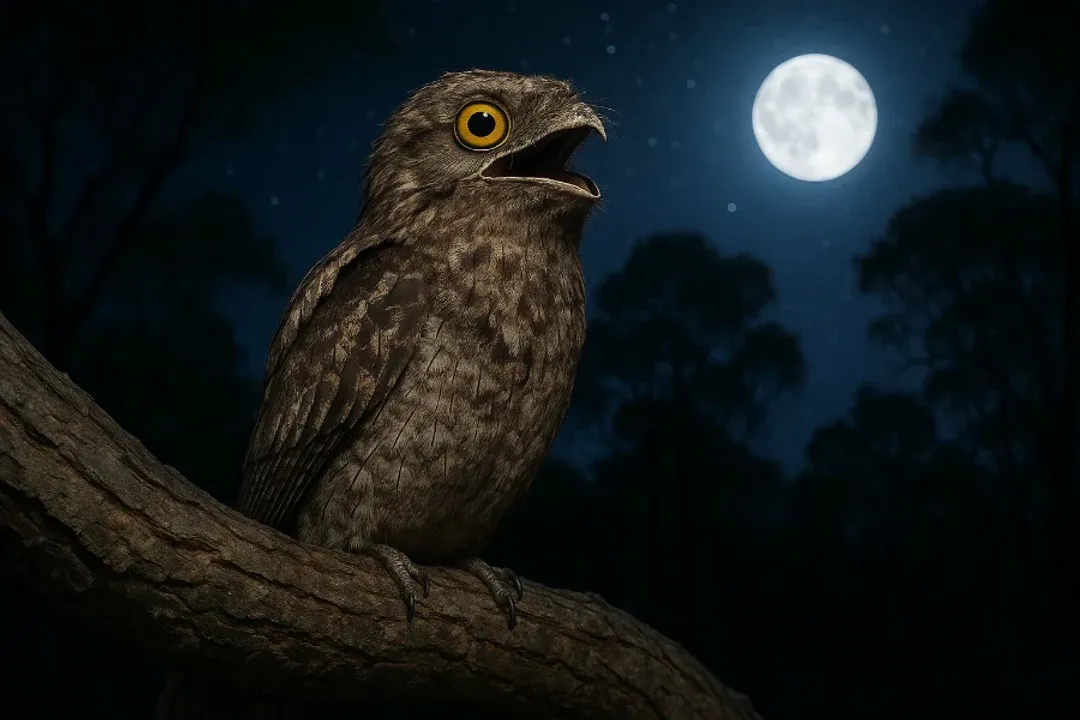
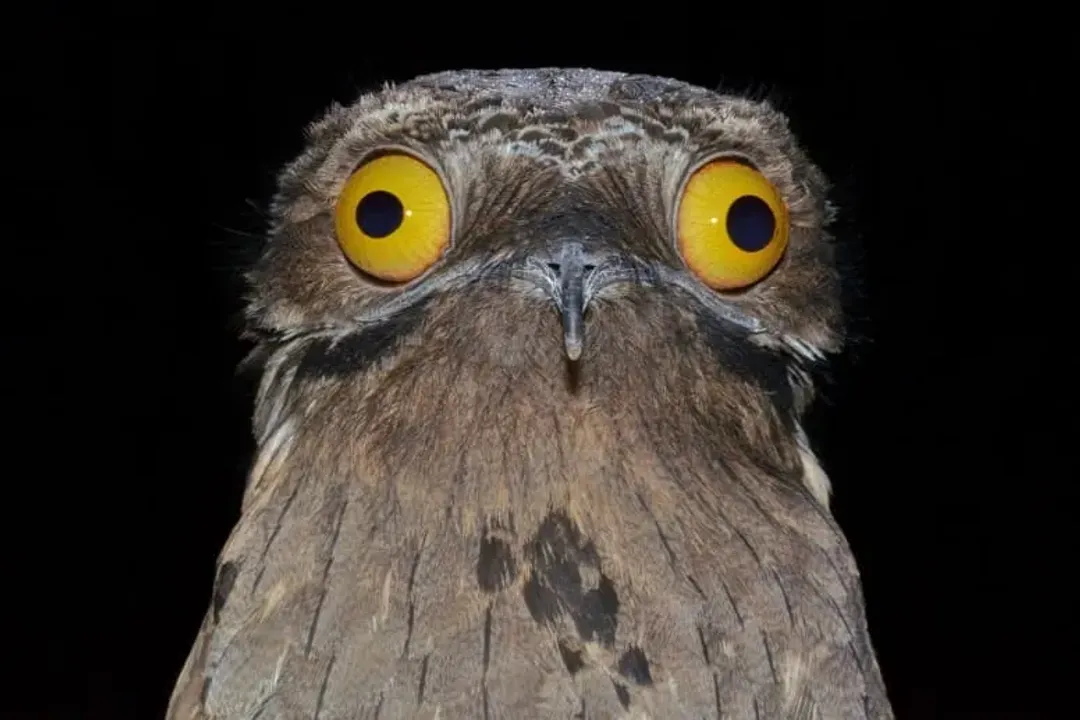
When the potoo is masquerading as a branch, the only feature that might betray its presence is its eyes. These birds possess remarkably large eyes, a clear adaptation for their nighttime lifestyle. However, during their daytime camouflage routine, they employ an incredible trick to conceal these tell-tale organs. They can partially close their eyes into narrow slits, which further enhances the illusion of a knot or imperfection on the wood rather than the glossy orb of a bird's eye.
Their mouth structure is equally bizarre and serves a very practical, predatory function. Potoos have a short beak but an extremely wide gape—the widest of any bird, in fact—which they can open dramatically. This mouth opens so wide it seems to encompass the entire front of the bird's face. This wide opening is perfect for their aerial insect-hawking style of hunting.
# Nocturnal Hunting
As nocturnal creatures, potoos emerge after sunset to feed. They typically employ a "sit-and-wait" foraging strategy, much like some nocturnal insectivorous birds. A potoo will perch silently on a high snag or branch and wait for flying insects—moths, beetles, and other large invertebrates—to pass by. When an insect is detected, the potoo darts out in a swift, clumsy-looking flight, captures the prey mid-air using its enormous mouth, and immediately returns to its perch to swallow the meal. This feeding method requires exceptional eyesight in low light, which their large eyes provide, and the wide gape is the perfect tool for snatching fast-moving targets.
# Vocalizations
While their visual uniqueness is what gains them notoriety, their calls are equally strange and are one of the defining sounds of the neotropical night. Potoos are known for their haunting, disembodied vocalizations. These sounds are often described as eerie whistles, mournful hums, or resonant, low-pitched calls that seem to carry for great distances through the forest. These calls help establish territory and communicate with mates, adding another layer to the bird's mysterious presence in the dark.
# Meme Status
In the digital age, the potoo's unusual appearance has propelled it to an unexpected form of celebrity: internet fame. The Great Potoo, in particular, has become the face of countless memes, largely due to images that capture its wide-eyed, somewhat forlorn or startled expression. This viral recognition has introduced the public to a species they might otherwise never have encountered, moving it from obscure ornithological fact to mainstream popular culture. This phenomenon highlights a modern interaction with wildlife, where a species' inherent strangeness becomes its greatest asset for visibility, even if the initial exposure is lighthearted.
To truly appreciate what makes the potoo unique, one must consider the complete package: an avian misidentified as an owl, possessing the camouflage skills of a lichen-covered stick, eyes built for darkness, and a mouth designed for aerial ambush, all capped off by an eerie nighttime voice and a surprising second career as an internet icon. They are a testament to the extreme and often comical forms evolution takes in the rainforest canopy.
#Videos
Potoos Are Hauntingly Cute - YouTube
Related Questions
#Citations
Potoos: Bizarre Nocturnal Birds Hiding in Plain Sight
I have never seen a Potoo Owl! Have you? ;) Thank you! Nature And ...
Potoos As An Internet Phenomenon - Tetrapod Zoology
Possibly its most well known characteristic is its unique moaning ...
…yes, more Great Potoo… | Three Star Owl - Three Star Owl
Potoos Are Hauntingly Cute - YouTube
Potoo birds: Derpy yet creepy masters of camouflage | by Dee Vortex
Potoo: The Ghost Bird of the Tropics | PeckPerk