What makes Barinasuchus unique?
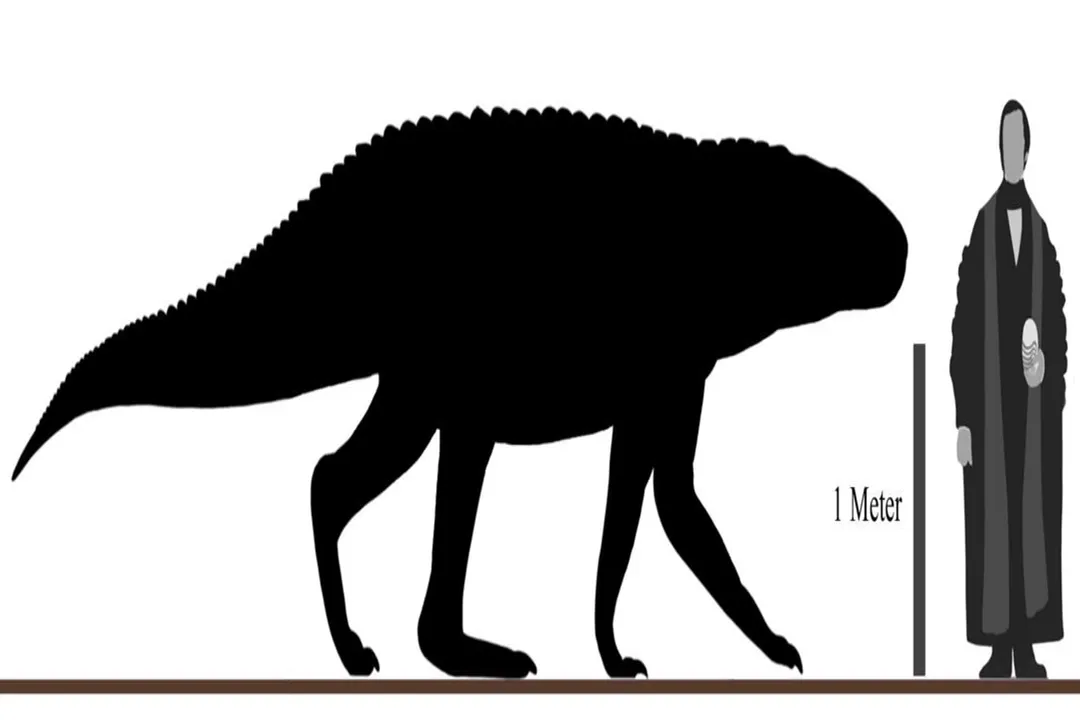
Imagine a crocodile that traded the swamp for the savanna, stood taller than most humans, and possessed teeth suited for shearing flesh like a giant theropod. This is not a creature from a lost world, but Barinasuchus, a prime example of how ancient reptiles bucked the trend of mammalian dominance during the Cenozoic era. While modern crocodiles are masters of aquatic ambush, Barinasuchus belongs to the Sebecidae family, a lineage of crocodylomorphs that evolved specifically to rule the land. [1][5]
Its very existence challenges our common perception of what a "crocodile" looks like and how it behaves. It was a spectacular final act for a very ancient group of reptiles, thriving millions of years after the dinosaurs fell. [5]
# Ancient Lineage
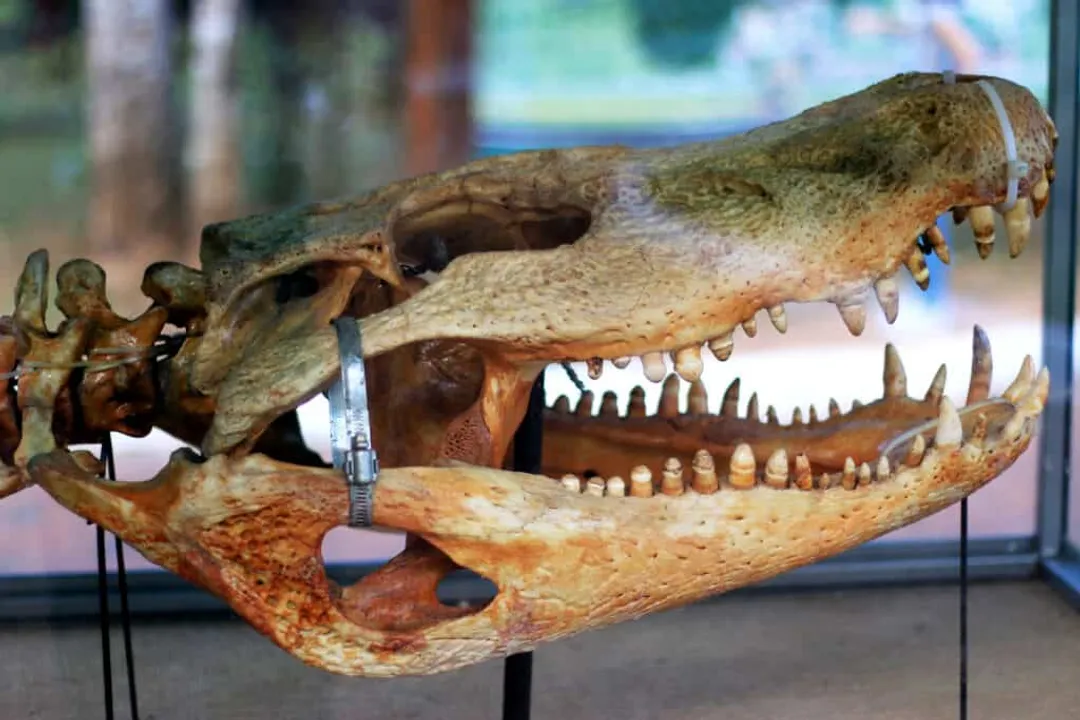
Barinasuchus—meaning "the Barinas crocodile," named for the Venezuelan location of its primary fossil discovery—is classified as an extinct mesoeucrocodylian within the Sebecidae family, itself a subgroup of the generally terrestrial Notosuchia. [2][3] These ancient archosaurs had a deep history, originating in the Triassic, an era often called the Age of Pseudosuchians. [5] When the dinosaurs took over, many pseudosuchians either became increasingly aquatic or smaller, but the notosuchian line maintained an active terrestrial lifestyle. [5]
The sebecosuchians, including Barinasuchus, represent a lineage that successfully re-occupied the large terrestrial predator niche left vacant, particularly after the K–Pg extinction event, when they initially stepped in alongside early mammals and competing archosaurs. [5] Barinasuchus arveloi, the single recognized species, appeared during the Middle Eocene and survived until the Late Miocene, roughly between 42 and 11.6 million years ago (Ma). [2][3] This means it reigned supreme in South America well into the Age of Mammals. [4]
# Running Anatomy
The most immediate feature setting Barinasuchus apart from its modern relatives is its terrestrial adaptation. [1] While we only possess partial remains, primarily the skull, comparisons with more complete sebecid relatives are vital for reconstruction. [3][5] Modern crocodiles possess sprawling limbs suited for short bursts of speed and powerful swimming, but Barinasuchus exhibited a fully upright stance with long legs positioned directly under its body. [4][5] This bauplan strongly suggests an animal built for sustained terrestrial movement—stalking and charging prey like a large mammal rather than lurking in the shallows. [5]
This dedicated locomotion meant its tail was likely more rounded in cross-section, making it poorly adapted for the lateral sweeps that propel modern crocs through water. [5] Furthermore, while the fossil record is frustratingly fragmentary—the original holotype was nearly destroyed during excavation, leaving only a partial snout and mandible [2][3][5]—the overall proportions inferred from relatives indicate a much taller shoulder height relative to its length compared to extant crocodilians. [5]
We can contextualize this adaptation by noting that while other contemporary giants like the enormous aquatic caiman Purussaurus dominated the waterways, Barinasuchus commanded the land. [1][3] It carved out its ecological role precisely where its aquatic cousin could not effectively hunt, creating a fascinating separation of apex roles within the same region. [5]
# Massive Scale
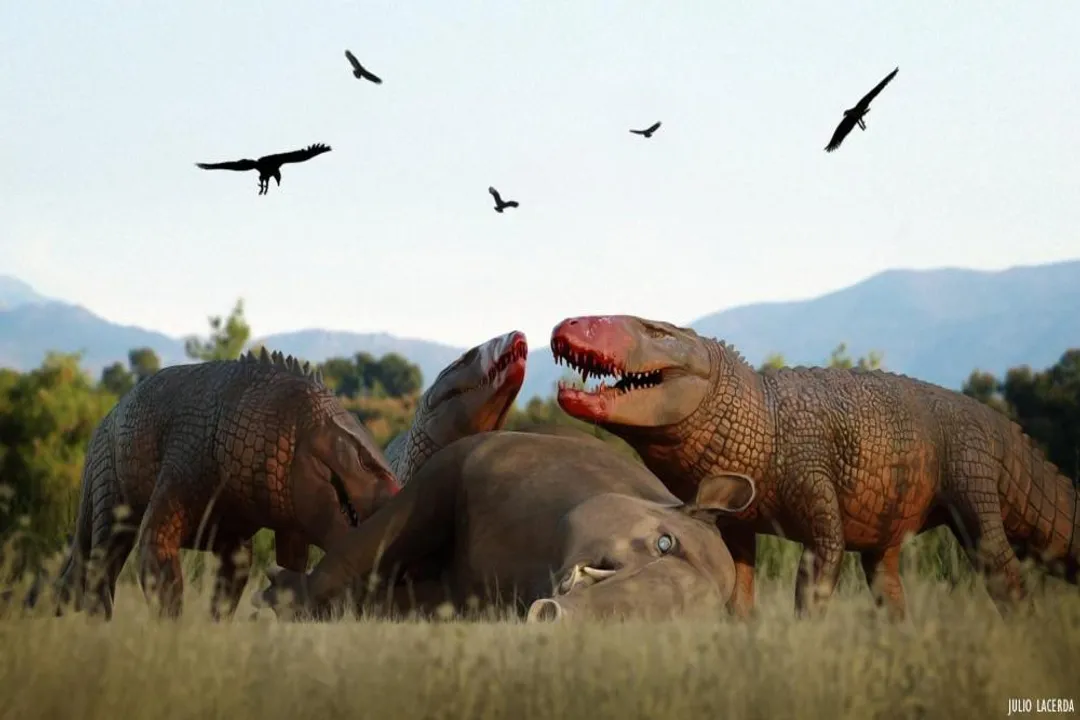
If the higher estimates hold true, Barinasuchus was an absolute behemoth. Early estimates based on proxies suggested a length between 6.3 to 10 meters (21 to 33 feet) and a mass in the range of 1,610 to 1,720 kilograms (3,550 to 3,790 lbs). [2][3] To put that weight into perspective, this surpasses any known terrestrial predatory mammal living today, comparable to a black rhinoceros. [2][3]
It’s important to acknowledge that paleontological estimates are constantly refined. Some newer analyses have suggested figures as low as 3–4 meters in length and 500 kg mass. [2] However, a closer look at the source of these lower figures reveals they often stem from using the measurement of only a partial skull fragment as the basis for scaling the entire animal, which has since been recognized as a method prone to severe underestimation. [5] Based on the known proportions of the holotype skull—around 70 cm preserved, likely scaling up to nearly 1 meter in total length—the higher weight estimates (well over 1,000 kg) seem far more consistent with its overall structure and the known proportions of its relatives. [5] This massive animal likely held the title as the largest terrestrial predator of the Cenozoic era. [4][7]
# Two-Stage Teeth
Perhaps the most unique aspect of Barinasuchus's predatory toolkit, aside from its leg structure, was its jaw weaponry. It possessed a set of teeth unlike the uniform pegs of modern crocodiles. [4] Its dentition was heterodont, meaning it exhibited multiple tooth morphologies, a characteristic more commonly associated with dinosaurs or mammals. [2][5]
The teeth served a specialized, two-part function:
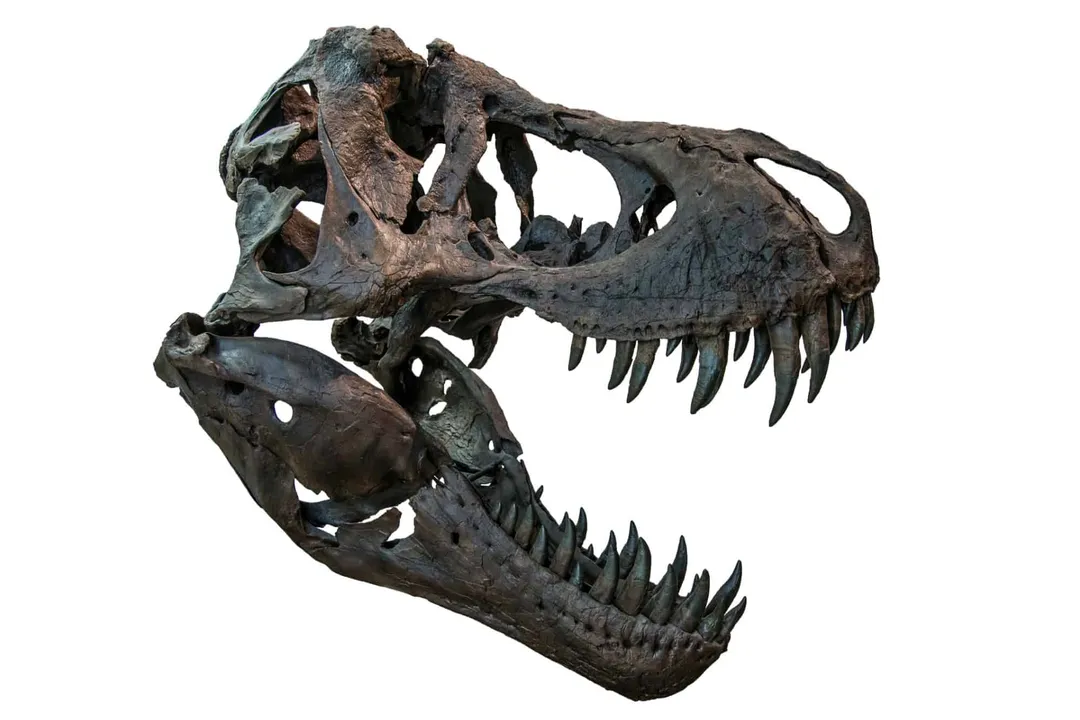
- Seizing and Holding: The teeth at the very front of the jaws (premaxilla and anterior maxilla) were longer and more conical, similar to the incrassate teeth of some tyrannosaurids, designed to seize and hold struggling prey. [2][5]
- Shearing and Slicing: The remaining teeth were ziphodont. [4] Ziphodont teeth are laterally compressed, blade-like, serrated along the edges, and curved backward—perfectly evolved to rip flesh away from bone, much like those found in large, non-avian theropods like Allosaurus. [1][5]
The mechanics of this bite are fascinatingly complex. The upper jaw featured a prominent notch between the premaxilla and maxilla that perfectly accommodated the very large fourth mandibular tooth. [2][5] This suggests a targeted, powerful final engagement. The animal could first clamp down using its front teeth to gain purchase and drag its target, then bring its shearing teeth into play to inflict massive, rapid blood loss and tissue damage. [5] This combination—the powerful grip of a tyrannosaurid combined with the shearing capacity of an allosauroid—represents a high degree of specialization for hypercarnivory on land. [5]
# Apex Niche
Living across what is now Argentina, Peru, and Venezuela during the Miocene, Barinasuchus was unquestionably an apex predator in its environment. [1][4] Its prey base would have been the large, somewhat slow-moving mammals endemic to South America, known collectively as meridiungulates. [3][5] This included groups like the camel-like Macrauchenia, giant rodents like Phoberomys, and primitive ground sloths (Hapalops). [1]
Crucially, Barinasuchus was large enough to target the continent's heaviest herbivores, such as the massive, tusked astrapotheres (like Granastrapotherium), which might have been too large or robust for the contemporary "terror birds" (Phorusrhacids) to handle consistently. [5] While its competitors included the jaguar-sized sparassodont Dukecynus and the terror birds, the sheer mass and predatory specialization of Barinasuchus likely placed it at the very top of the terrestrial food chain. [3][5]
An interesting ecological counterpoint is its relationship with the massive aquatic caiman, Purussaurus. While Purussaurus was potentially heavier in total mass, its lifestyle was centered on lakes and rivers. [1][3] This means that on dry land, where Barinasuchus lived and hunted, it faced little real competition from the water-bound giant, allowing this terrestrial crocodylomorph to maintain its dominance. [5]
# Environmental End
The ultimate fate of Barinasuchus was not a rival predator, such as the emerging placental carnivores that would arrive later with the joining of the Americas. [5] Instead, its end—around 12 million years ago—was dictated by global geological upheaval. [3][4]
The cooling and drying climate trend that affected the world was amplified in South America by the uplift of the Andes Mountains. [3][5] This geological action caused massive ecological disruption: the huge, humid Pebas Mega-Wetland system that covered much of northern South America slowly drained into the Atlantic. [2][3][5] As lush forests and wetlands shrank and were replaced by drier, more open habitats, the specialized environment that supported massive herbivores like the astrapotheres disappeared. [5] As an apex predator highly dependent on a stable, resource-rich ecosystem, Barinasuchus was highly susceptible to this drastic change, leading to its extinction along with many other South American specialists. [2][3]
The story of Barinasuchus is a powerful reminder that evolution often takes surprising turns. For a time, long after their reign ended in the Triassic, the terrestrial crocodilian forms staged a comeback, culminating in the largest land predator of the Age of Mammals—a testament to the sheer adaptability and raw power residing within the Archosaur group. [5]
#Videos
Barinasuchus: The Reptile That Was The Largest Terrestrial ...
Related Questions
#Citations
Barinasuchus - Barinosuchus arveloi - A-Z Animals
Barinasuchus - Wikipedia
Barinasuchus: The land croc that ruled in the Age of Mammals - Reddit
Barinasuchus - Speculative Evolution Wiki - Fandom
Barinasuchus: The Reptile That Was The Largest Terrestrial ...
Barinasuchus:The largest land predator since the trex - ARK News
Barinasuchus | Dinopedia - Fandom