What pair of ecosystems was genetically distinct enough to act as a contemporary barrier to gene flow in the White-crowned Sparrow?
Answer
Alpine coniferous (AC) and riparian deciduous (RD) habitats
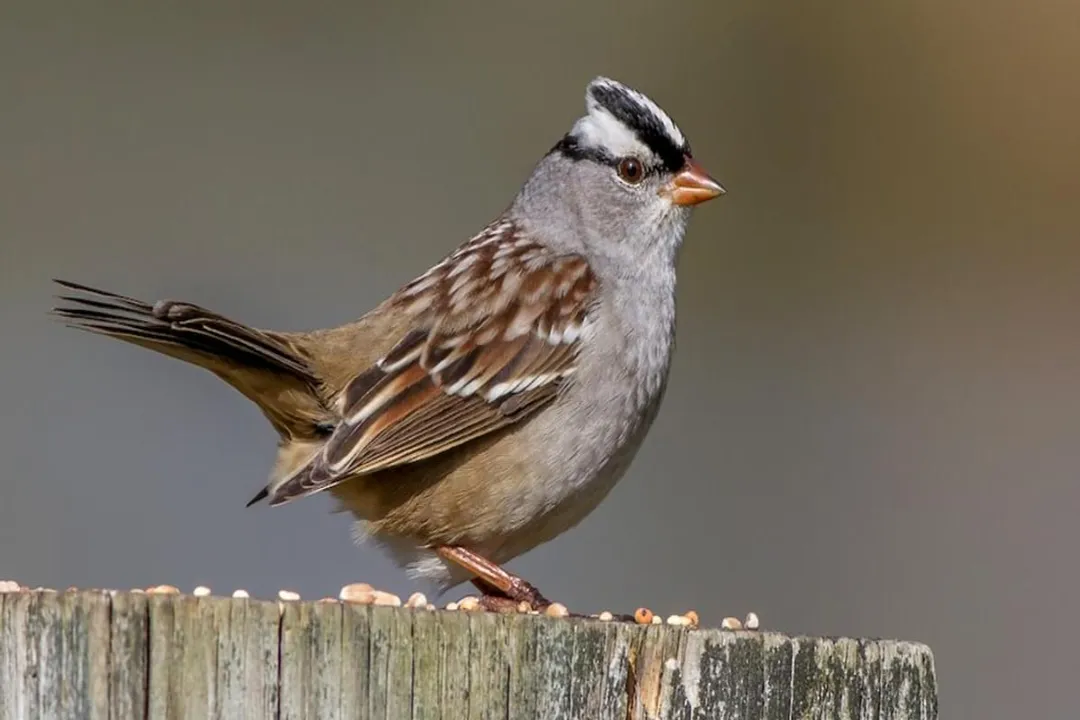
Evolutionary studies demonstrated that the type of ecosystem, rather than just physical distance, could act as a significant barrier to gene flow at a finer scale. Sparrows sampled from Alpine Coniferous (AC) environments showed significant genetic separation from those found in Riparian Deciduous (RD) habitats, even when these areas were geographically proximate. This partitioning suggests strong selection pressures related to local adaptation, such as food availability or microclimate, maintaining genetic differences between populations utilizing these distinct habitats.
Related Questions
What do the Greek components of *Zonotrichia leucophrys* signify about the bird's features?What field marks help distinguish the White-crowned Sparrow from the White-throated Sparrow?Which of the five recognized White-crowned Sparrow subspecies resides permanently along the California coast?What pair of ecosystems was genetically distinct enough to act as a contemporary barrier to gene flow in the White-crowned Sparrow?How did the morphology of sparrows sampled from deciduous ecosystems compare to those from coniferous areas?What genetic markers suggested four main genetic groupings across the rangewide scale in western subspecies analysis?What geographical feature was overcome by gene flow, evidenced by adjacent northern populations showing no genetic difference despite the barrier?For the highly migratory *Z. l. gambelii*, which principle dominated the rangewide pattern of genetic structure?What immediate, rapid behavioral evolution occurred in San Francisco sparrows following the COVID-19 pandemic noise drop?What specific physical characteristics distinguish the *Z. l. pugetensis* subspecies from others, such as *gambelii*?What does the strong site-fidelity and requirement for specific montane conditions suggest about the genetic influence on *Z. l. oriantha*?