White-Crowned Sparrow Physical Characteristics
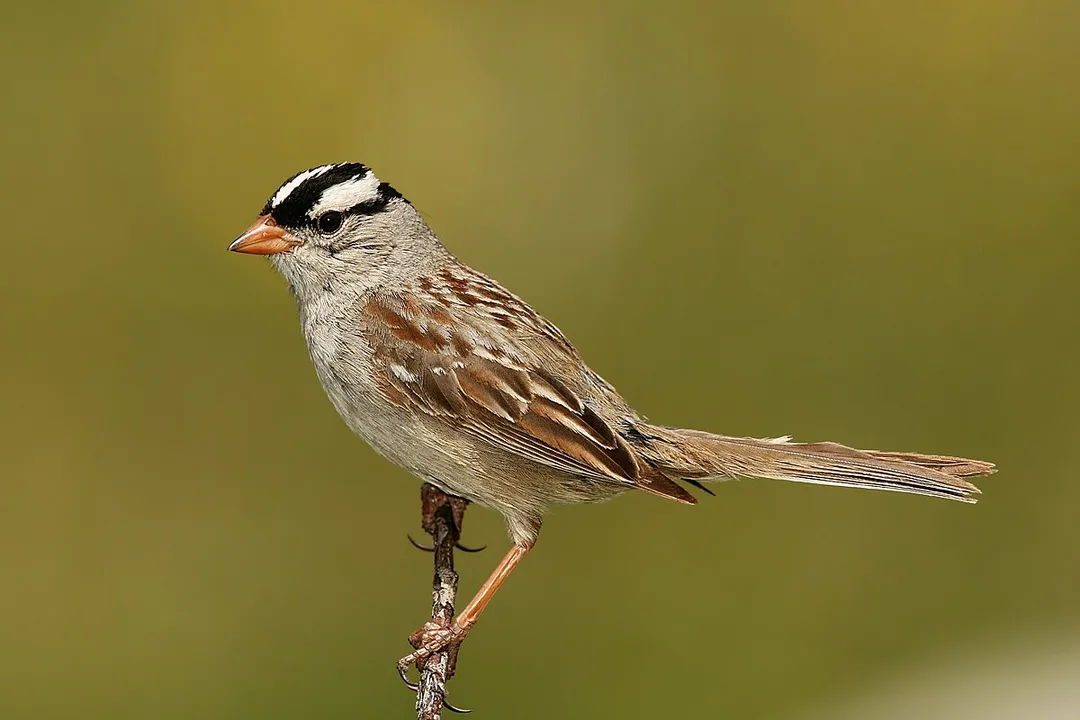
The White-crowned Sparrow is one of North America’s most recognizable and widespread small birds, immediately identified by the bold, unmistakable pattern emblazoned across its head. While often grouped with other streaky brown sparrows, this species possesses a distinct architecture that sets it apart from nearly all its relatives in the field. [2][3] An adult bird typically measures between 6 and 7.5 inches in length, boasting a relatively stout body structure for a sparrow, though it is smaller than a Robin. [1][4] Its overall impression is one of grayish-brown mottling on the back and wings, contrasted sharply by a clean, pale breast and belly. [2]
# Crown Stripes

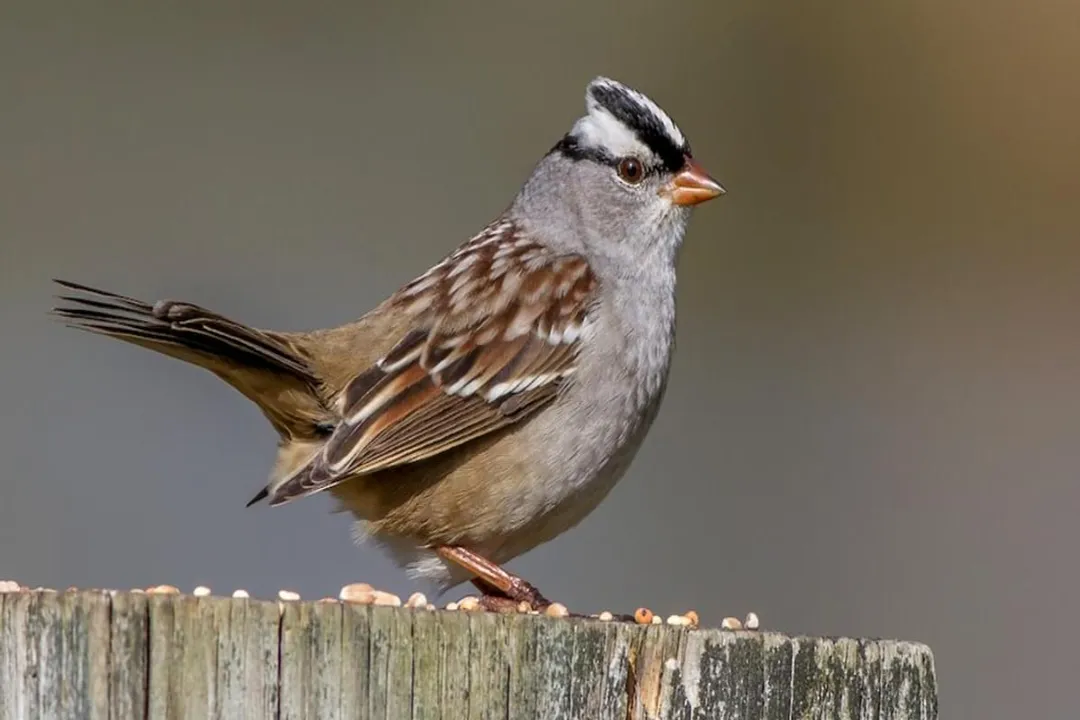
The defining physical characteristic is undoubtedly the crown—the patch of feathers atop the head. [1][2] In adult breeding plumage, this area features alternating stripes of black and white that run from the base of the bill back toward the nape. [1][3] Specifically, there are five primary stripes visible: a central white stripe, flanked on either side by a black stripe, which is then bordered by a thinner white stripe, and finally, the outermost stripe being black, meeting the gray sides of the head. [1] This high-contrast pattern serves as an essential identification marker, especially when binoculars bring the bird into clearer view. [2]
However, not all adults look identical year-round, nor do all individuals sport the same pattern. [1] The White-crowned Sparrow is actually comprised of several distinct subspecies, and while all share the fundamental black and white striping, the width and intensity of these stripes vary geographically. [1] For instance, some western subspecies exhibit broader black stripes, creating a bolder, more dominant head pattern, whereas others may have narrower, somewhat less pronounced markings. [1] Think of it like variations on a classic theme; the theme is the crown, but the execution differs based on location. [3]
# Body Coloration
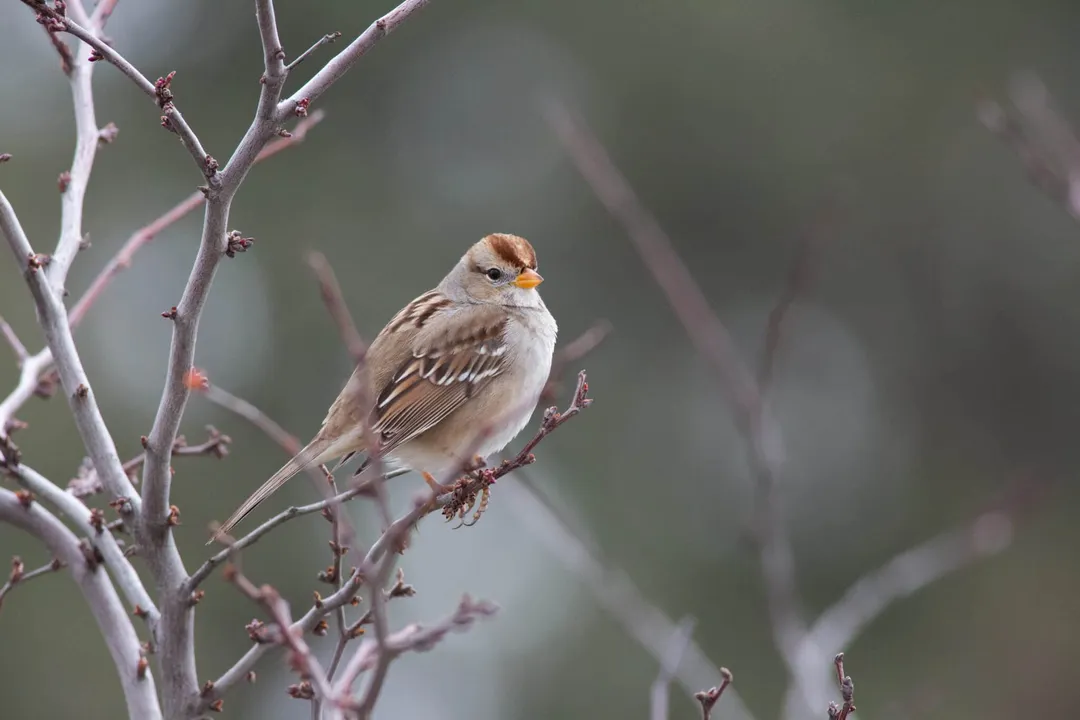
Away from the striking head, the rest of the body plumage is much more subdued, relying on texture and soft coloration rather than sharp contrast. [2] The back and wings are a mixture of brownish-gray streaking over a lighter base color. [1][3] This streaking provides excellent camouflage among the brushy habitats where they often forage. [3] The breast and belly generally present as a plain, pale gray, often lacking the heavy streaks found on many other sparrow species, such as the Song Sparrow. [1][2] This clean underpart is a critical field mark. If you see distinct, heavy streaks running down the flanks or across the breast in a thick central spot, you are likely looking at a different sparrow species. [2]
The wings display two noticeable pale wing bars, formed by the tips of the median and greater coverts. [1][3] These bars are usually whitish or buffy and stand out against the darker wing feathers. [2] The rump is typically a uniform grayish-brown. [1]

# Bill and Legs
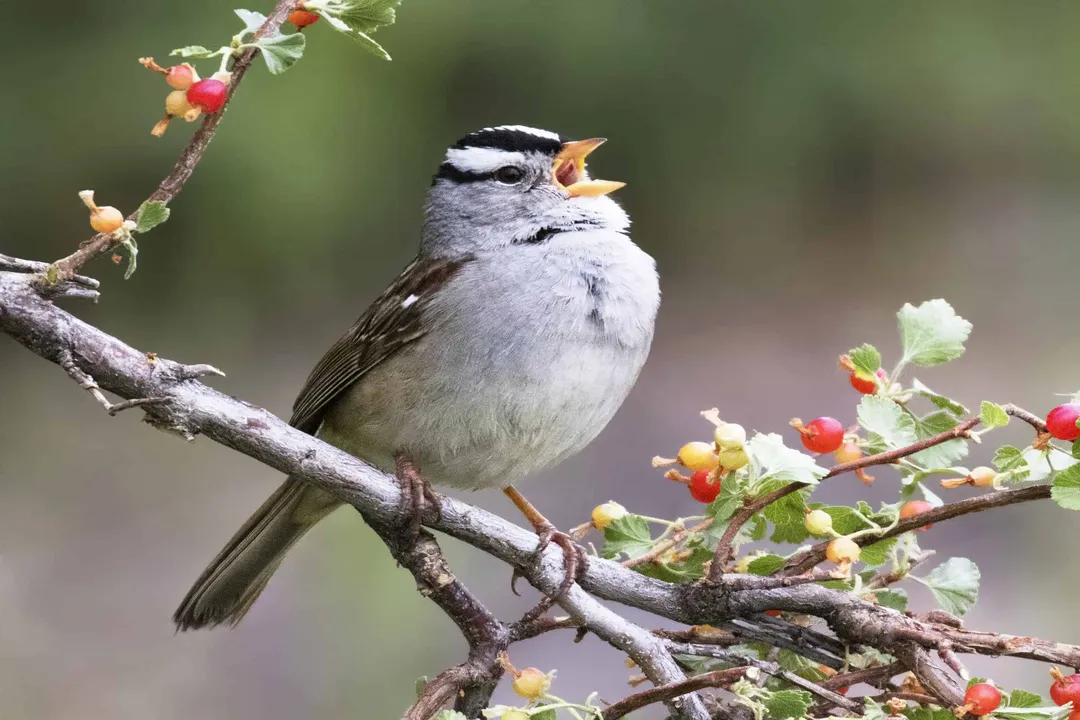
The bill structure is relatively thick and conical, typical of seed-eating birds, yet it is often described as somewhat pale or pinkish-gray, especially in breeding adults. [1][3] This paler bill contrasts subtly with the darker markings around the eye and face. [1] The legs and feet are generally a pale pinkish-flesh color. [2][3] Observing the leg color can sometimes aid in differentiating this species from close relatives, particularly during migration when the bird’s head pattern might be obscured by shadow or angle. [4] In the field, noticing that clean, pale leg tone can be just as helpful as identifying the crown stripes, especially if the bird is partially hidden in low vegetation. [3]
# Immature Look
Juvenile White-crowned Sparrows present a marked difference from the crisp adults, reflecting the needs of camouflage for young birds still learning to navigate the world. [1][3] Young birds lack the sharp black and white crown pattern of their parents. [1] Instead, their crown is a dull, buffy-brown color, heavily streaked with darker brown or black markings. [1][3] This streaking extends down onto the face and breast, giving them a generally browner, less contrasted appearance overall. [3] The breast is noticeably streaked, much more so than in the adult, helping them blend into the ground cover where they spend much of their time searching for insects and seeds. [1]
As the juvenile matures toward its first winter plumage, the head pattern begins to sharpen. The buffy crown starts to resolve into clearer, though still often duller, white and black bands. [1] It takes the full development of the first prebasic molt before the bird achieves the definitive, high-contrast adult pattern seen during the breeding season. [1] If you encounter a sparrow in the fall with a somewhat messy crown—a mix of dull white, gray, and brown streaks—you are likely observing a bird transitioning from its juvenile to its first-year adult appearance. [1][3]

# Size Variance
While the average size is consistent, there is some slight variation based on subspecies and sex. [1] Generally, males and females are very similar in size and appearance—they exhibit little to no obvious sexual dimorphism in plumage, meaning you cannot reliably tell male from female just by looking at the crown stripes or body color. [1][2] Any minor size differences are subtle, typically requiring measurement to confirm. [1] The tail is relatively short and slightly notched, and the overall posture when perched is usually upright. [3]
One intriguing aspect of size perception is how environmental factors can influence apparent size. Birds in the far north (like the Gambel’s subspecies) tend to be slightly larger overall than those found further south, a phenomenon known as Bergmann's rule, which relates to thermoregulation—a larger body mass helps retain heat in colder climates. [1] Although you won't measure them in the field, understanding this subtle geographic trend adds a layer of depth to identification when observing birds across their vast migratory and breeding ranges. [1]
# Subtle Distinctions
Given the sheer number of brown sparrows found across North America, focusing too much solely on the crown can sometimes lead to misidentification if the bird is partly obscured. [3] It is useful to remember two subtle, non-crown characteristics for quick confirmation. First, White-crowned Sparrows typically have a relatively plain face, often showing a pale eye-ring that is not heavily streaked or masked, distinguishing them from highly streaked species like the Savannah Sparrow. [2] Second, their wing feather edging often produces a paler, buffy wash on the edges of the tertials and scapulars, which can catch the light even when the bird is hunkered down. [1] While the primary field mark is the head, these supporting details—the clean breast, the pinkish legs, and the wing feather tones—all work together to paint a complete physical picture of the species. [2][4] When observing a new bird, quickly ticking off three distinct physical confirmations rather than relying on just one feature provides a much higher degree of certainty in identification. [3]
Related Questions
#Citations
White-crowned Sparrow Overview ...
White-crowned Sparrow | Audubon Field Guide
White-crowned sparrow
Zonotrichia leucophrys (white-crowned sparrow)
White-Crowned Sparrow Bird Facts - Zonotrichia leucophrys
White-crowned Sparrow - Zonotrichia leucophrys
white-crowned sparrow
White-crowned Sparrow
Identify white-crowned sparrow species?