How to identify a white-crowned sparrow?
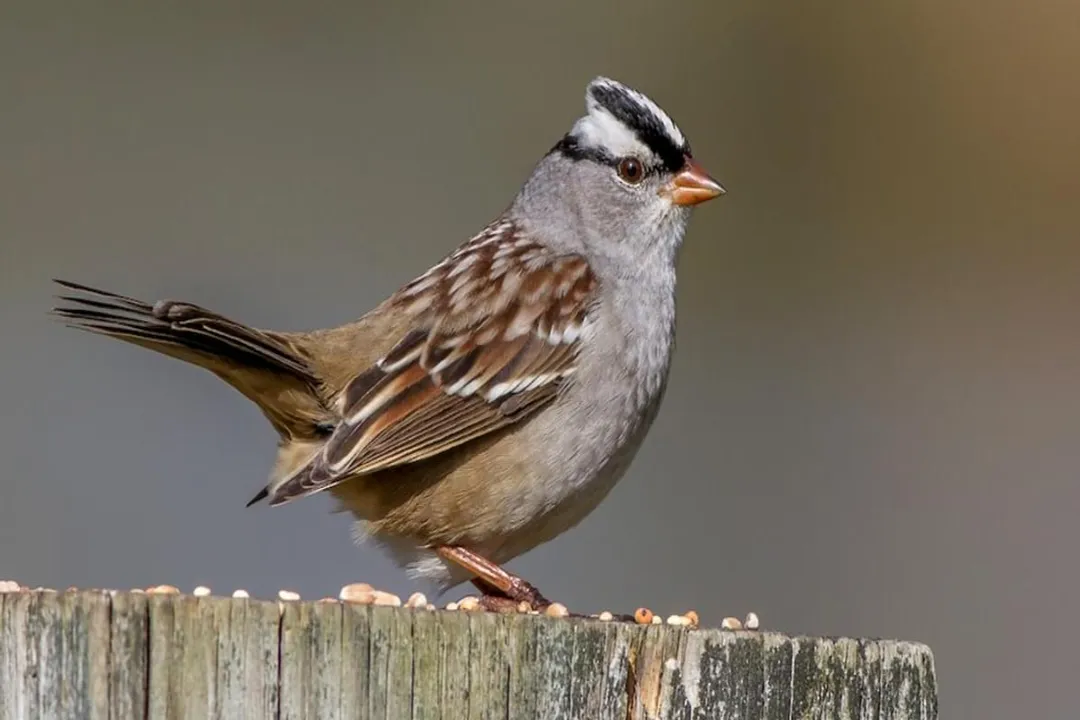
The White-crowned Sparrow presents a striking profile among North America's often brown and streaky sparrows, making its identification relatively straightforward once you know what to look for. This bird is widespread, found across much of the continent depending on the season, but its distinct head pattern acts like a neon sign pointing directly to its name. [2][5] Distinguishing it from other Zonotrichia sparrows, like the similarly marked White-throated Sparrow, requires careful attention to the fine details of the head and bill coloration. [1]
# Striped Crown
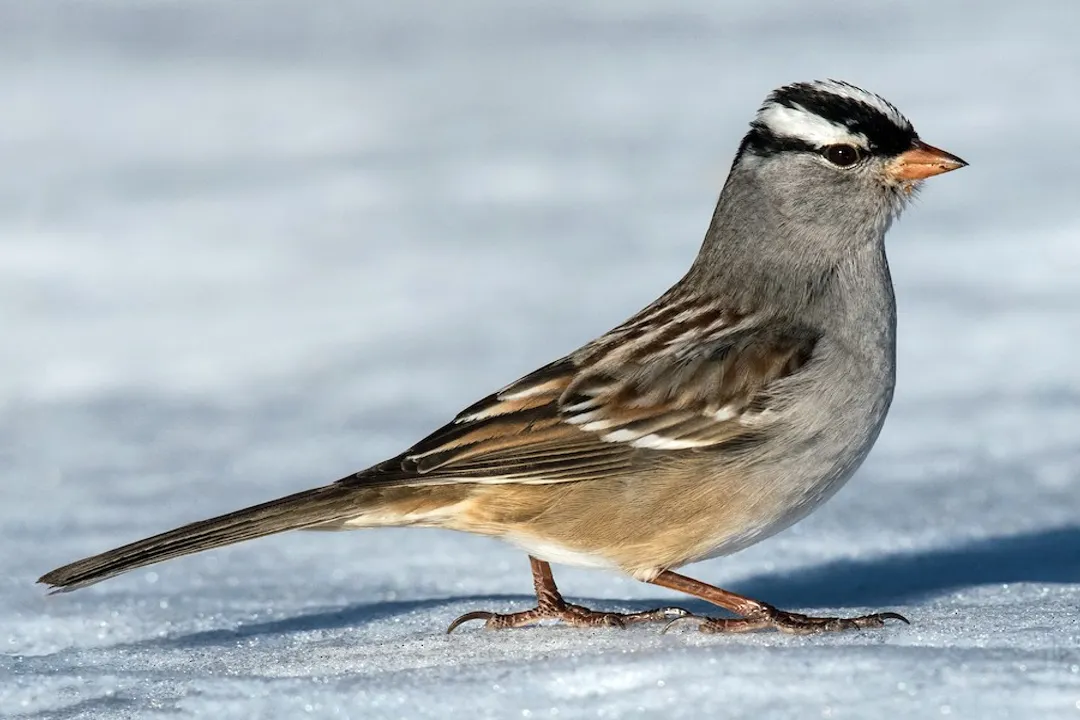
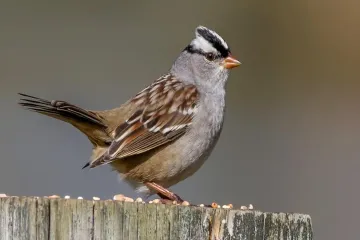
The key diagnostic feature, the one that gives this bird its common name, is the bold pattern on its head. [3][8] Adults possess a distinct, high-contrast crown featuring five prominent stripes: a white central stripe bordered by two thick black stripes on either side. [1] This stark black-and-white striping is unmistakable in a good view and immediately separates it from most other sparrow species found in feeding areas or brushy cover. [8]
However, not all individuals display this perfection. This is where field experience becomes useful. The pattern can look slightly different based on which subspecies you are observing, particularly across the West where different forms overlap during migration. [1][5]
# Color Differences
While the adult pattern is crisp, age and subspecies dictate significant variation. Juvenile White-crowned Sparrows look dramatically different from the adults they will soon replace. [5] Young birds lack the clean stripes; instead, their crowns are washed with buff or brownish tones and show streaking rather than solid blocks of black and white. [1] If you see a sparrow with a generally grayish head but with messy, brownish streaks where sharp lines should be, you are likely looking at a first-year bird. [5]
Comparing the two main types seen across North America offers another layer of identification. The nominate subspecies, often found breeding in the Great Basin and Rocky Mountains, typically exhibits broader black stripes flanking the white ones. [1] The Gambel's Sparrow, which breeds in the far north and migrates through much of the continent, tends to show narrower black stripes with an intermediate brownish or grayish wash evident in the white stripes themselves. [1] If you are observing a bird during migration far from a known breeding ground and notice faint, dusky streaking within the white stripes, favoring the Gambel’s look, it suggests you are seeing one of the more widespread migratory forms rather than the nominate adult breeding in the west. [1][5]
# Build Details
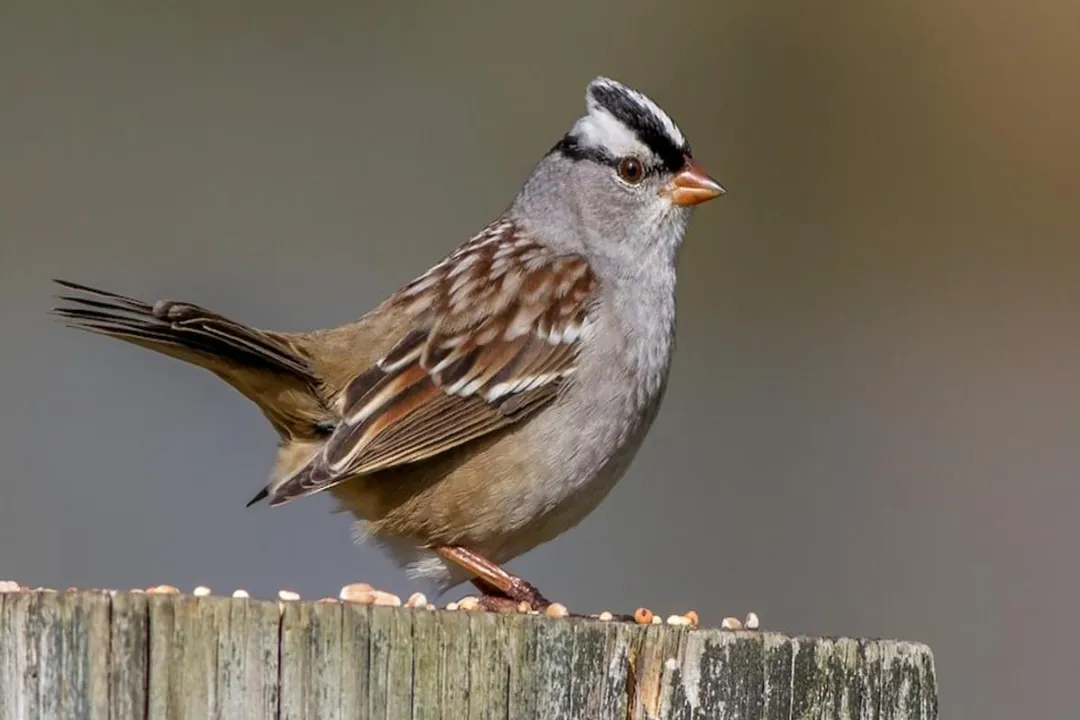
Beyond the head, the overall body structure assists in identification. The White-crowned Sparrow is a medium-sized, rather stocky sparrow, generally larger than a Song Sparrow. [2][7] Its body plumage is generally grayish-white on the underparts and grayish on the head and breast, contrasting with brownish, streaked back and wing feathers. [1][3]
One of the most useful features, especially when trying to separate it from the similar White-throated Sparrow, is the bill. [1] The White-crowned Sparrow has a noticeably stout, conical bill that is pale—often appearing pinkish or yellowish in the field. [8] The White-throated Sparrow, by contrast, usually has a darker, grayish bill. [1] Furthermore, the White-crowned generally lacks the bright white throat patch that the White-throated species prominently displays, though both have white in their head pattern. [1][3]
If you are in an area where you observe both House Sparrows and White-crowned Sparrows at a feeder, look instantly at the bill and crown. The House Sparrow wears a dull, dusty brown cap, lacking any true black and white striping, and its bill is dark. [8] The White-crowned's bold, high-contrast head pattern and pale bill offer a clear break from the drabber House Sparrow. [8]
# Identifying Song
If you cannot get a clear view of the head stripes, the song is the next best identifier. The White-crowned Sparrow has a beautiful, relatively slow, and distinctly whistled song. [2][6] It is clear, melodic, and composed of several rising or falling whistles that sound quite deliberate. [1] Field guides often describe the song as sounding like a series of clear, ringing notes, sometimes memorized as something akin to "Oh sweet, sweet, sweet, Canada, Canada". [1][6]
This contrasts with the song of the White-throated Sparrow, which is often described as a clearer, slurred whistle, usually phrased as “Oh sweet Canada, Canada, Canada”. [1] While both are whistled, the White-crowned’s song tends to be a bit more hesitant and spaced out compared to the more continuous phrasing of its cousin. [1] When not singing, their common contact call is a sharp, metallic chink note, often given rapidly when agitated or moving through thickets. [2]
# Where Found
Understanding where and when you encounter this bird drastically narrows down the possibilities. The White-crowned Sparrow breeds primarily in the northern reaches of the continent, favoring open areas with scattered low shrubs, clearings, and the edges of boreal forests across Alaska, Canada, and high elevations in the American West. [2][5]
When winter arrives, these northern populations travel great distances southward. [3] They are found across the southern half of the United States and into Mexico during the non-breeding season. [5][10] During migration, they are highly adaptable, utilizing almost any habitat that offers adequate cover, including suburban gardens, parks, roadside brushy areas, and, most commonly, backyard bird feeders. [3][8] Seeing one during the winter months in the lower 48 states is expected; seeing one in the summer outside of high mountain ranges or the far north suggests it might be a localized resident or a rare outlier. [2]
# Field Checklist
Putting the visual and auditory cues together creates a reliable identification sequence. When you spot a sparrow that seems promising, run through this mental checklist:
- Crown Pattern: Is it a clean black and white stripe, or is it buffy and streaky (juvenile)? If it’s clean, proceed.
- Bill Color: Is the bill pale, pinkish, or yellowish? If yes, this strongly favors White-crowned over many other sparrows, including the darker-billed White-throated Sparrow. [1][8]
- Throat: Is there a bright, clear white patch on the throat? If yes, it's likely a White-throated Sparrow, not a White-crowned. [1]
- Vocalization: Can you hear a slow, clear, whistled song? If so, confirm the species based on the song structure. [2]
In practical terms for a beginning birder working near a busy feeder in winter, the combination of pale bill + stark black/white head stripes + gray face/breast is the fastest route to confirming a White-crowned Sparrow. [8] If you are observing in the Southwest during spring migration and the bird seems slightly smaller with less contrast on the head, remember that subspecies variation is real, but the fundamental striped crown rule remains the constant identifier across the species range. [1][5]
#Videos
Identify Birds: White-crowned Sparrow vs White-throated ... - YouTube
Related Questions
#Citations
White-crowned Sparrow Identification - All About Birds
White-crowned Sparrow | Audubon Field Guide
Young white-crowned sparrow identification - Facebook
White-crowned sparrow - Wikipedia
Bird Guide: White-crowned Sparrow - Alaska Songbird Institute
Meet the White-crowned Sparrow - Sacramento Audubon Society
Meet the White-Crowned Sparrow - Birds and Blooms
Identify Birds: White-crowned Sparrow vs White-throated ... - YouTube
White-crowned Sparrow Zonotrichia leucophrys - eBird