Woodpecker Physical Characteristics

The woodpecker family, known scientifically as Picidae, represents a fascinating group of birds renowned for their specialized methods of foraging and nesting high up on trees. Their physical makeup is a spectacular demonstration of evolutionary fine-tuning, perfectly equipping them for an arboreal lifestyle centered around drilling into wood. Across the globe, this family encompasses more than 200 species, all sharing core anatomical features that distinguish them from other avian groups.
# Clinging Feet
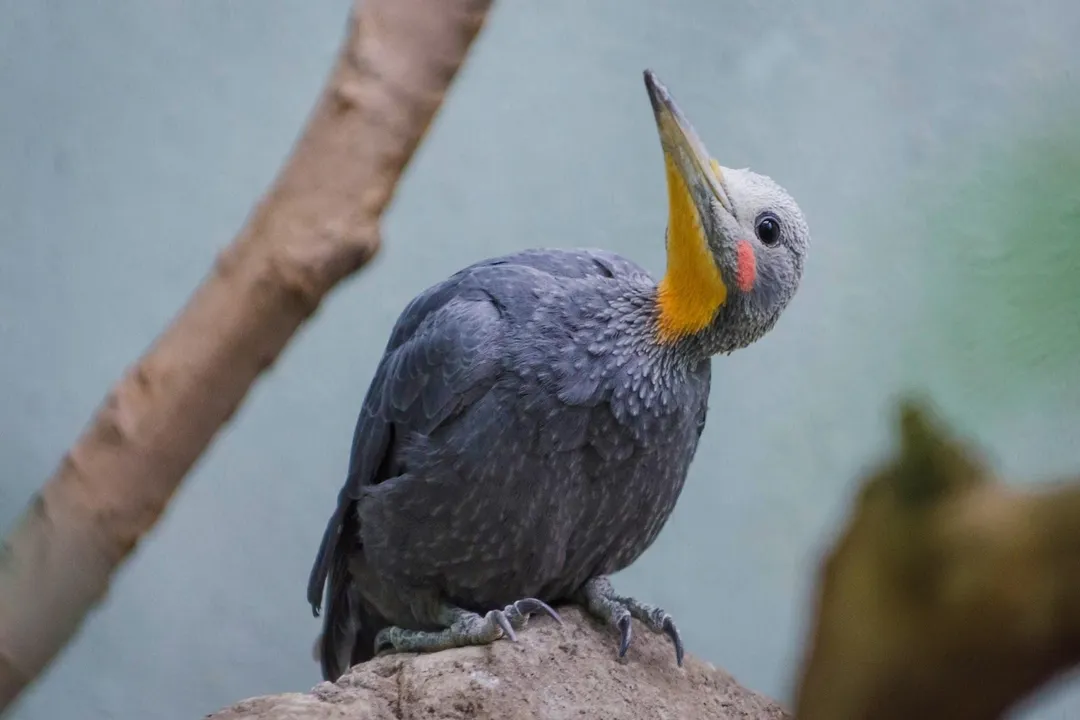
One of the most immediate adaptations visible when observing a woodpecker is its foot structure, which is supremely adapted for clinging vertically to bark surfaces. Woodpeckers possess zygodactyl feet, meaning they have two toes pointing forward and two toes pointing backward. This arrangement provides an exceptionally secure grip, allowing them to brace themselves against the trunk while hammering away. While many birds have three toes forward and one back (anisodactyl), the backward-pointing toe, or hallux, is critical for the woodpecker's stability during its characteristic head-down or head-up hammering activities.
This unique toe configuration works in concert with another key feature: the stiff tail feathers.
# Supportive Tail

The tail feathers of woodpeckers are generally shorter and stiffer than those found on many other bird species. These feathers are not used primarily for flight control in the typical sense while clinging, but rather function as a prop or brace. When a woodpecker clings to a vertical surface, it presses the rigid tail feathers against the wood, creating a tripod-like support system with its zygodactyl feet. This three-point contact allows the bird to absorb and direct the intense impact forces generated during drumming or excavating activities. The strength and rigidity of these tail feathers are essential components of their physical toolkit for climbing and woodworking.

# Specialized Head

The mechanics of how a woodpecker strikes wood at high speeds without suffering brain damage is perhaps the most studied aspect of its physical characteristics. Their skulls are marvelously engineered to manage these repetitive, high-impact forces.
# Skull Reinforcement
The avian skull has several adaptations that serve as natural shock absorbers. The bone structure is unusually thick and dense, providing inherent protection. Furthermore, the architecture includes spongy, specialized bone tissue located between the bird’s outer and inner skull tables. This tissue acts much like the crumple zones in a car, dissipating the kinetic energy generated by the beak striking wood. The skull bone density in birds like the Pileated Woodpecker can be significantly higher than in other birds of comparable size.
Another fascinating aspect involves the hyoid bone apparatus, which supports the tongue, but also plays a subtle role in cushioning, as the tongue apparatus is wrapped around the skull. The way the brain itself sits within the skull is also cushioned by cerebrospinal fluid, further dampening the shockwaves before they reach the vital tissues.
# Powerful Neck Muscles
To generate the necessary force for drilling, woodpeckers require substantial muscle power. They possess very strong neck muscles attached to their robust skulls. These muscles enable the rapid acceleration and deceleration required for the percussive action of drilling. The force exerted can be considerable; estimates suggest that a woodpecker’s head can decelerate at speeds up to 1,200 times the force of gravity (G-force) during impact, which highlights the necessity of their specialized bony and muscular protection.
# The Chisel Bill

The bill, or beak, is the primary tool for excavating wood, yet it is not a single, uniform structure like that of a typical seed-eater. Woodpecker bills are strong, straight, and chisel-tipped.
# Bill Structure and Wear
The beak is constantly being sharpened and maintained through use. The outer layer of the beak is extremely hard, providing a durable cutting edge. As the bird hammers, the tip wears down, but the underlying bone continues to grow, maintaining a sharp edge, similar to how a human fingernail grows. This constant renewal is vital, as the bird may strike wood thousands of times in a single day when excavating a nest hole or foraging for insects.
Comparing species can reveal subtle differences in bill use. For instance, while many woodpeckers excavate wood for nesting or feeding, some specialized species might use their bills more for drumming on resonant surfaces to communicate rather than deep drilling. The Pileated Woodpecker, for example, is known for creating large, rectangular holes in trees while searching for carpenter ants, necessitating a very powerful, heavy-duty bill.

# The Tongue Adaptation
If the bill is the chisel, the tongue is the specialized retrieval tool, arguably one of the most unique physical features of the family. Woodpecker tongues are long, thin, and extremely flexible, often extending far beyond the tip of the bill when deployed.
# Tongue Morphology
The structure varies significantly between species, but generally, the tongue is equipped with tiny, rearward-pointing barbs or filaments, particularly near the tip. These barbs help grip and secure slippery insect prey, such as ants or beetle larvae, once they are located deep within the wood channels. In many species, the tip of the tongue is also hardened or slightly barbed to aid in piercing or adhering to the insects.
The remarkable length is achieved because the hyoid bone, which supports the tongue muscle, does not simply attach near the jaw like in most birds; instead, it often wraps around the back of the skull, sometimes extending up over the top of the head and attaching near the nostrils or even above the eye socket. This extensive wrapping allows for the necessary reach to probe deep into excavated galleries. This anatomical arrangement is truly distinctive to the woodpecker group, enabling them to access food sources unavailable to other birds.
# Size and Plumage Variation
Woodpeckers exhibit significant variation in size and coloration depending on the genus and species.
# Size Range
The family spans a considerable size range. The smallest species are often around 8 to 10 centimeters in length, while the largest, like the Magellanic Woodpecker or the previously mentioned Pileated Woodpecker, can reach lengths nearing 50 centimeters. This size disparity affects foraging behavior and the scale of the holes they excavate.
# Coloration
Plumage colors are diverse, often featuring bold patterns that include black, white, red, yellow, and green. Many species are cryptically colored, using patterns of black and white to blend into tree bark, making them surprisingly difficult to spot despite their size. However, striking colors are also common, frequently used for species recognition and display. For instance, the presence of a red patch, often on the crown or crest, is a common sexual dimorphism feature or a distinguishing mark among species. The Pileated Woodpecker is recognizable by its prominent red crest, which contrasts sharply with its mostly black body.
A specific example of specialized coloration is seen in the Red-cockaded Woodpecker (Dryobates borealis), a federally endangered species in the southeastern United States. This bird is relatively small, characterized by black and white barring on its back and a small white streak above its eye, with males featuring a small, almost invisible red streak on their crown feathers. This subtle marking contrasts sharply with the bright red crests of some of their larger relatives.
Here is a brief table summarizing the key physical adaptations:
| Feature | Description | Primary Function | Citation |
|---|---|---|---|
| Feet | Zygodactyl (2 forward, 2 backward toes) | Superior vertical clinging and bracing | |
| Tail | Stiff, pointed, and rigid feathers | Acts as a supportive prop against tree trunks | |
| Skull | Thick, dense bone with spongy layers | Shock absorption during high-speed impacts | |
| Tongue | Very long, barbed tip, hyoid bone wraps skull | Reaching deep into wood to extract insect prey | |
| Bill | Straight, chisel-tipped; constantly growing | Excavating wood and drumming |
It's interesting to consider how these adaptations create trade-offs. While the robust skull and strong neck muscles are perfect for impact, they might limit agility in open flight compared to birds with lighter cranial structures. The immense tongue apparatus, while necessary for feeding, requires significant anchoring within the head, fundamentally altering the bird's internal head architecture.

# Eye Placement and Vision
While the fixation on the bill and tongue is common, the eyes also play a role in their success. Woodpeckers generally have good vision, necessary for spotting insects or recognizing territory. Their eyes are situated forward enough to allow for some degree of binocular vision, which aids in judging distances accurately—a critical skill when aiming a blow or accurately deploying the tongue into a narrow crevice. Though not as sharply focused on predatory pursuit as raptors, their visual acuity must be high enough to process the environment while performing rapid, repetitive actions.
# Locomotion Beyond Clinging
Though specialized for clinging, woodpeckers do move through the canopy in distinct ways. When moving up a tree, they use a characteristic hopping motion, always bracing with their tail prop. However, when they need to descend to investigate a lower spot or change trees, they often employ a unique sideways shuffle or even drop straight down, using their stiff tails to brake slightly, rather than walking down head-first like a nuthatch. This preference for an upward climb reflects the limitations imposed by their specialized feet and tail structure when facing gravity downwards on a vertical surface.
Observing a local woodpecker—perhaps a Downy or a Hairy Woodpecker in a backyard setting—offers a perfect, close-range study of this specialization. You might notice that smaller species, while possessing the same fundamental design, seem to drum at a higher frequency, suggesting their lighter body mass allows for quicker repetition of the impact cycle, trading raw force for speed in their search for small beetle larvae hidden just under the bark. The sheer efficiency of their physical design means that the entire bird, from its specialized grip to the wrapping of its tongue bone, works as one integrated system dedicated to penetrating the seemingly impenetrable barrier of hardwood.
# Summary of Design Efficiency
The overall physical impression of a woodpecker is one of compact, specialized power. Every external feature—the strong claws, the braced tail, the sturdy bill—is functionally linked to the internal architecture designed to withstand immense physical stress. They are avian engineers whose physiology is intrinsically tied to their niche, making them highly effective at extracting resources from environments that remain inaccessible to most other bird life. The combination of zygodactyl feet, a prop-like tail, a reinforced skull, and the hyper-extended, barbed tongue creates a creature perfectly suited for its arboreal, percussion-based existence.
Related Questions
#Citations
Woodpecker - Wikipedia
Woodpeckers - Penn State Extension
Woodpecker | Characteristics, Species, & Facts - Britannica
Red-cockaded Woodpecker (Picoides borealis) | U.S. Fish & Wildlife ...
Physical Characteristics of Woodpeckers - Backyard Chirper
Pileated Woodpecker Overview, All About Birds, Cornell Lab of ...
Fun Facts About Woodpeckers - Wild Birds Unlimited
What Does a Woodpecker Look Like? - Critter Control
Woodpeckers - The Science of Birds
18 Amazing Woodpecker Facts You Should Know - Birds and Blooms