What is the primary habitat of the vicuña, characterized by high elevation and low oxygen levels?
Answer
Puna grasslands
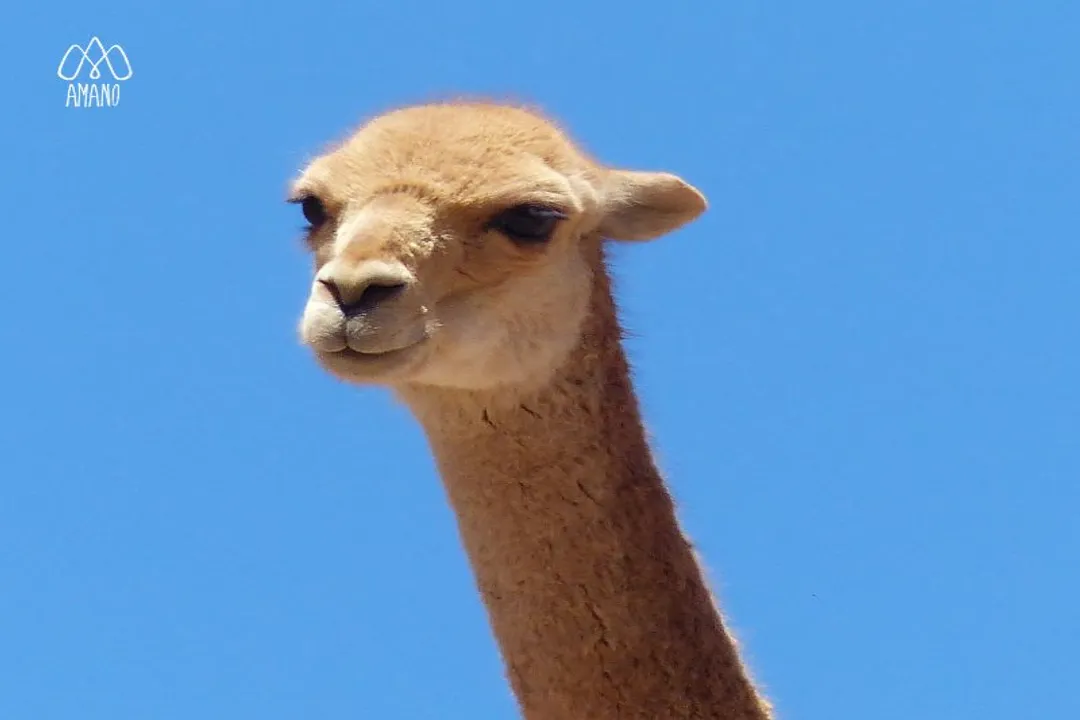
The vicuña is uniquely specialized for the puna grasslands, which are typically found at high altitudes between 3,200 and 4,800 meters above sea level. This extreme environment is defined by low oxygen availability and intense temperature fluctuations. The vicuña remains tied to this specific niche because its digestive system is highly adapted for the short, high-quality grasses found exclusively in this alpine environment, distinguishing it from the guanaco, which occupies a much broader range of habitats.
Related Questions
Approximately how many years ago did the evolutionary divergence between the ancestors of the modern vicuña and the guanaco occur?Which domesticated camelid is considered the direct descendant of the wild vicuña?Which wild South American camelid serves as the primary ancestral lineage for the domesticated llama?What specific anatomical trait allows the vicuña to continuously maintain adequate grinding surfaces while consuming tough, abrasive grasses?What physiological adaptation in the blood of the vicuña facilitates its survival in the low-oxygen environment of the puna grasslands?Which geological epoch marks the time frame when the vicuña and guanaco populations experienced their initial evolutionary separation?What is the primary habitat of the vicuña, characterized by high elevation and low oxygen levels?Which factor caused the severe population bottleneck of the vicuña during the 20th century?In modern taxonomy and molecular research, which genus is frequently used to classify the vicuña?What is the approximate diameter of vicuña fiber, which makes it highly prized and economically valuable?