What is the primary conservation challenge impacting the long-term health of Vermilion Flycatcher populations?
Answer
Destruction of riparian woodland habitats
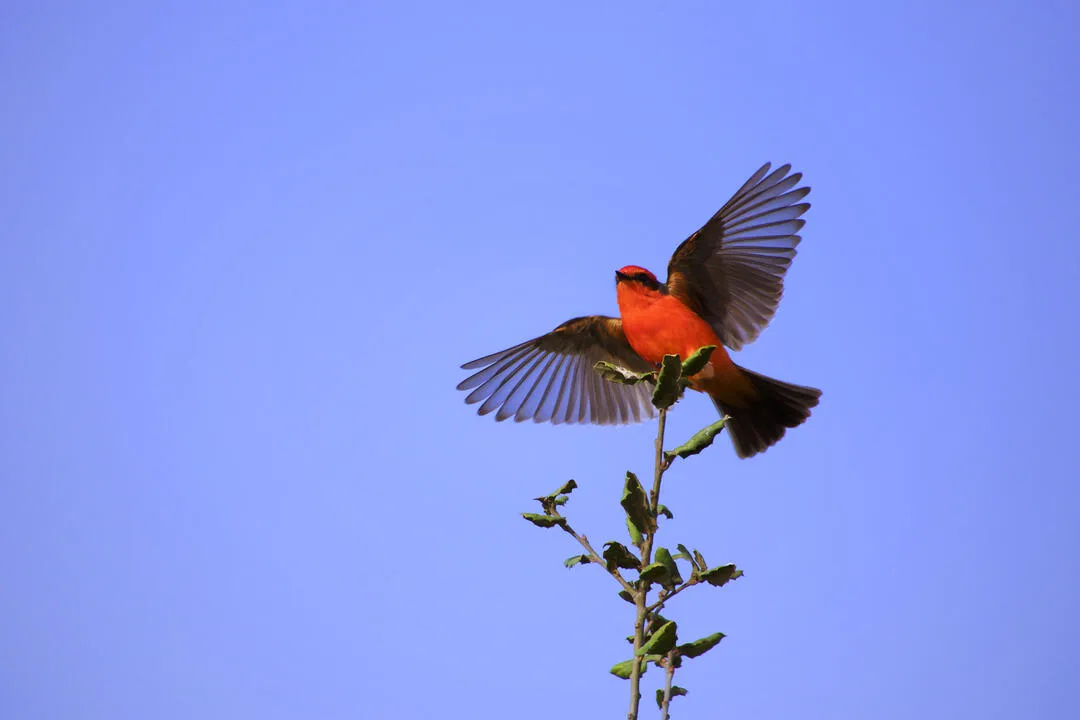
The most significant limitation across the range of the Vermilion Flycatcher is the loss and degradation of the specific habitats they require for breeding and foraging. They are heavily dependent on open riparian woodlands, which have been severely impacted by human activity, including water management practices like damming and the physical clearing of riverside vegetation. The loss of these essential cottonwood-willow corridors leads to a direct reduction in the quality and quantity of available nesting and foraging grounds, which is a primary driver of population declines, particularly in regions like the Lower Colorado River Valley.
Related Questions
What determines the vibrant red plumage of the male Vermilion Flycatcher?What is the meaning behind the genus name Pyrocephalus for the Vermilion Flycatcher?How does the Vermilion Flycatcher primarily capture prey while hunting?Which environment is most essential for the habitat of the Vermilion Flycatcher?What materials does a female Vermilion Flycatcher typically use to build her nest?How does the Vermilion Flycatcher exhibit complex reproductive behaviors?What specific threat does the Vermilion Flycatcher face when nesting in suburban areas?What occurs during the flight song display performed by the male Vermilion Flycatcher?Besides insects, what unusual food source has the Vermilion Flycatcher been observed consuming?What is the primary conservation challenge impacting the long-term health of Vermilion Flycatcher populations?