What is the medical significance of the venom from the large female writing spider?
Answer
It is not considered medically significant to humans
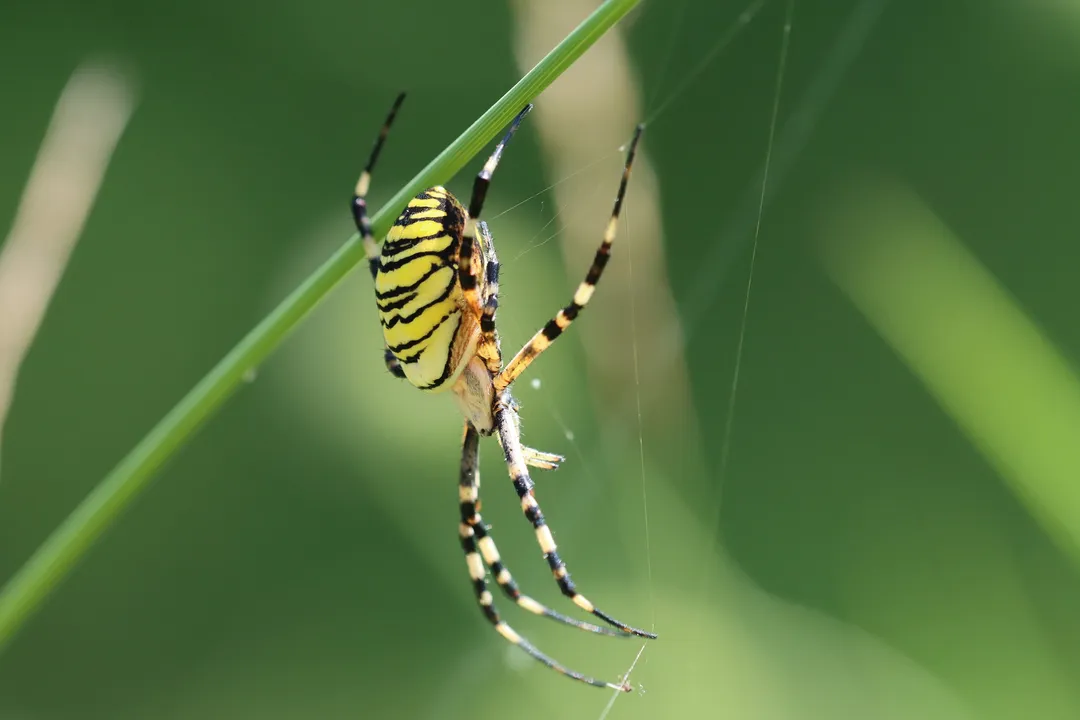
Despite the imposing size and striking coloration of the female *Argiope aurantia*, its venom poses very little threat to human health. The venom produced by this species is generally classified as having low toxicity toward humans. Bites are extremely uncommon, usually occurring only when a person accidentally traps or squeezes the spider against their skin, such as when reaching into dense foliage or leaning inadvertently onto a web. Even in the rare event of a bite, the resulting effects are typically minor and do not necessitate specialized medical intervention related to the venom itself.
Related Questions
What is the most critical environmental factor dictating where an Argiope aurantia sets up its web?What dual purpose does direct sunlight serve for the writing spider's web placement?What is the name of the dense, zigzag silk pattern found at the hub of the Argiope aurantia web?Which theory suggests the Argiope aurantia's stabilimentum functions to reflect UV light?What characteristic makes sturdy tomato stakes superior anchor points compared to delicate annual blooms for the writing spider?How do writing spiders overwinter, given that adults die off after the first hard frost?What does the name 'corn spider' traditionally suggest about the preferred hunting grounds of Argiope aurantia?What is the medical significance of the venom from the large female writing spider?When are writing spiders most frequently observed waiting patiently at the center of the stabilimentum?How do male spiders generally compare in size to the architect female Argiope aurantia?