What is the characteristic physical sign on trees and shrubs indicating heavy white-tail browsing activity?
Answer
The browse line, often reaching about six feet in height
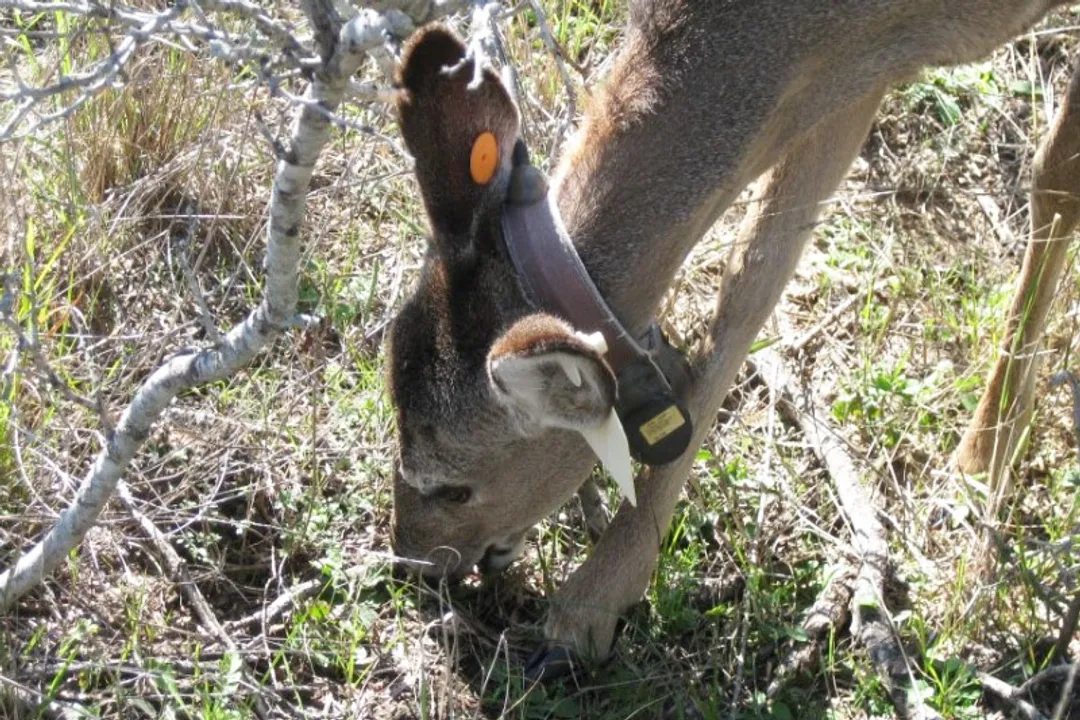
When white-tailed deer populations are heavy in an area, their highly selective foraging behavior creates a distinct visual marker on the vegetation known as the browse line. This line is visible where all palatable foliage has been stripped away from the lower reaches of trees and shrubs. Typically, this line corresponds to the deer's reach, often measuring around six feet in height, though it can be temporarily altered by deep snowpack. Furthermore, the method of removal itself is telling: deer use their dental pad to pinch and tear vegetation, leaving ragged edges on the remaining stems, distinguishing their feeding from the clean cuts made by other animals like rabbits.
Related Questions
What feeding classification sets white-tailed deer apart from grazers like cattle?What physiological adaptation in deer saliva allows for safe consumption of items like acorns?Which three categories usually comprise the majority of the annual white-tail intake across regions?What is the primary nutritional purpose of the deer consuming carbohydrate-rich mast in the fall?During which season does new, succulent growth from forbs provide the highest quality, protein-rich menu for deer?What is the characteristic physical sign on trees and shrubs indicating heavy white-tail browsing activity?Why might a deer starve with a full stomach if the landscape is dominated by mature, low-quality grass?What is the key management technique that promotes the early successional growth deer instinctively prefer?Which nutrient demand peaks most severely for bucks during the spring and summer, and for does during late-stage pregnancy and lactation?When is a high-protein food plot most likely to see low usage from white-tails, according to land management considerations?