Whitetail Deer Evolution
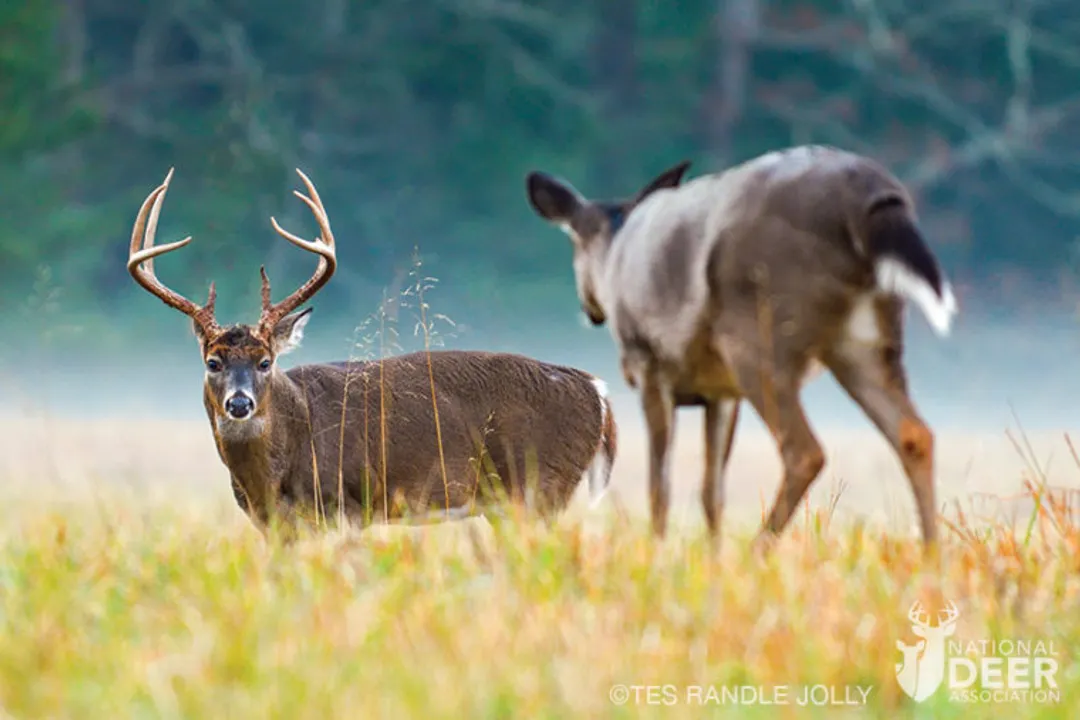
The story of the white-tailed deer, Odocoileus virginianus, is less a singular, straight line of development and more a testament to environmental flexibility across deep time. These animals, recognizable across much of North and South America, represent a highly successful branch of the Cervidae family, one that has weathered immense climatic shifts to become one of the continent’s most prevalent large mammals. To understand the modern whitetail, one must look back to the early evolution of deer generally, tracing roots that stretch back tens of millions of years. The earliest relatives, such as Protolabis, an ancestral deer species appearing roughly 25 million years ago, represent a distant starting point for all cervids. The lineage that would eventually give rise to modern deer began to separate from other ruminant groups around 20 million years ago, marking the true beginning of the deer group's own evolutionary path.
# Early Divergence
The genus Odocoileus, which houses both the white-tailed deer and the mule deer, is relatively young in the grand sweep of mammalian history, but the split between these two iconic North American species is a critical event in their localized evolution. Many researchers suggest that the divergence of the whitetail from the mule deer lineage occurred approximately two to three million years ago. This separation likely coincided with major geological changes in western North America, particularly the uplift of the Rocky Mountains. This rising topography created significant barriers to gene flow, effectively isolating populations that then evolved along different selective pressures. The ancestors of the mule deer were effectively funneled into more arid, western environments, while the ancestors of the whitetails remained dominant in the eastern woodlands and plains. This geographical separation, driven by tectonic activity, acted as a powerful evolutionary crucible.
The anatomical differences we observe today—the whitetail's bounding gait and relatively smaller ears versus the mule deer's distinct jumping motion and large, mule-like ears—are the observable results of this ancient allopatric speciation event. When observing antlers from some extinct cervids, one can see intermediate characteristics that hint at the transitional forms these two modern species evolved from. For instance, a peculiar buck specimen discovered in the 1980s possessed skull and antler characteristics that seemed to bridge the gap, suggesting a physical throwback to the ancient ancestors shared by both modern species before they fully specialized. This reinforces the idea that modern speciation is rarely instantaneous; rather, it's a gradual process of accumulating trait differences based on local survival needs.
# Adaptability Defined
The key to the white-tailed deer's enduring success, which allowed it to survive periods where other large mammals vanished, rests in its incredible adaptability. Unlike some specialized herbivores, O. virginianus is not locked into a single dietary niche. They are generalists, capable of subsisting on browse (twigs and leaves), forbs (weedy plants), grasses, agricultural crops, and even fungi, depending on seasonal availability. This dietary plasticity means that when one food source fails due to drought or climate shifts, the whitetail can readily switch to another.
Geographically, this translated into an enormous range. White-tailed deer are found from southern Canada, through the majority of the United States, into Mexico, and down through Central and northern South America. This distribution covers an astonishing variety of ecosystems, including dense forests, swamps, shrublands, deserts, and increasingly, suburban environments. Their ability to thrive in environments as varied as the swamps of Florida and the arid regions of Texas speaks volumes about the selective advantages conferred by their flexible feeding habits and moderate size. While they are often associated with dense cover, their success is tied to their ability to move into and utilize edge habitats created by environmental change.
Considering the immense selective pressures of the Pleistocene extinctions, the whitetail’s generalized survival strategy proved far more resilient than highly specialized forms. While many megafauna disappeared as the climate warmed and vegetation changed dramatically, the whitetail maintained a foothold. This resilience suggests that their evolutionary path favored generalized fitness over specialized peak performance. It's interesting to consider how this adaptability contrasts with the ecological pressures faced by their larger, more specialized cousins, such as the elk or moose, which are far more constrained by specific forage types or snow depths. The whitetail essentially hedged its bets against future uncertainty by not committing fully to one ecological role.
# The Human Factor
While natural forces shaped the whitetail's anatomy and temperament over millennia, the most dramatic population shifts in the last few centuries have been directly attributable to human activity. By the late 1800s and early 1900s, the species faced near-obliteration across much of its original range due to unregulated market hunting and habitat destruction. The massive scale of this decline—a near-total population collapse—represents an intense, rapid selective pressure rarely seen in evolutionary history.
The subsequent rebound, starting in the mid-20th century, is a remarkable conservation story. Strict regulations on hunting, coupled with land use changes that favored the deer (such as agricultural abandonment creating ideal successional habitat), allowed populations to skyrocket. This rapid expansion and increase in density presents a modern evolutionary scenario: density-dependent selection. In areas where populations are now incredibly high, we see selection favoring traits related to rapid maturation, higher reproductive rates, and perhaps even altered social behaviors to cope with crowding. For example, in areas with high predation or hunting pressure, the visual alarm signal—raising the white underside of the tail—becomes a crucial, visible communication trait, rapidly selected for its effectiveness in alerting others to danger.
If we were to track genetic drift during this period of explosion, we might expect to see a homogenization of traits across previously separate regional populations as individuals dispersed widely into newly suitable territories. The species essentially re-colonized its former range very quickly, perhaps leading to more gene flow than existed prior to the human-caused crash.
# Modern Phenotypes and Niche Separation
The two primary North American deer species, O. virginianus and O. hemionus (mule deer), offer a clear case study in how slightly different initial conditions lead to distinct modern forms. While they separated millions of years ago, their current differences underscore successful adaptation to different niches.
| Trait | White-Tailed Deer (O. virginianus) | Mule Deer (O. hemionus) | Evolutionary Implication |
|---|---|---|---|
| Tail Display | Raises tail vertically, showing white underside (flagging) | Tail held down, often black-tipped | Different antipredator signaling based on habitat use. |
| Ear Size | Relatively smaller ears | Large, mule-like ears | Superior hearing in open/windy environments vs. forest acoustics. |
| Locomotion | Fast bounds, relatively straight path | Stotting/jumping gait, often changing direction mid-air | Locomotion suited for dense cover vs. open terrain maneuvering. |
| Antlers | Tines curve forward | Tines fork repeatedly (bifurcation) | Distinct morphological specialization in velvet shedding season. |
This divergence in physical traits directly relates to behavior and habitat preference. The mule deer's large ears suggest adaptation to open plains or mountainous regions where hearing is vital for detecting predators from a distance. Conversely, the whitetail's smaller ears and bounding, direct escape route are effective in the thickets and woods where immediate, fast evasion through cover is prioritized over long-range detection. It’s fascinating to see how subtle genetic variations, perhaps initially neutral, become highly advantageous when paired with distinct physical landscapes, ultimately resulting in two separate, thriving species occupying adjacent, yet ecologically distinct, territories.
This separation isn't always absolute; they can interbreed, though hybrids are typically infertile or less fit, confirming their status as distinct evolutionary lines. The ability of the white-tailed deer to inhabit such a broad latitudinal span suggests that the selective pressures related to photoperiod (day length affecting breeding cycles) and winter survival are managed through remarkable physiological flexibility, allowing populations near the Arctic tree line to coexist genetically with those in the tropics.
# Evolutionary Lessons for Today
The history of the white-tailed deer provides a potent example of how evolutionary success is often rooted in being a 'jack-of-all-trades' rather than a specialist. Their ability to persist through the massive environmental upheavals of the Pleistocene, and later through the near-extinction event caused by humans, highlights the survival premium placed on generalized feeding habits and behavioral flexibility.
An interesting way to view modern wildlife management is through this lens of evolutionary pressure. When a species is managed for high density, as the whitetail often is, management practices—like maintaining a specific buck-to-doe ratio or controlling harvest rates—are essentially directing artificial selection. If management consistently favors bucks with larger racks (a common desire), selection pressures shift toward antler growth traits, potentially at the expense of other fitness factors like disease resistance or efficient foraging, simply because the trait for antler mass is being artificially rewarded by the harvest system. This is a feedback loop where human cultural preference temporarily overrides natural selective pressures, guiding the immediate phenotypic trajectory of the population. The animal's evolutionary inertia towards being a generalist keeps it thriving, but its visible characteristics can be rapidly molded by concentrated human influence.
The whitetail’s long-term success, spanning millions of years of environmental change since the initial deer lineage split, serves as a reminder that adaptability is the most powerful evolutionary tool. When observing a herd today, one is seeing the accumulated adaptations of eons—a lineage that learned not to rely too heavily on any single food source or specific landscape feature, ensuring its survival long after more specialized forms faded into the fossil record.
#Videos
The History Of Whitetail Deer - YouTube
Related Questions
#Citations
The Oldest Deer on Earth | National Deer Association
White-tailed deer - Wikipedia
White-tailed Deer - Discover Lewis & Clark
The rise and fall – and rise again – of white-tailed deer
The Amazing Adaptable Whitetail Deer (Odocoileus virginiana)
Could anyone explain why mule and white tail deer evolved to have ...
White-tailed Deer - Cosley Zoo
White-tailed Deer | The Story of Illinois
The History Of Whitetail Deer - YouTube