Whitetail Deer Physical Characteristics
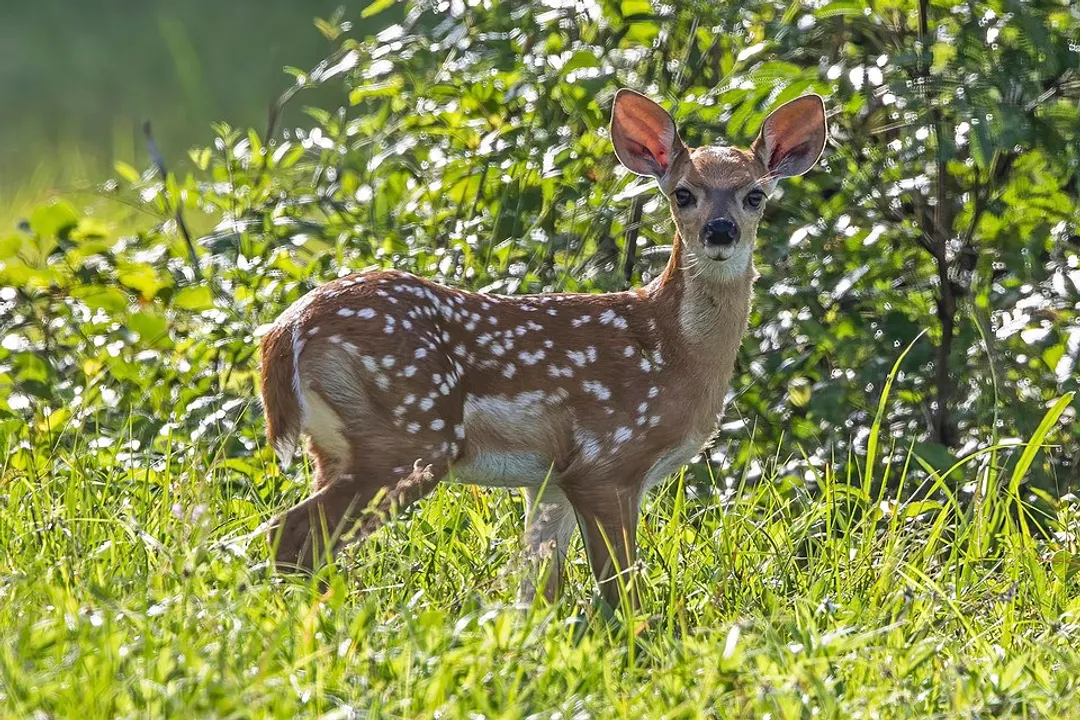
The white-tailed deer, scientifically known as Odocoileus virginianus, presents a fascinating study in adaptation, easily recognizable across much of the Americas. [4][10] Distinguishing features begin with their general size and body structure, which are finely tuned for survival in diverse habitats ranging from deep forests to open fields. [1][5]
# Size Build
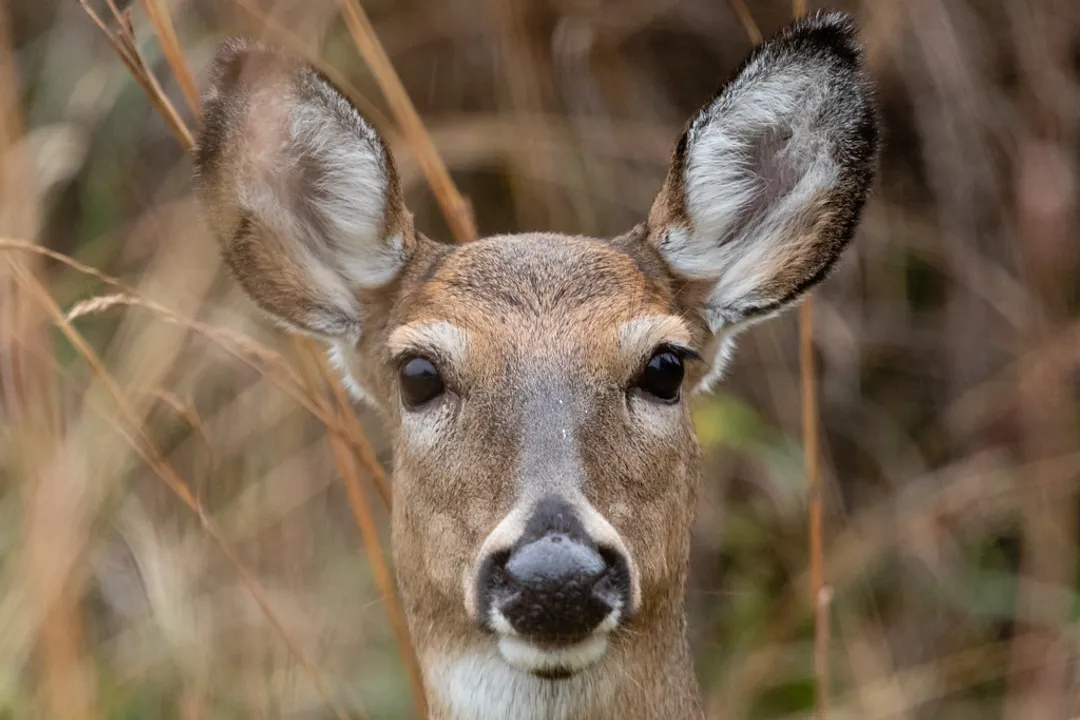
Adult white-tailed deer exhibit significant variation in size, strongly influenced by sex, age, and local environmental factors like nutrition and climate. [4][6] On average, a mature deer stands between 3 and 3.5 feet tall when measured at the shoulder. [2][10] Body weight is much more variable between the sexes. A typical mature male, or buck, will usually weigh in the range of 150 to 300 pounds. [1][2] In contrast, females, known as does, are considerably lighter, generally falling between 90 and 200 pounds. [1][2] Their physical build emphasizes agility; they possess relatively slender legs that allow for rapid acceleration, capable of reaching speeds near 30 miles per hour over short distances. [1][4] This combination of moderate size and quickness helps them evade many common predators. [4]
# Coat Color
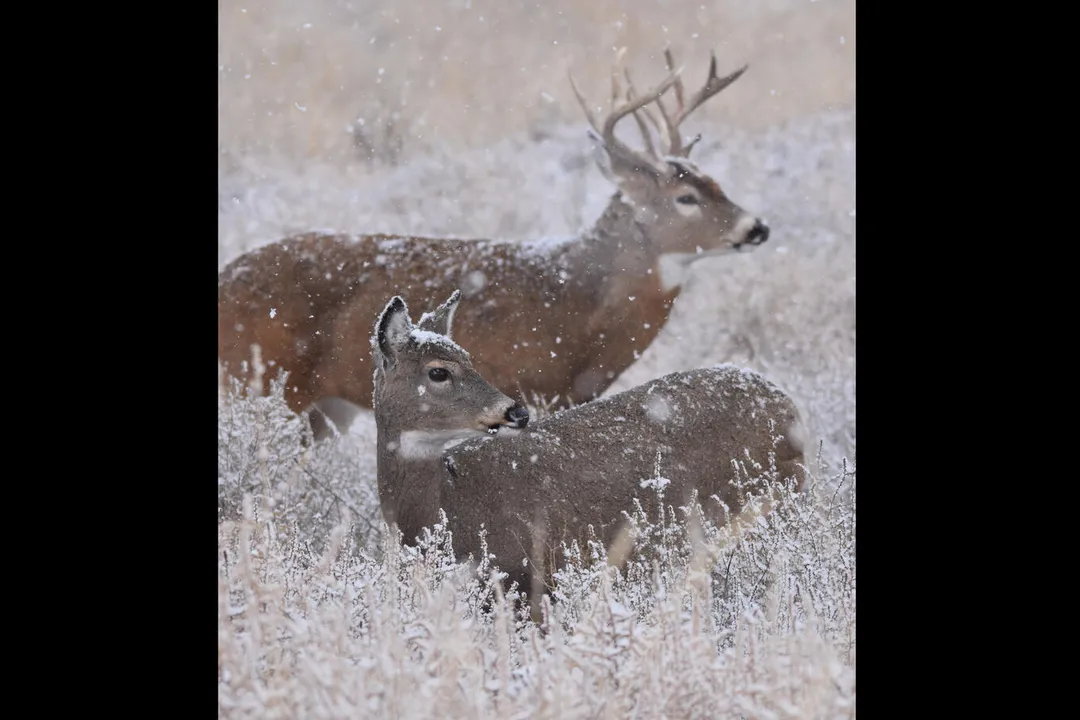
The deer’s coat undergoes a distinct seasonal transformation that serves as critical camouflage. [3][8] During the warmer months, the deer sports a reddish-brown or tan coat that is short and sleek, blending effectively with the dense greens and browns of summer vegetation. [8] As the seasons shift toward winter, this coat is replaced by a much thicker, longer layer. [8] This winter coat is characterized by a grayish-brown hue, and importantly, the individual hairs become hollow. [8] This structural change creates pockets of trapped air, providing superior insulation necessary to withstand frigid temperatures encountered in northern ranges. [8]
# Tail Signal
Perhaps the most iconic physical characteristic is the tail, which gives the species its name. [4][10] The tail is relatively slender, measuring approximately 12 to 14 inches in length. [4][1] The upper surface is dark, matching the body coat, but the underside is covered in strikingly white fur. [10][4] This bright white patch is not merely cosmetic; it functions as an alarm system within the herd. [10] When a deer perceives a threat and flees, it raises its tail vertically, displaying the bright underside like a flag. [4][10] This visual signal alerts other deer in the vicinity to the potential danger, allowing them to follow the fleeing animal to safety or prepare to flee themselves. [4] Understanding the tail display's context is key; a slowly flicked tail might indicate mild curiosity or nervousness, while a fully erect, rapidly vibrating flag usually signifies immediate, high-alert departure into dense cover.
# Male Ornamentation
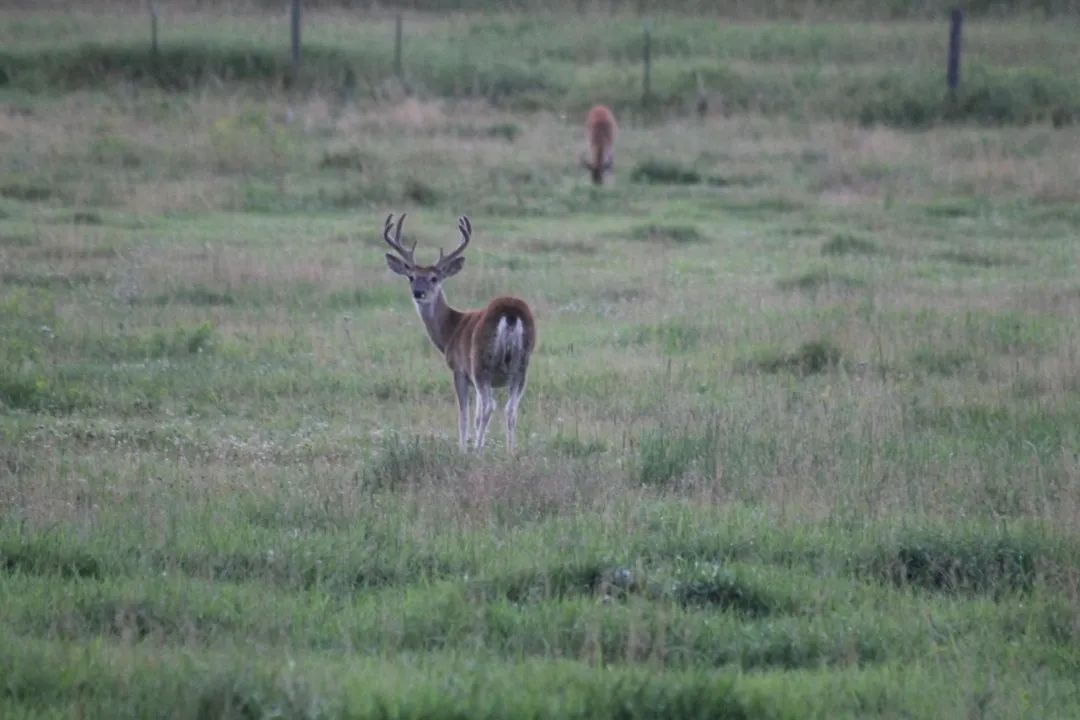
The annual growth and display of antlers are exclusive to the males. [6] These structures are made of solid bone, not keratin like horns, and are shed and regrown every year. [4][6] The growth phase occurs during the spring and summer, during which the antlers are covered in a vascularized, fuzzy skin called velvet, which supplies the necessary nutrients and blood flow for rapid bone development. [4][1] Once fully developed, usually by late summer or early autumn, the velvet dries up and is shed, a process often involving the buck vigorously rubbing its antlers against small trees and shrubs, leaving behind scent markings and polished bone. [6][4] The resulting rack's size and number of points (tines) are highly indicative of the buck’s age and overall health; a yearling might only produce small spikes, whereas a genetically superior, well-nourished mature buck can develop a large rack with many points. [4][6]

# Sensory Acuity
White-tailed deer rely heavily on their senses to navigate their environment and detect threats, often possessing capabilities superior to human senses. [4][5] Their sense of smell is particularly acute, allowing them to detect airborne scents over much greater distances and lower concentrations than humans can manage. [5] Hearing is also highly developed; their large, independently moving ears can swivel to pinpoint the direction of subtle sounds, like a twig snapping far away. [4]
Vision, while functional, differs from the human experience. While they might not perceive fine details or colors as sharply as we do, their eyes are positioned on the sides of their heads, granting them an exceptionally wide field of view—close to 310 degrees—which is perfect for spotting movement along the perimeter. [4][5] This broad field of view means they have excellent peripheral vision, though it comes at the cost of slightly reduced binocular depth perception directly in front of their noses. [5]
# Regional Variation
While the basic physical blueprint remains consistent, there is notable geographic plasticity within the species, leading to physical differences across its massive range. [4][6] Deer inhabiting colder, northern regions generally mature into larger animals with significantly heavier bodies and denser winter coats compared to their counterparts in warmer, southern climates. [4][6] This difference aligns with general ecological principles where larger body mass helps conserve heat in colder environments. This regional size difference, known as Bergmann's Rule in ecology, means a hunter tracking a "typical" weight range in the southern US might significantly underestimate the potential mass of a mature buck from a colder northern region with similar age structure. Furthermore, while body size varies, the deer’s basic coloration and the defining white tail feature remain standard across all subspecies. [4] A tabular comparison of general size ranges helps illustrate this sexual and geographical dimorphism:
| Characteristic | Does (Female) | Bucks (Male) | Notes |
|---|---|---|---|
| Shoulder Height | ~3.0 feet | ~3.0–3.5 feet | Minor variations by location [2] |
| Typical Weight | 90–200 lbs | 150–300 lbs | Northern bucks can exceed 300 lbs [1][2] |
| Coat Color (Winter) | Grayish-brown | Grayish-brown | Thicker, hollow hairs for insulation [8] |
Bucks also exhibit subtle differences in the winter months, often showing darker, coarser hair around the neck area, especially as they approach the breeding season, or rut. [8] These physical traits, from the flag-like tail to the specialized winter coat, showcase a highly adaptable mammal perfectly sculpted by natural pressures across North America. [5][10]
Related Questions
#Citations
White-tailed Deer - Odocoileus virginianus - New Hampshire PBS
White-tailed deer (Odocoileus virginianus) - National Park Service
White-tailed Deer - Cosley Zoo
White-tailed deer - Wikipedia
White-Tailed Deer - BioKIDS
White-Tailed Deer | Colorado Parks and Wildlife
White-tailed Deer - SUNY ESF
Physical Description - White-tailed Deer Illinois: deer ecology
White-tailed Deer Facts for Kids - NatureMapping Foundation
White-Tailed Deer Odocoileus virginianus - Chesapeake Bay Program