What is the hybrid of Pere David's deer?
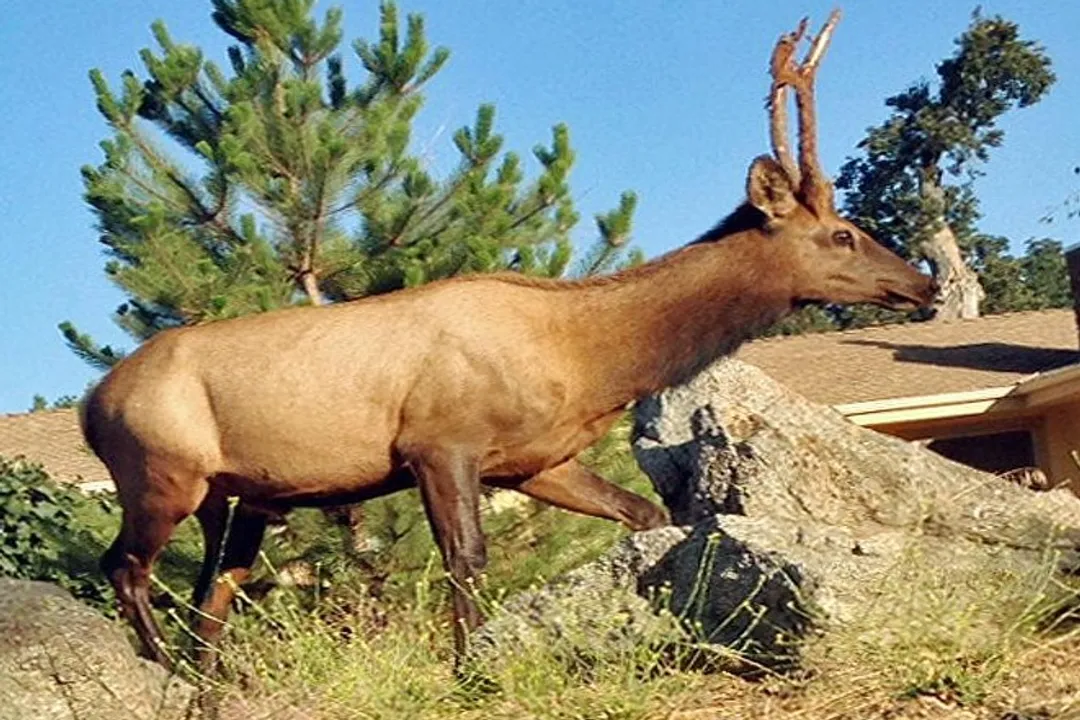
The Père David's deer, or Elaphurus davidianus, is a species famous for its near extinction in the wild and its subsequent survival primarily through captive breeding programs. [6] When discussing such a unique and rare animal, questions inevitably arise regarding its genetic compatibility with other deer species, particularly concerning the possibility of hybridization. The scientific literature does document attempts to cross this species with others, most notably the Red deer (Cervus elaphus), leading to the creation of rare, documented hybrids. [2][5] This is not a widespread, naturally occurring phenomenon; rather, it stems from controlled breeding efforts aimed at understanding genetic boundaries and chromosome compatibility. [4]
# Hybridization Studies
The most concrete information available regarding Père David's deer hybrids stems from reproductive biology studies focusing on interspecies crosses. [2][8] One specific area of research involved the cross-mating of the Père David's deer with the Red deer (Cervus elaphus). [2] These experiments are significant because they investigate the degree of genetic divergence between two distinct genera: Elaphurus and Cervus.
The resulting first-generation (F1) hybrids from the Père David's deer male and Red deer female pairings exhibited certain characteristics and viability. [2] The success of creating these F1 offspring immediately indicates a relatively close genetic relationship between the two species, allowing for successful conception and development, despite the species separation. [4]
# Chromosomal Complements
Understanding the genetics behind these crosses involves looking at the chromosome counts. While the exact details of the source material are abstracts, they confirm that genetic markers and chromosome numbers are central to assessing hybrid viability. [4][8] The ability to produce F1 offspring suggests that the basic mechanisms for embryonic development are compatible, even if evolutionary separation has occurred. [2] The Red deer, a species known for successful captive management and widespread introduction across various regions, provides a standard against which the unique genetics of the Père David's deer can be mapped. [3][7]
The rarity of Père David's deer in the wild means that any natural hybridization events are exceedingly unlikely. The animals that exist today are maintained under careful management, often in specific parks or reserves. [6] Therefore, the documented hybrids are products of deliberate scientific inquiry, not chance encounters in a shared natural habitat. [2]
# Offspring Viability
A critical measure of successful hybridization is not just the birth of the first generation, but whether subsequent generations can reproduce—a concept known as fertility. [2] If an F1 hybrid is sterile, the hybridization event is considered an evolutionary dead end.
Research into the F1 progeny of the Père David's deer Red deer cross revealed that these first-generation hybrids were indeed viable and, importantly, fertile. [2] This observation—that the F1 hybrids could themselves reproduce—is a notable finding in mammalian hybridization studies. Furthermore, the research extended to backcrosses, where the F1 hybrids were mated back to one of the parent species, specifically the Red deer. [2]
The results from these backcrosses further illuminate the genetic interchangeability:
- F1 Red Deer: Offspring were produced from this mating. [2]
- F1 Père David's Deer: Offspring were also produced from this mating. [2]
The successful production of viable, fertile F1 animals, and the subsequent successful backcrossing to both parental lines, suggests a significant degree of genetic compatibility, possibly greater than what might be expected between two different genera based solely on taxonomy. [4]
A fascinating point to consider when reviewing these types of controlled crosses is the comparison of reproductive success across different initial pairings. While the abstracts confirm successful F1 production, the viability rates between a male Père David's deer and a female Red deer versus the reciprocal cross (if studied) can reveal subtle differences in sex-linked genetic factors or cytoplasmic inheritance. [2][8] In the context of managing a critically endangered species like the Père David's deer, understanding these reproductive barriers or lack thereof is essential for captive breeding protocols, even if hybridization is generally discouraged for pure species preservation. [3]
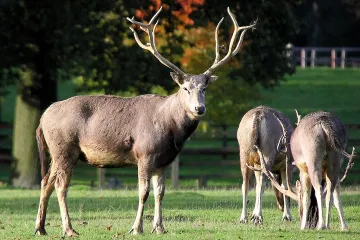
# Comparison with Other Deer Hybrids
Deer species, members of the family Cervidae, are known to hybridize, which speaks to their relatively recent common ancestry in evolutionary terms. [5] For instance, hybridization between Red deer and Elk (Cervus canadensis), which are sometimes classified as the same species or as closely related species, is relatively common. [5] Even further apart, hybridization has been observed between species like the Whitetail deer and Mule deer. [5]
What sets the Père David's deer cross apart is its placement in a different genus, Elaphurus, which historically has been more distinct than the close relationship between Cervus species. [5] The fact that Elaphurus davidianus can produce fertile F1 hybrids with Cervus elaphus (Red deer) suggests that the genetic separation between these two lineages, while significant enough to result in distinct species characteristics, has not yet resulted in an absolute reproductive barrier, such as the production of inviable embryos or completely sterile F1 offspring. [4]
If we were to plot the genetic distance based on hybridization success, the Père David's deer Red deer cross falls into a category of successful intergeneric or close interspecific crosses where full reproductive compatibility is largely maintained in the first few generations. [2][5]
| Hybrid Cross Parentage | F1 Viability | F1 Fertility | Notes |
|---|---|---|---|
| Père David's Red Deer | Yes | Yes | Fertile F1s allow for backcrossing. [2] |
| F1 Red Deer | Yes | Assumed Viable | Documented backcross. [2] |
| F1 Père David's Deer | Yes | Assumed Viable | Documented backcross. [2] |
This experimental data allows zoo and conservation geneticists to assess the potential risk of accidental hybridization in mixed-species collections. While the Père David's deer is rare and usually managed separately, if a facility housed both species, the genetic overlap observed here highlights a theoretical possibility of accidental cross-breeding, which would dilute the pure Elaphurus davidianus gene pool. [6]
# Conservation Implications
The primary goal for managing Père David's deer remains the preservation of the pure species genetics, given its vulnerability to extinction in its native range, which is now historical. [3] The existence of fertile hybrids, while a testament to biological adaptability, presents a challenge to conservationists focused on species purity. [2][6]
For captive populations, the management strategy must prioritize maintaining genetically distinct lines of E. davidianus. Any recorded instance of accidental hybridization, even if rare due to management practices, would require careful tracking and potential removal from breeding programs to prevent the introgression of Red deer genes into the Père David's deer lineage. [3] The high value of the Père David's deer lies in its distinct, albeit relict, genome. [4]
It is worth noting the incredible conservation effort that saved the species from complete annihilation. The species survived thanks to the efforts of European collections, which maintained the population while the species disappeared from China. [3][6] This history of reliance on captive stock makes the integrity of that remaining gene pool paramount, overshadowing the scientific interest in interspecies crossing. [3]
One practical implication for managers of mixed deer collections, whether zoos or private herds, is to maintain clear separation protocols. If the genetic compatibility is high enough to produce fertile offspring, visual identification alone might not be sufficient to prevent accidental pairings, especially during periods of high seasonal hormonal activity when behavioral cues might override subtle species differences. [2] Therefore, ensuring physical barriers and distinct enclosure management between Elaphurus and Cervus species is a necessary measure to uphold species purity standards. This diligence is key because, unlike some species where hybridization results in sterile "mules," the fertility observed here means the dilution effect can compound over generations if left unchecked.
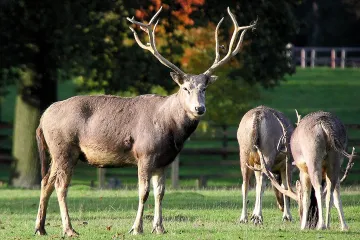
# Rarity of Natural Hybrids
While the scientific literature confirms that hybridization can occur under controlled settings, there is no indication that hybrids are common or even exist naturally today. [1][6] The Père David's deer has been extinct in the wild for a long time, which naturally prevents natural crossing events. [3] In captive settings, strict husbandry practices are usually employed to prevent unintentional breeding between closely related but distinct species housed in proximity. [2] The mention of a "very rare hybrid" in public discussions often refers back to these specific scientific crosses rather than a common occurrence in the current managed populations. [1] The focus remains squarely on the survival of the pure species, making the documented, fertile hybrids fascinating biological footnotes rather than threats of widespread natural genetic mixing. [2][6]
Related Questions
#Citations
A very rare hybrid between a Père David's deer (Elaphurus ... - Reddit
interspecies hybrids between Père David's deer (Elaphurus ...
[PDF] Hybridisation between red deer (Cervus elaphus) and Père David's ...
new gene mapping resource: interspecies hybrids between Père ...
Deer Hybrids - Mammalian Hybrids - Biology Dictionary
Pere David's deer species information - Facebook
[PDF] Evaluation of hybrids between Pere David's deer and red deer as a ...