Whitetail Deer Facts
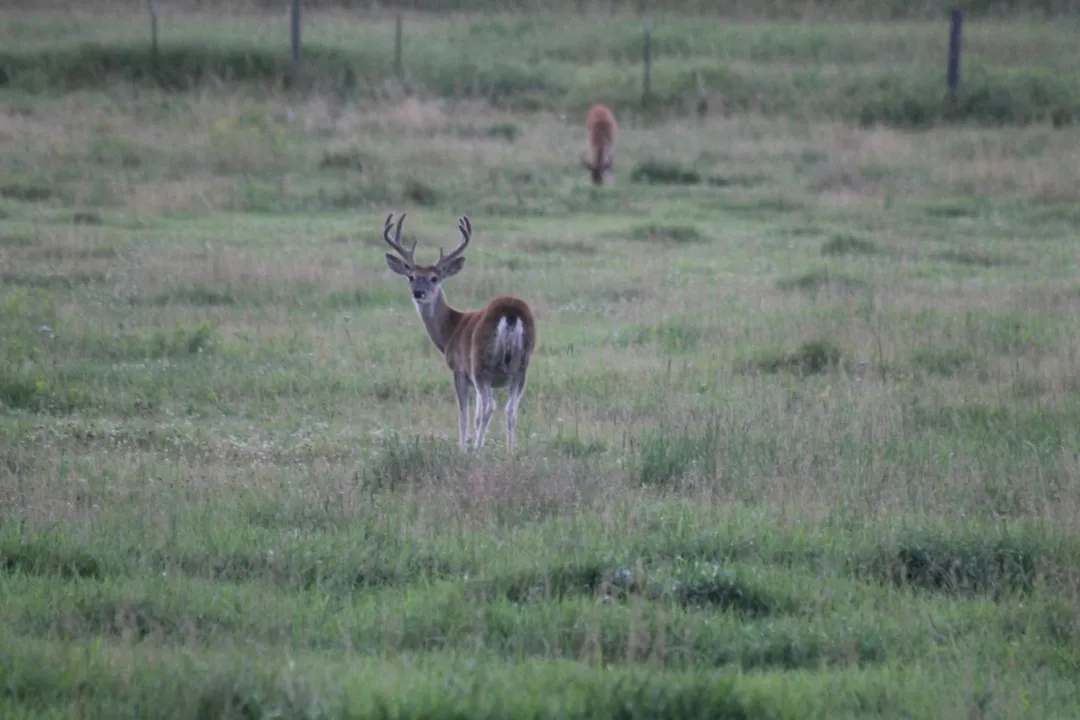
The whitetail deer, Odocoileus virginianus, is perhaps the most familiar large mammal across the Americas, its success stemming from remarkable adaptability and keen senses. This species earns its common name from the distinctive feature displayed when alarmed: a flash of the bright white underside of its tail held high as it bounds away, a clear signal to others in the vicinity. [2][3][4][6][10] These creatures occupy an enormous range, stretching from southern Canada through much of the United States and deep into Central and South America, thriving in environments as varied as dense forests, swamps, and even arid desert regions. [3][5][6][9]
# Names Range
While commonly known as the white-tail or simply deer, the scientific classification places them within the family Cervidae. [5] Their presence is so widespread that in many local ecosystems, they form a significant part of the faunal community, often present in high numbers, especially in areas where habitat management favors their growth. [5][10]
# Coat Change
A noticeable trait of the whitetail is its seasonal coat color variation, which helps it blend into changing surroundings throughout the year. [2][3][5][9] During the warmer months, the coat is generally a reddish-brown or tan, providing camouflage against summer foliage. [2][9] As temperatures drop and winter sets in, the deer grows a thicker, denser coat of fur that shifts to a duller, grayish-brown hue, better suited for the muted tones of leafless landscapes. [3][5] This shift isn't just about color; it's a fundamental change in insulation needed to manage harsh winter weather. [3]
# Body Metrics
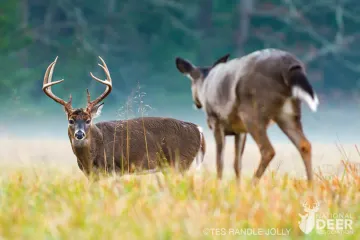
Size differences exist between sexes and are also influenced by geography and available nutrition. Adult bucks (males) can weigh anywhere from about $100$ to $300$ pounds, while does (females) tend to be slightly smaller. [3][5] They stand tall, usually between $3$ to $3.5$ feet high at the shoulder. [2][5] Observing a large buck in prime habitat, it might appear robust and muscular, yet these animals retain an incredible capacity for agility and speed when necessary. [4]
# Antler Cycle
Only the male deer grow antlers, which are bony structures shed and regrown annually. [2][4][9] The annual cycle involves shedding the hardened antlers usually in late winter or early spring, followed by a rapid growth period throughout the summer while they are covered in velvet—a vascularized skin that supplies nutrients. [4] By late summer or early fall, this velvet is rubbed off, revealing the hard, polished antlers used for display and sparring during the breeding season, known as the rut. [4] The final size and complexity of the antlers are heavily dependent on the deer's diet during the spring and summer months, highlighting a direct link between habitat quality and male physique. [3] It is fascinating to consider that while they are masters of survival in varied, sometimes sparse environments, the physical manifestation of male dominance—the antlers—demands peak nutritional conditions to be fully developed each year. [3]
# Sensory World
Whitetail deer rely on highly tuned senses to navigate a world full of predators and human activity. [4] Their hearing is exceptionally sharp, augmented by their ability to independently rotate their large, trumpet-shaped ears to pinpoint the exact source of a sound without moving their head, allowing them to assess threats stealthily. [2][4] Smell is another crucial tool; they possess a powerful sense of smell that helps them detect predators or other deer from considerable distances. [4] While their daylight vision is somewhat limited compared to humans, their eyes are expertly adapted for crepuscular and nocturnal activity, meaning they see very well in low-light conditions, which is when they are often most active. [4]
# Eating Habits
As herbivores, whitetails are adaptable feeders, capable of shifting between browsing (eating twigs, leaves, and buds) and grazing (eating grasses and forbs) based on what is available. [2][5][9] Their diet is quite varied and changes significantly with the seasons. [3][5] In spring and summer, they favor young, tender green vegetation and agricultural crops. [3] In the fall and winter, when green forage is scarce, they rely more heavily on woody browse, acorns, and whatever remaining seeds or dried vegetation they can find. [5][9] This dietary flexibility is a primary reason for their massive success across so many different North American ecosystems. [3][5]
# Group Behavior
The social structure of whitetail deer is generally matriarchal and dependent on the time of year. Outside of the rut, does typically live in small family groups consisting of themselves, their current year's fawns, and sometimes the previous year's female offspring. [2][4] Bucks, on the other hand, tend to be more solitary, although they might form small bachelor groups during non-breeding periods. [4] They are generally characterized as nervous and shy animals, often relying on freezing in place or flight when they perceive danger. [4][10] When a doe needs to alert her fawn or other nearby deer to a specific threat, the tail flag is instantaneous. [2] A subtle but interesting behavioral note is how this tail flashing aids in group cohesion during rapid movement; even if one deer can't clearly see the leader through thick brush, the consistent, synchronized flashing of white tails acts as a visual trail marker, ensuring the group stays together on the escape route. [10]
# Birthing Season
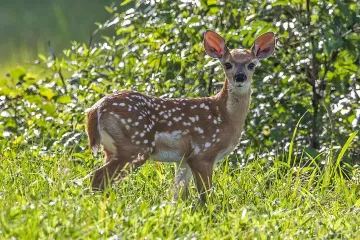
Gestation lasts for approximately six and a half months. [4] Most fawns are born between late May and early July, timed perfectly to coincide with the peak availability of nutritious spring and summer forage needed by the mother to support lactation. [4] Newborn fawns are tiny, weighing only a few pounds, and are covered in white spots that serve as excellent camouflage against the dappled light of the forest floor, helping them avoid detection while the mother feeds nearby. [2][4] Fawns will typically remain hidden and stationary for the first few weeks of life. [4]
# Habitat Success
The whitetail’s ability to thrive where other large ungulates might fail is largely attributable to its adaptability in habitat. [3][6] They are not specialists; rather, they are generalists who can modify their behavior and diet to suit their surroundings, whether that means moving through agricultural fields, thick woodlands, or even suburban edges. [3][9] This versatility means that while they are iconic figures in deep wilderness areas like the Great Smoky Mountains National Park, [6] they are just as commonly observed in human-dominated landscapes, making them a fixture of the modern American outdoors. [5] Their success story is one of resilience, keen senses, and a biological readiness to adapt to whatever food sources are currently abundant. [3][5]
Related Questions
#Citations
Five Fun Facts about White-Tailed Deer
White-tailed Deer Facts for Kids - NatureMapping Foundation
White-tailed deer - Wikipedia
White-tailed deer (Odocoileus virginianus) - National Park Service
[PDF] White-Tailed Deer - NC Wildlife
7 Amazing Facts About Smoky Mountain White-Tailed Deer
White-tailed deer | Habitat, Diet & Adaptations | Britannica
White-Tailed Deer | National Geographic
White-Tailed Deer - BioKIDS
10 Whitetail Facts Every Hunter Should Know | HuntWise