What is the biological consequence of the White Sturgeon's slow growth rate within the Acipenseriformes order?
Answer
Reproductive success is tied to decades-long survival
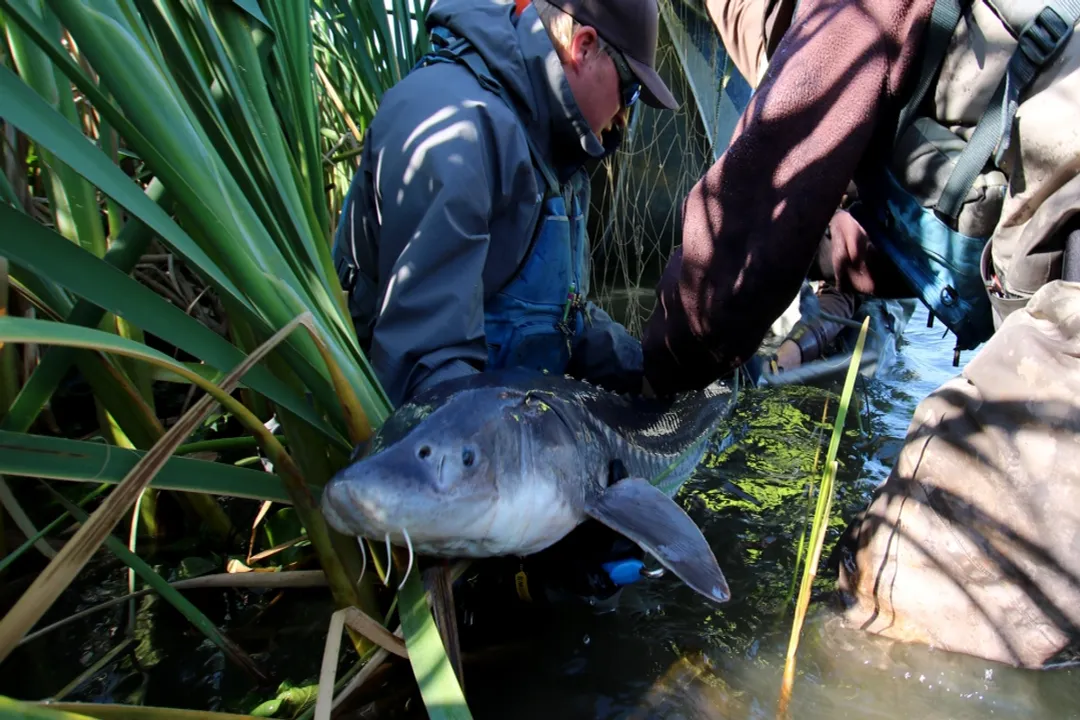
Due to its classification within the ancient Acipenseriformes order, the White Sturgeon exhibits inherently slow growth and maturation rates, resulting in an exceptionally long lifespan that can approach or surpass 100 years. The biological consequence of this longevity and slow growth is that reproductive success becomes critically tied to the survival of the individual fish over many decades. If populations experience overfishing or severe habitat loss, the rate at which they can recover is inherently slow because they must survive for many years before they can successfully contribute to the next generation, making rebound efforts protracted.
Related Questions
What Class designation is given to the White Sturgeon, Acipenser transmontanus?What feature distinguishes the Family Acipenseridae from paddlefishes regarding sensory organs?What is the NatureServe global conservation ranking (G-rank) for Acipenser transmontanus?Which Phylum is Acipenser transmontanus placed in, characterized by the presence of a notochord?What key physical characteristic relates to the White Sturgeon's ancient lineage in the Order Acipenseriformes?Which specific jurisdiction lists Acipenser transmontanus as Endangered within its state boundaries, unlike Idaho?What is the biological consequence of the White Sturgeon's slow growth rate within the Acipenseriformes order?What characteristic describes the White Sturgeon's tail fin structure?Which historical scientific name was sometimes used for the White Sturgeon instead of Acipenser transmontanus?What defining trait separates the White Sturgeon's skeletal composition from many modern bony fishes?