White Marlin Scientific Classification
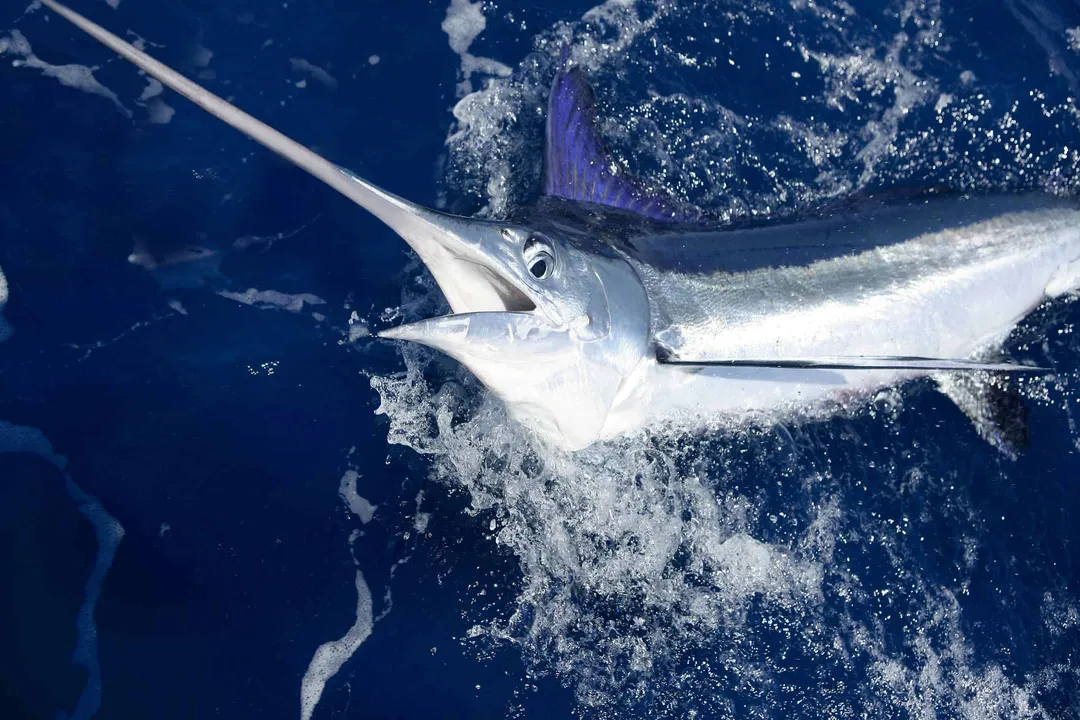
The formal designation given to any living creature, the scientific classification, acts as a universal biological address, placing the striking White Marlin (Kajikia albida) squarely within the grand tree of life. Understanding this hierarchy—from the broadest kingdom down to the specific species—is not just an exercise in memorization; it reveals evolutionary relationships, predicted biological traits, and often informs conservation strategies. While many anglers know this fish by its common name or perhaps its impressive fighting ability, its Linnaean grouping tells a deeper story about its place among the ocean's apex predators.
# Kingdom Animalia
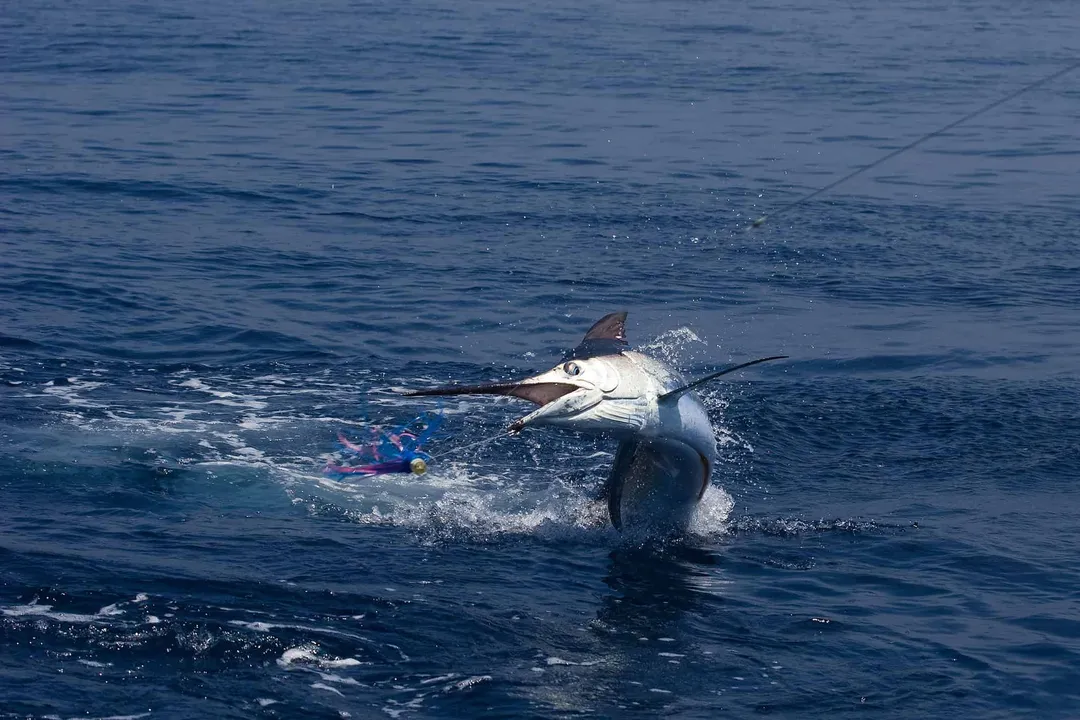
The journey begins at the broadest level, the Kingdom, where the White Marlin belongs to Animalia. This immediately separates it from plants, fungi, and bacteria. As an animal, it is a multicellular, eukaryotic organism that is heterotrophic, meaning it must consume other organisms for energy, rather than producing its own food through photosynthesis. This fundamental characteristic dictates its life as a predator in the open ocean, constantly seeking prey to sustain its high-energy lifestyle.
# Phylum Chordata
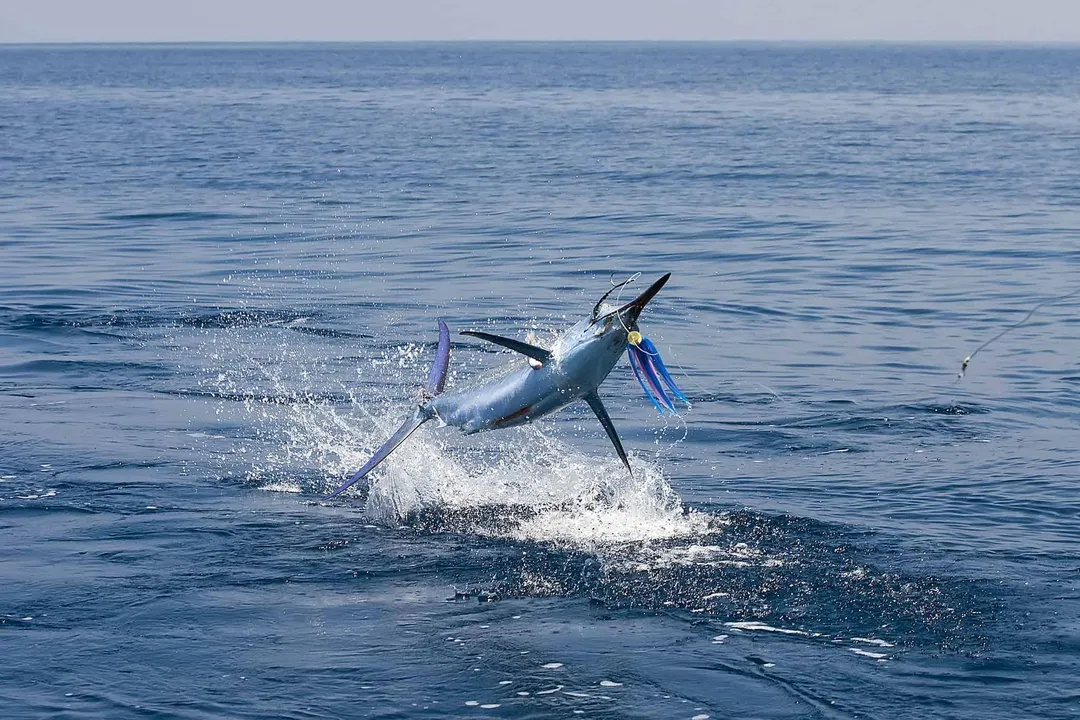
Moving down a rank, the White Marlin falls into the Phylum Chordata. This phylum is inclusive of all animals possessing, at some stage of their development, a notochord, a dorsal hollow nerve cord, pharyngeal slits, and a post-anal tail. In the case of the White Marlin, these features are evident during its embryonic development, fitting it alongside fish, amphibians, reptiles, birds, and mammals. It is within this group that we find the vertebrates—animals with backbones—a feature essential for supporting the muscular structure required for rapid swimming speeds.
# Class Actinopterygii
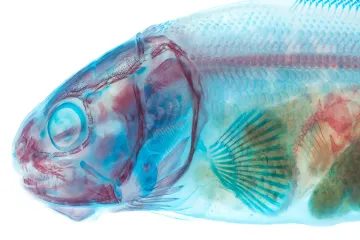
The next level of classification is the Class, which for this billfish is Actinopterygii. This class encompasses the ray-finned fishes, which constitute the vast majority of all fish species alive today. The defining characteristic here is the structure of their fins, which are supported by bony rays that connect to the main body structure, unlike the fleshy, lobe-like fins found in Sarcopterygii (lobe-finned fishes, which include lungfish and coelacanths). This anatomical difference in skeletal support provides the necessary maneuverability and propulsion for pelagic life.
# Order Istiophoriformes
Within the ray-finned fishes, the White Marlin is grouped into an Order that defines its lifestyle. While historical classifications might place it in Perciformes, modern taxonomy often assigns it to Istiophoriformes, which groups together the billfishes, including marlins, sailfish, and swordfish. This grouping signifies shared characteristics related to their streamlined, built-for-speed bodies, the presence of a long, pointed bill derived from the upper jaw, and their highly migratory, oceanic existence. The inclusion in this order immediately signals that the fish is a high-speed predator of the epipelagic zone.
# Family Istiophoridae
The family level, Istiophoridae, narrows the focus specifically to the true billfishes. This family includes the Marlins and Sailfish, distinguishing them from the related family Xiphiidae (Swordfish). Members of Istiophoridae share several key physical attributes: a deeply forked caudal fin, a prominent dorsal fin that often folds into a groove when swimming fast, and a relatively slender body compared to the more massive body shape of the Swordfish. A critical distinction for the White Marlin’s family is the presence of two pelvic fins, whereas the Swordfish only possesses one. The Florida Museum notes that the White Marlin is considered a medium-sized member of this family.
# Genus and Species Defining Identity
The final two ranks, Genus and Species, provide the unique identifier for the White Marlin: Kajikia albida.
# Genus Kajikia
The assignment to the Genus Kajikia is significant because it separates the White Marlin from other groups of marlins. Historically, White Marlins were often classified under the genus Tetrapturus. However, current scientific consensus often places it within Kajikia, grouping it with the Roundscale Spearfish (Kajikia tetraponx). This rearrangement reflects subtle but important morphological and genetic differences between these groups and the true Marlins placed in Makaira. Placing the White Marlin into Kajikia suggests a closer evolutionary relationship to other species traditionally separated from the large Blue or Black Marlin complex, which often share similarities in fin structure and juvenile development.
# Species albida
The species epithet albida directly relates to the fish’s appearance. Derived from Latin, albus means white, which perfectly describes the pale, whitish lower sides and belly of the fish, contrasting with its darker dorsal surface. This specific epithet, albida, combined with the genus, gives us the unique binomial name: Kajikia albida. It is this final, two-part name that distinguishes it from its cousins, such as the Striped Marlin (Kajikia audax, if considered by some taxonomies) or the Blue Marlin (Makaira nigricans).
# Taxonomy Comparison Table
To better illustrate the specificity of the classification, especially concerning the historical genus placement, a quick comparison is useful. The scientific placement is critical because it often dictates initial assumptions about biology, even before detailed species-level study begins.
| Taxonomic Rank | Classification | Key Implication |
|---|---|---|
| Kingdom | Animalia | Must consume food for energy |
| Phylum | Chordata | Possesses a backbone/notochord |
| Class | Actinopterygii | Ray-finned structure |
| Order | Istiophoriformes | Pelagic, high-speed billfish lifestyle |
| Family | Istiophoridae | True billfish; possesses two pelvic fins |
| Genus | Kajikia | Separates it from Makaira (Blue/Black Marlin) |
| Species | albida | Specific coloration (whitish belly) |
# Classification and Life History Insights
The placement of the White Marlin within Kajikia has real-world consequences, particularly for researchers and managers tracking populations. While the Florida Fish and Wildlife Conservation Commission lists the White Marlin as a species of concern, the U.S. Fish and Wildlife Service lists it as a Species of Concern under the Endangered Species Act, though it is not currently listed as threatened or endangered. This classification status forces specific monitoring requirements, which are often differentiated based on accurate species identification, distinguishing K. albida from more numerous or robust billfish populations. If the species were still universally lumped under Tetrapturus, management assessments might mistakenly apply data from a more common Tetrapturus species to the White Marlin, potentially leading to under-management of this specific, often smaller, pelagic fish.
Furthermore, the general traits conferred by its family, Istiophoridae, highlight why this fish is so specialized. Its anatomy is finely tuned for bursts of incredible speed in pursuit of prey like mackerel and squid. Because it resides primarily in the open ocean—often between the surface and about 100 meters deep—its classification as a highly migratory pelagic species affects how its stock assessments are conducted, as its range crosses international boundaries. When considering the sheer volume of water this classification implies the fish inhabits, it becomes clear why monitoring the Kajikia albida population requires a globally coordinated effort, much more complex than monitoring a near-shore species.
# Distinguishing Features Tied to Identity
While the scientific classification provides the formal structure, the physical description is what grounds the name in reality. The White Marlin is often confused with other billfish, but specific morphological markers, which evolutionary pressures solidified within the Kajikia genus, provide differentiation.
One key characteristic distinguishing it from the Blue Marlin is its relatively shorter, more slender bill compared to the massive bill of the Makaira genus. Additionally, the White Marlin typically has a noticeably more arched dorsal fin than the Blue Marlin, often reaching a height comparable to the length of the fish's pectoral fin when relaxed, a trait that becomes more pronounced in adults. Its coloration is also a clue: while the flanks are darker blue to blackish-brown, the belly is notably white or silvery-white, a trait reflected in its species name, albida. Some guides note that the White Marlin rarely exceeds 160 pounds, making it significantly smaller than the potential size of a Blue Marlin, another practical differentiator derived from its species-level biology.
Another area of subtle distinction, often used by fisheries biologists, relates to the relative length of the upper jaw compared to the length of the head behind the eye. For the White Marlin, the upper jaw length is typically shorter than the length of the head measured from the back of the eye, providing a measurable metric that separates it definitively from other members of the Istiophoridae family based on subtle skeletal differences that underpinned its placement in Kajikia.
# Biological Context and Vulnerability
The classification as a member of the family Istiophoridae also explains why this species often faces the threats it does. These large, fast-swimming predators require substantial food resources and are naturally subject to relatively low reproductive rates compared to smaller reef fish. The fact that the White Marlin is federally listed as a Species of Concern by the FWS underscores the pressure these open-ocean predators face from commercial and recreational fishing activities. Its biology, defined by its place in the tree of life, dictates its vulnerability; it is a long-lived, relatively slow-growing species, meaning population recovery after heavy fishing pressure is inherently slow, regardless of the specific genus it belongs to.
Even non-lethal interactions, like being caught and released by recreational anglers—a common scenario given its popularity in sport fishing—must be considered against its biological profile. The stress of the fight, while celebrated by the angler, represents a significant physiological cost to an animal evolved for efficiency in a stable environment, a context that classification helps researchers frame when modeling population dynamics. Recognizing that Kajikia albida belongs to a family known for extreme oceanic life informs us that management must address habitat connectivity across vast stretches of the Atlantic basin where these fish roam.
Related Questions
#Citations
White Marlin Animal Facts - Kajikia albida
White Marlin – Discover Fishes - Florida Museum of Natural History
Kajikia albida, Atlantic white marlin : fisheries, gamefish - FishBase
White Marlin (Kajikia albida): Complete Species & Fishing Guide 2025
White Marlin (Kajikia albida) | U.S. Fish & Wildlife Service
White Marlin - Images | Blue Planet Archive
Atlantic white marlin (Tetrapturus albidus) - iNaturalist
White Marlin - FWC
White marlin Facts for Kids