How many dorsal fin spines typically differentiate the White Crappie (*P. annularis*) from the Black Crappie (*P. nigromaculatus*)?
Answer
Six
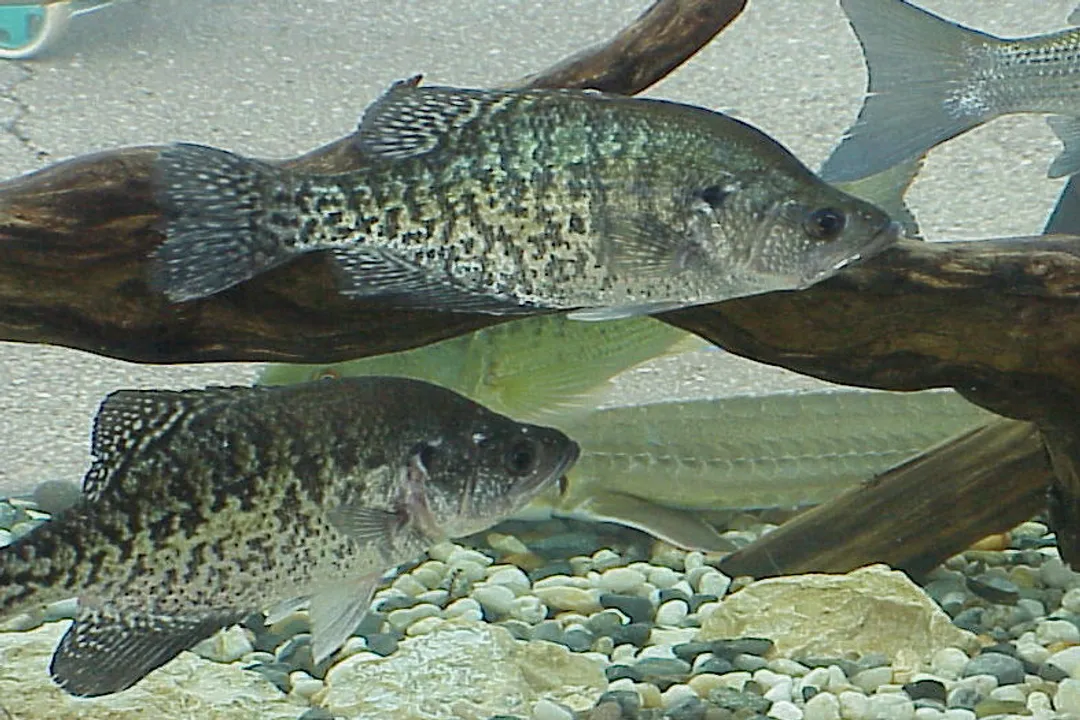
The most reliable physical count used for separating the White Crappie from its close relative, the Black Crappie, involves examining the dorsal fin spines. The White Crappie (*P. annularis*) characteristically possesses exactly six dorsal fin spines. In contrast, the Black Crappie (*P. nigromaculatus*) is typically distinguished by having either seven or eight dorsal fin spines. This measurable distinction in skeletal fin structure is a key component of the taxonomic analysis used by fisheries biologists for accurate field identification, providing concrete data that supports their separate species classifications within the genus *Pomoxis*.
Related Questions
What is the Phylum classification for the White Crappie (*Pomoxis annularis*)?How many dorsal fin spines typically differentiate the White Crappie (*P. annularis*) from the Black Crappie (*P. nigromaculatus*)?What is the common designation for the Family Centrarchidae, which includes *P. annularis*?What does the Latin species name *annularis* translate to, describing the White Crappie's characteristic markings?Which Class groups the White Crappie, characterized by bony spines or rays supporting its fins?In which environmental condition does the White Crappie generally seem to tolerate or prefer over the Black Crappie?Which genus classification groups the White Crappie along with the Black Crappie (*P. nigromaculatus*)?What specific type of scales, featuring tiny, tooth-like projections, are characteristic of *P. annularis* morphology?Which major North American drainage system is identified as part of the native territory for *Pomoxis annularis*?What is the IUCN Red List conservation status assigned to the widespread White Crappie population?