White Crappie Scientific Classification
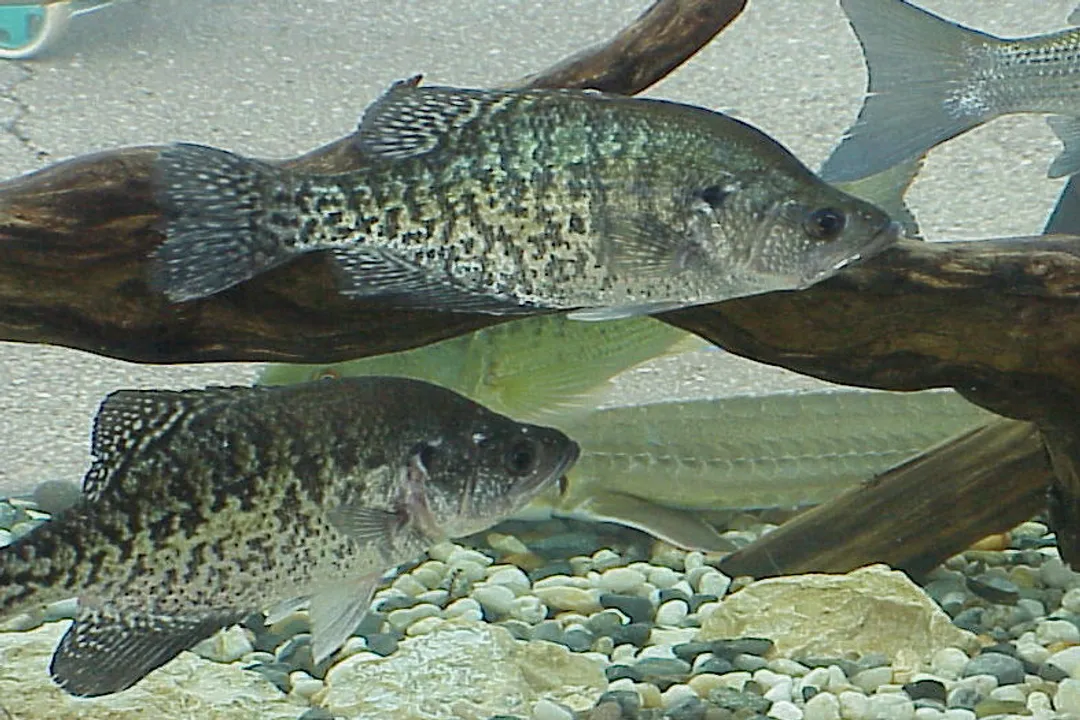
The White Crappie, known by its scientific designation Pomoxis annularis, is a species that commands significant attention from anglers across North America, yet its precise scientific placement deserves a closer look than just its common nickname, "papermouth." Understanding where this popular freshwater fish fits into the grand tree of life helps explain its biology, its relationship to its close cousin, the Black Crappie, and why it thrives in certain environments over others. [4][6]
# Kingdom Animalia
The journey into the classification of the White Crappie begins at the highest recognized grouping: the Kingdom. Pomoxis annularis belongs squarely within Animalia, meaning it is a multicellular, heterotrophic organism—it must consume other organisms for energy—which distinguishes it from the plant and fungus kingdoms. [7] This fundamental placement establishes it as part of the vast collection of life forms we recognize as animals.
# Phylum Chordata
Moving down the hierarchy, the White Crappie falls under the Phylum Chordata. [4] This phylum is significant because it includes all animals possessing, at some point in their development, a notochord, a dorsal hollow nerve cord, pharyngeal slits, and a post-anal tail. [7] Within Chordata, the White Crappie is further categorized as a Vertebrata (subphylum), confirming it possesses a backbone or spinal column, setting it apart from invertebrates like insects and mollusks. [7]
# Ray-Finned Fishes
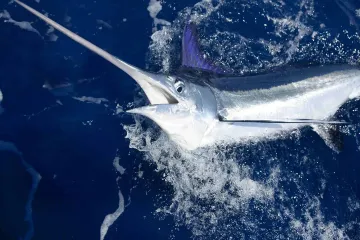
The Class for the White Crappie is Actinopterygii. [4][7][8] These are the ray-finned fishes, representing the largest group of vertebrates in existence. [4] Their defining feature, evident in the name, is the presence of bony spines or rays supporting their fins, which differ fundamentally from the fleshy, lobe-like fins found in Sarcopterygii (lobe-finned fishes, which include lungfish and our distant ancestors, the tetrapods). [4]
# Order and Family Placement
The next steps in the taxonomy place the White Crappie within its ecological context. It belongs to the Order Perciformes, [7][8] a large and diverse order containing many well-known freshwater and marine species, often characterized by spiny dorsal fins. [4] However, some classifications place it within Centrarchiformes. [4] Regardless of the exact order designation, the critical grouping for understanding its immediate relatives is the Family Centrarchidae. [1][4][7][8]
The Centrarchidae family is commonly known as the Sunfish Family. [1] This is the same family that includes familiar species like the largemouth bass and bluegill. [6] Being a member of Centrarchidae suggests shared ancestry and similar life history traits, such as nesting behavior during spawning season, common to many of these sunfish species. [7]
# Genus and Species Definition
The genus level narrows the focus to the closest relatives, which is Pomoxis. [4][7][8] This genus contains the two recognized crappie species: the White Crappie (P. annularis) and the Black Crappie (P. nigromaculatus). [4][6] The specific species name, Pomoxis annularis, was given by Rafinesque in 1818. [4][3]
# Etymology of the Name
The scientific names themselves offer insight into the species’ characteristics. The genus name, Pomoxis, is derived from the Greek words referring to a sharp operculum (gill cover). This physical attribute helps distinguish it from some other fish families. The species name, annularis, is Latin for "having rings". [4] This is an apt description, as the White Crappie possesses vaguely vertical bars or rings along its sides, a key identifier when comparing it to its spotted relative. [4][5]
# Distinguishing Features
When managing or identifying fish in the field, the taxonomic distinction between P. annularis and P. nigromaculatus is crucial, and often relies on counting fin spines. [7] This comparative analysis highlights why the classification system matters for field identification.
# Spine Count Contrast
The most reliable physical count used to separate the two species involves the dorsal fin spines. [1][4][7]
- White Crappie (P. annularis): Typically possesses six dorsal fin spines. [1][4][7]
- Black Crappie (P. nigromaculatus): Typically possesses seven or eight dorsal fin spines. [1][4][7]
Furthermore, the body patterning differs significantly: White Crappie display five to ten dark vertical bars along their sides, while Black Crappie display randomly scattered spots. [4][6][7] This contrast in markings, which dictates the species' specific epithet (annularis for rings/bars), is a direct reflection of the Linnaean naming system. [4]
# Ecological Niche by Classification
The classification not only tells us what the fish is related to but also where it is likely to be found, as different species within a genus often diverge into slightly different ecological niches. White Crappie generally seem to prefer, or at least tolerate, warmer and more turbid (murky) waters compared to the Black Crappie. [6][3] While both species associate with structure like submerged timber, the White Crappie tends to outnumber its cousin in the cloudier environments and those lacking dense, rooted aquatic vegetation. [4]
It is interesting to consider how the distinct marking system—the vertical bars (annularis)—functions when compared to the spotting of the Black Crappie. In the clearer water where the Black Crappie might dominate, its spotted pattern might offer superior camouflage against dappled sunlight filtering through vegetation. Conversely, the vertical barring of the White Crappie may offer a more effective form of cryptic coloration in the lower visibility, more uniform background of turbid lake water or against vertical structures like submerged timber—a strategy that, perhaps unconsciously, reinforces the ecological separation dictated by their distinct species classifications. [1][3][4]
# Biogeographic Range and Status
The established classification of P. annularis corresponds to a specific native range within North America, though its popularity has resulted in widespread introduction. [4][8]
# Native Territory
The species is native to the Mississippi River basin and the Great Lakes drainages. [3][7] Its native spread extends from New York and southern Ontario westward to South Dakota and Minnesota, and south to the Gulf of Mexico. [3][4] Additionally, it occupies Gulf Slope drainages, reaching from Mobile Bay (Georgia/Alabama) to the Neuces River in Texas, including the Red River tributary to Hudson Bay. [3][7] Idaho, for instance, classifies the White Crappie as Exotic because it is not native to their waters. [8]
# Conservation Standing
From a population health perspective, the formal classification of its conservation status is "Least Concern" according to the IUCN Red List. [4][1] This indicates that the species is abundant and widespread across its native range. [7] Despite this low-risk status, the White Crappie is a designated Game Fish in many jurisdictions, such as North Carolina and Idaho. [6][8] This designation highlights a significant economic reality: its abundance and popularity as a sport fish often necessitate active management. It is stated that roughly one billion dollars is spent yearly on maintaining fisheries in the United States, a portion of which supports the management of popular species like the White Crappie, even when they are not considered threatened. [7] This contrast between a secure conservation status and substantial management expenditure speaks volumes about its value to recreational angling.
# Defining Adulthood
The lifecycle stages, which are inherent to a species' classification, also show variation depending on environmental factors. Maturity is generally reached around the second or third spring of life. [4][7] In managed waters, the average lifespan is longer, around six years, while in unmanaged settings, it is often shorter, averaging three to four years, frequently ending in stunting or overcrowding. [4][7] For instance, in Reelfoot Lake, Tennessee, they have been documented living for nine years. These differences in growth and longevity—which influence population structure—are what fisheries biologists must monitor when managing the stock, often using length-frequency data from trap nets to assess whether the population is overpopulated (e.g., average length under 130 mm). [7]
If an angler is looking to specifically target the largest specimens, understanding the growth rate contrast is key. While juveniles can grow quite rapidly in their first year, reaching 3–5 inches, [4] the rate slows down. Focusing on clear, well-managed waters where food competition is moderated, perhaps by the presence of appropriate forage like gizzard shad, is often the best way to ensure the White Crappie reaches its potential maximum length and weight, rather than succumbing to the stunted growth common in overcrowded, unmanaged populations. [7]
# Physical Classification Markers
Beyond the spines, the overall morphology places P. annularis within the broader teleost group, possessing ctenoid scales—scales with tiny, tooth-like projections on the exposed part. [4] They also share a characteristic terminal mouth position suited for feeding on prey directly in front of them. [7] Their body is described as deep-bodied and laterally compressed, allowing for quick movements, with a depth roughly one-third of the total body length. [4][7]
The general coloration aids in field identification, though it can change based on season and environment. Typically, the back is olive green to brown, fading to silvery sides, and a white belly. [3][6] During the breeding season, this pattern is emphasized, with males exhibiting darker heads and breasts, and dark margins appearing on numerous scales, particularly around the nape and breast area. [3][7] The dorsal, anal, and caudal fins are characteristically marked with dark spots or bands, forming a checkered pattern. [3][4] This precise combination of scale type, fin ray counts, and dorsal spine count provides the concrete, measurable data upon which the entire scientific classification rests. [7]
Related Questions
#Citations
White crappie - Wikipedia
White Crappie (Pomoxis annularis) - Species Profile
White Crappie | Louisiana Department of Wildlife and Fisheries
Pomoxis annularis (White Crappie) | Idaho Fish and Game Species ...
White Crappie | NC Wildlife
Pomoxis annularis - White crappies - Animal Diversity Web
White Crappie: Fish Description & Facts - WVDNR
White Crappie - | Outdoor Alabama