What defining trait separates the White Sturgeon's skeletal composition from many modern bony fishes?
Answer
It retains a mostly cartilaginous skeleton
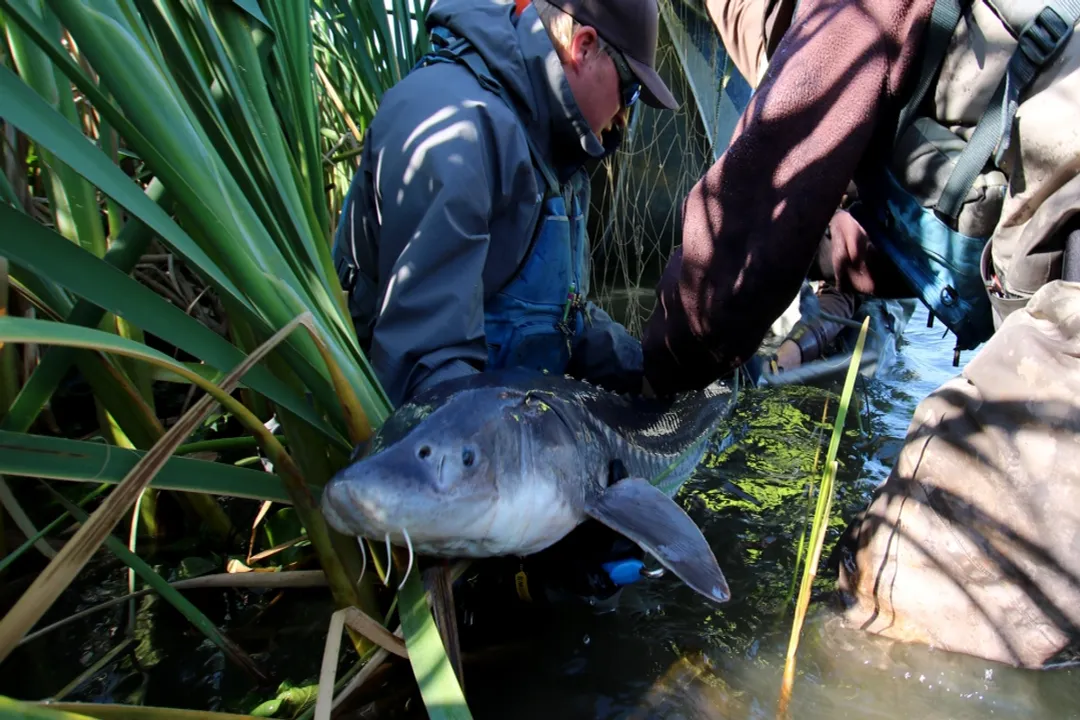
A key biological feature differentiating the White Sturgeon from many modern bony fish is that it retains a mostly cartilaginous skeleton, despite being classified in the bony fish class Actinopterygii. This primitive trait contributes to its ancient lineage appearance. While it possesses a backbone, which places it in the Subphylum Vertebrata, the main structural material remains cartilage rather than fully ossified bone found in more derived species. This cartilaginous nature, combined with the external reinforcement provided by the five rows of bony plates or scutes, creates its unique body framework.
Related Questions
What Class designation is given to the White Sturgeon, Acipenser transmontanus?What feature distinguishes the Family Acipenseridae from paddlefishes regarding sensory organs?What is the NatureServe global conservation ranking (G-rank) for Acipenser transmontanus?Which Phylum is Acipenser transmontanus placed in, characterized by the presence of a notochord?What key physical characteristic relates to the White Sturgeon's ancient lineage in the Order Acipenseriformes?Which specific jurisdiction lists Acipenser transmontanus as Endangered within its state boundaries, unlike Idaho?What is the biological consequence of the White Sturgeon's slow growth rate within the Acipenseriformes order?What characteristic describes the White Sturgeon's tail fin structure?Which historical scientific name was sometimes used for the White Sturgeon instead of Acipenser transmontanus?What defining trait separates the White Sturgeon's skeletal composition from many modern bony fishes?