What high percentage estimate is associated with defensive strikes by *H. platurus* resulting in no venom injection?
Answer
Up to 80% of the time
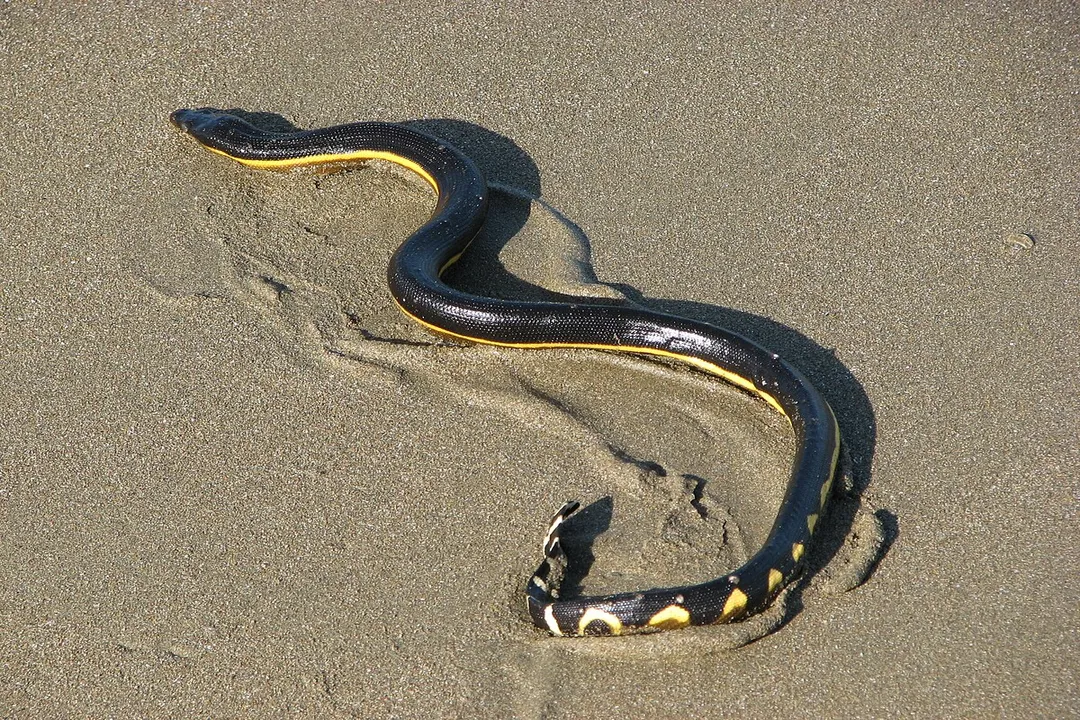
Despite possessing highly potent venom belonging to the elapid family, actual instances of human envenomation are infrequent, largely due to the snake's docile temperament and preference for avoiding confrontation. A significant factor contributing to the low rate of venom injection during defensive encounters is the prevalence of what are termed 'dry bites.' Estimates suggest that up to 80% of defensive strikes delivered by *H. platurus* involve the mechanical action of biting without actually injecting venom into the target. Even when envenomation does occur, the venom yield per bite is relatively small, ranging from 1.0 to 4.0 mg.
Related Questions
Why was the genus name *Pelamis* replaced with *Hydrophis* for the yellow-bellied sea snake?What percentage of necessary oxygen can *Hydrophis platurus* absorb directly from the water via cutaneous gas exchange?Why is the yellow-bellied sea snake rendered virtually helpless when found stranded on land?What reproductive mode describes the development of young inside the mother, leading to live birth in *H. platurus*?What high percentage estimate is associated with defensive strikes by *H. platurus* resulting in no venom injection?How does the yellow-bellied sea snake clean accumulated epibionts like barnacles from its body during shedding?How do pelagic sea snakes like *H. platurus* primarily satisfy their hydration requirements without drinking seawater?What major recurring weather event is linked to the passive transport of *H. platurus* outside its typical thermal range, such as to New Zealand?What does the conspicuous black and yellow pattern of the yellow-bellied sea snake function as to warn potential attackers?Why should the public be explicitly warned against returning a stranded yellow-bellied sea snake to the ocean immediately?