What is a sea snake classified as?
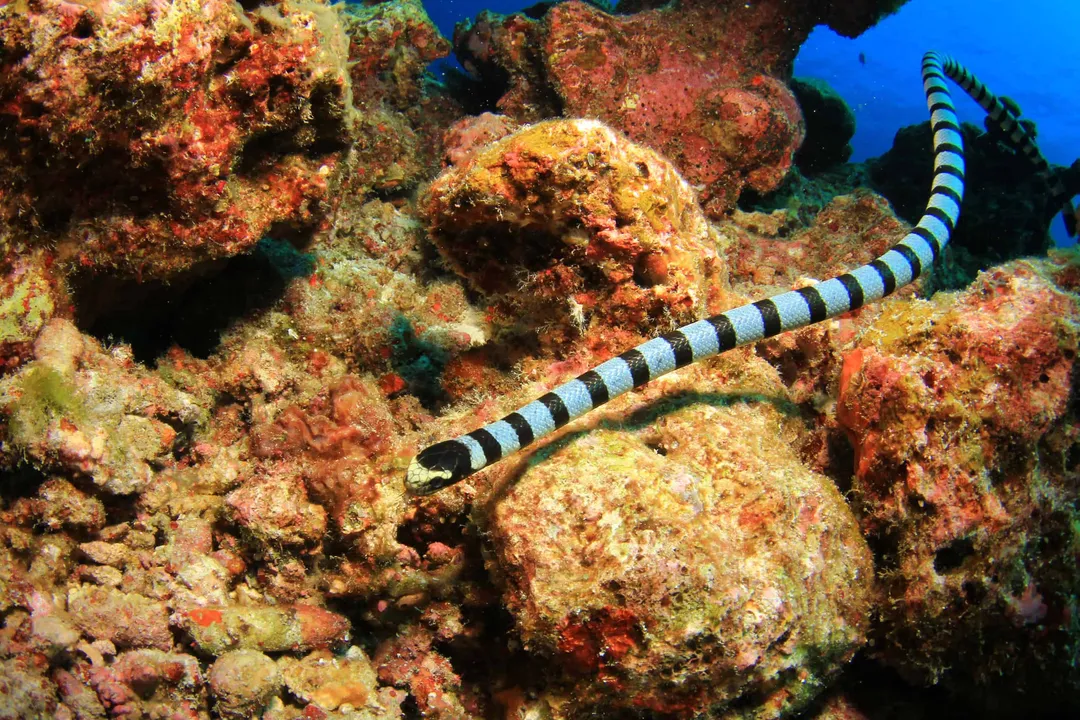
The world of snakes that inhabit the ocean is far more diverse and fascinating than a simple label might suggest. When we ask what a sea snake is classified as, the answer immediately points toward a highly specialized branch of the Elapidae family, the same group that includes cobras and mambas. [2][3][5] These are not fish, despite their environment; they are air-breathing reptiles that have conquered the marine realm through extraordinary biological engineering. [1][4] Scientifically, sea snakes fall under the Class Reptilia and the Order Squamata. [2][5] However, defining "sea snake" requires understanding a crucial split among these marine dwellers, based on how long they commit to the water and where they choose to reproduce. [1]
# Elapid Family Ties
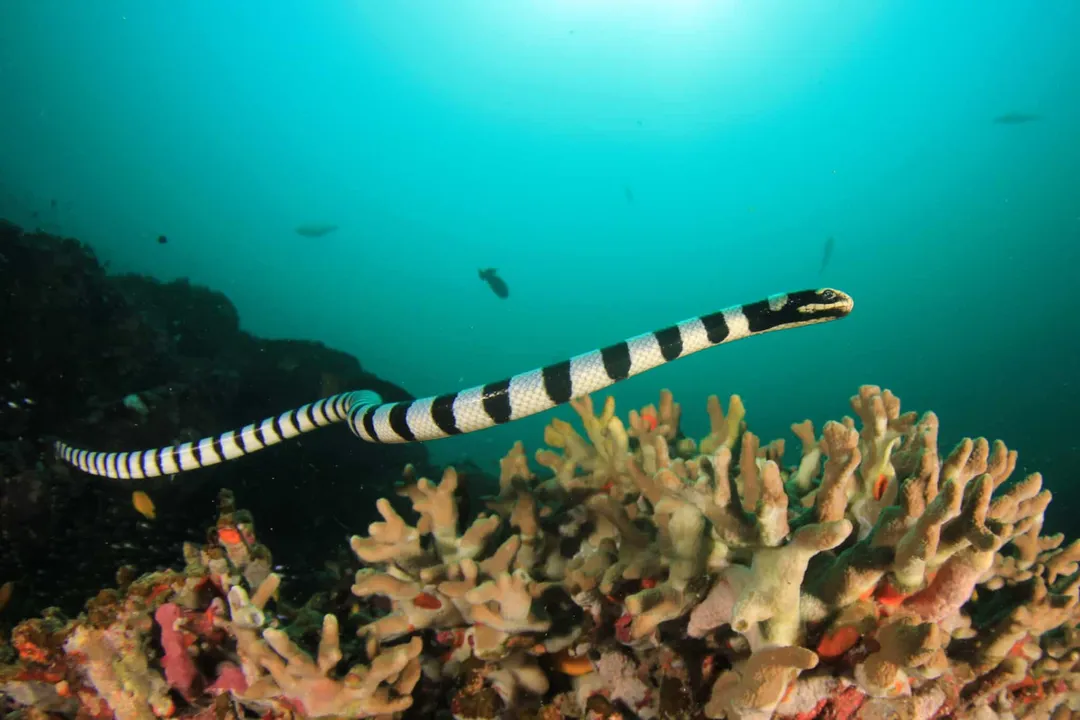
The fundamental classification places sea snakes squarely within the Elapidae family. [2][3][5] A key identifying feature shared with their terrestrial cousins, like cobras, is the presence of front fangs that stand up permanently. [1] This morphological feature is designed for injecting powerful toxins. [1] While they share this dangerous lineage, sea snakes are broadly organized into two distinct subfamilies, which reflects their varied evolutionary paths within the marine environment: Hydrophiinae (the true sea snakes) and Laticaudinae (the sea kraits). [3][4]
The Hydrophiinae are the snakes most completely adapted to aquatic life, spending the vast majority of their existence in the ocean and even giving birth while afloat. [1][4] Interestingly, this subfamily also encompasses certain terrestrial elapids found in Australasia. [3][4] Conversely, the sea kraits (Laticauda) represent a more primitive aquatic lineage that retains a necessary connection to land, as they must come ashore to deposit their eggs. [1][3] Some sources note that there are roughly 64 recognized species of Hydrophiinae (if excluding terrestrial ones) and about eight species of sea krait. [1][4] Other accounts cite totals around 52 or 67 species overall, reflecting ongoing taxonomic refinement. [2][5]
One point that clarifies their evolutionary position is the relationship between the two groups. The true sea snakes (Hydrophiinae) are considered more closely related to the land-based elapids of Australasia than they are to the sea kraits. [1][3] This suggests that the aquatic adaptation occurred at least twice, or that the kraits diverged earlier from the main line leading to the other sea snakes and terrestrial Australasian species. [3][4] Thinking about their classification this way reveals a fascinating story of adaptation; the sea kraits represent one successful solution to marine living, while the true sea snakes represent another, far more committed solution. [1][3]
# True Snakes Kraits
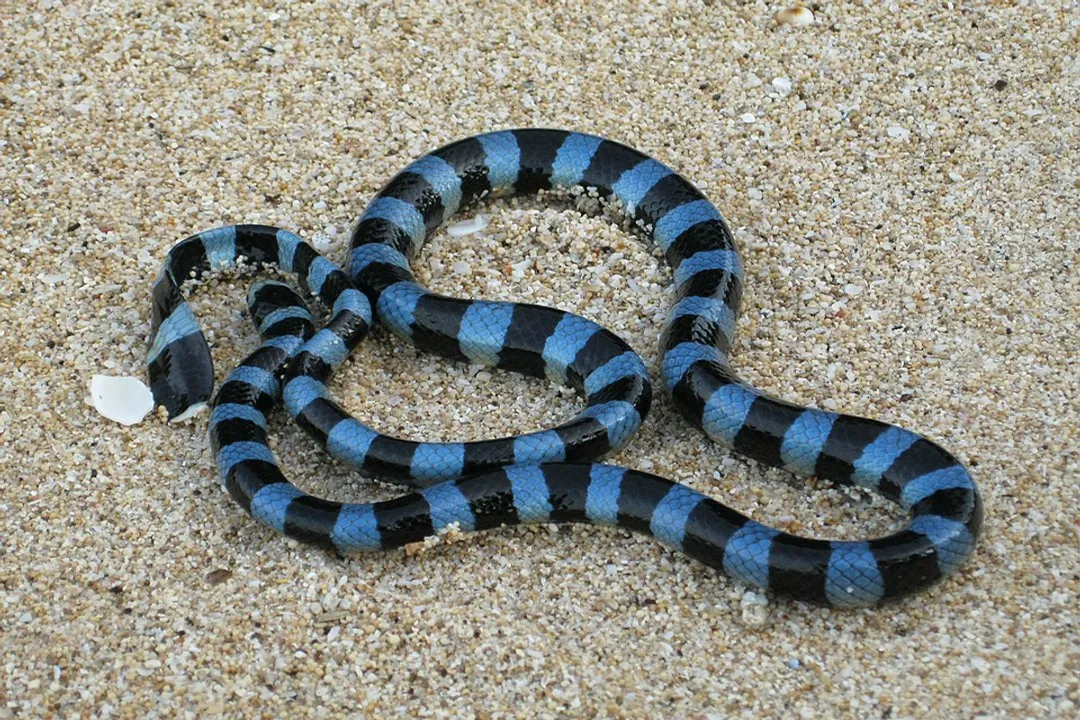
The distinction between the Hydrophiinae and Laticaudinae carries tangible physical consequences, particularly concerning how they move on land. [3] True sea snakes, belonging to Hydrophiinae, have evolved towards near-total aquatic dependency. [4] Their adaptation for life in the waves involved the reduction or complete absence of the enlarged belly scales found on land snakes. [3][4] While this modification creates the perfect laterally compressed shape for swimming and aids in propulsion with a paddle-like tail, it renders them virtually helpless on land; they cannot generate enough grip to crawl effectively and often roll onto their sides. [1][3][4]
Sea kraits (Laticauda spp.), on the other hand, are characterized by their need to return to land, often climbing into limestone caves and rock crevices to lay their eggs. [1][3] Because of this terrestrial obligation, they have retained the larger, overlapping belly scales common to land snakes, which allows them to move much more efficiently when out of the water. [3][4] Furthermore, sea kraits have lateral nostrils, whereas the highly specialized true sea snakes feature valvular nostrils situated on the top of the snout for efficient breathing at the surface. [3][4] This difference in nostril placement is a subtle but telling indicator of differing degrees of commitment to a fully aquatic existence. [3] If you encounter a banded snake basking on a coastal rock, the presence of prominent belly scales would strongly suggest it is a sea krait, not a true sea snake. [1]
# Aquatic Masters

Life in a saltwater environment demands significant physiological adjustments, and sea snakes have solved these challenges with specialized organs and body shapes. [1] Their most striking physical adaptation, shared by most species, is the flattened, oar-like tail, which provides the main means of propulsion through lateral undulation. [1][2][5] Many species also possess bodies that are laterally compressed to maximize swimming efficiency. [4]
However, their respiratory system is perhaps the most crucial adaptation, given that they are reptiles who must surface to breathe. [1][4] To facilitate longer dives—with reports of swimming to depths over 200 meters—they possess an enormously elongated lung that extends almost the entire length of the body, though the rear section may primarily aid in buoyancy control. [1][3] Beyond their lungs, they exhibit cutaneous respiration; they can absorb oxygen directly through their skin, which can account for up to 30% of their oxygen needs, enabling prolonged submersion. [1][3][4] Scientists have even found specialized, highly vascularized areas, such as on the forehead of the annulated sea snake (Hydrophis cyanocinctus), likely helping route oxygenated blood directly to the brain during deep or prolonged dives. [1][3] Dealing with the salt ingested from breathing and swallowing seawater is handled by specialized glands, often located under the tongue sheath, which excrete the excess salt. [1][3]
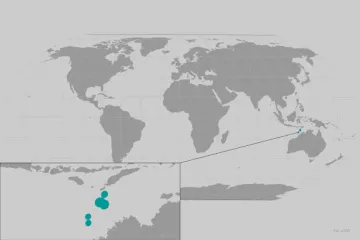
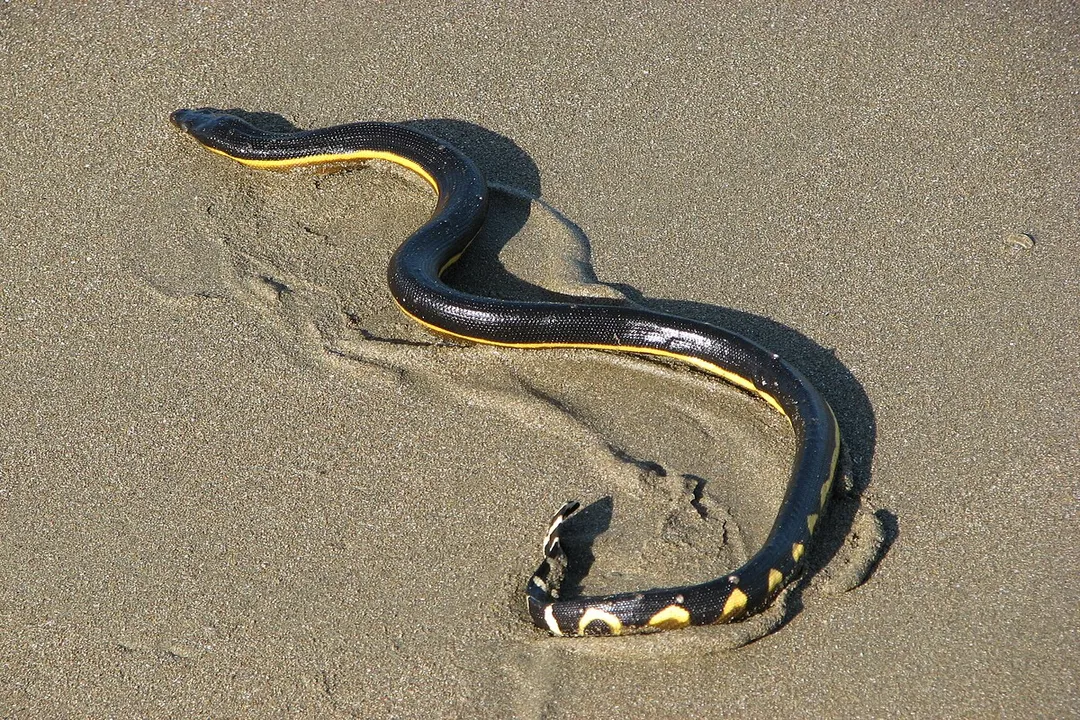
Considering the diverse habitats, from shallow reefs to the open ocean, it's interesting to note how their exterior surfaces adapt. While most pelagic (open-ocean) species have non-overlapping scales, reef-dwelling species, like those in the genus Aipysurus, possess imbricate (overlapping) scales, offering better protection against abrasion from sharp coral. [3][4] This adaptation shows that classification based purely on family structure doesn't capture the full spectrum of environmental tuning within the group. [3] For instance, the Yellow-bellied Sea Snake (Pelamis platurus) is the most pelagic, living its entire life at the surface and never needing to touch land or the seafloor, yet it can be found washed ashore when sick or caught in currents. [8]
# Sensory World
Navigating a submerged, light-filtered world requires senses fine-tuned for water-borne cues. [1] Vision, while present, is often considered secondary for prey capture compared to how terrestrial snakes rely on it. [4] Underwater, the light spectrum shifts dramatically, dominated by blue light, with yellow and red severely attenuated. [1] Sea snakes have evolved visual pigments in their retinas adapted to these conditions, and recent research suggests they may have even re-evolved some color sensitivity, perhaps necessary for when they surface to breathe or hunt in variable light zones. [1]
Crucially, they possess specialized sensory organs on their scales, likely on the head, which detect water-borne vibrations—a substitute for ground-borne vibrations experienced by land snakes. [1][4] Auditory responses to underwater motion have been recorded, indicating sensitivity to the movements of passing prey, though not as refined as a fish's lateral line system. [4] For mating, chemical signaling appears paramount; studies on turtle-headed sea snakes showed that while vision is useful up close (under 1 meter), pheromones become more important upon physical contact. [4]
An observation often overlooked in discussions of survival is how these snakes manage shedding their skin, or ecdysis, far from the abrasive surfaces available to coastal species. [8] The Yellow-bellied Sea Snake, being strictly pelagic, cannot rub against rocks or coral to aid the process. Instead, it employs a unique knotting and twisting behavior, sometimes over hours, to loosen the old skin, a necessity for keeping their bodies free of adhering algae or barnacles. [8] This method of maintenance is a direct consequence of their lifestyle, illustrating a behavioral adaptation supporting their physical classification as pelagic specialists. [8]
# Venom Potency Danger
The Elapid family association means that the majority of sea snakes possess venom that is extremely potent, often cited as more powerful than that of many terrestrial snakes. [1][5] For example, the venom of the Yellow-bellied sea snake ranks higher in toxicity (based on LD50 measures) than any terrestrial snake in Costa Rica where it is found. [4] The venom typically contains a mix of neurotoxins and myotoxins, which can cause paralysis, muscle breakdown (rhabdomyolysis), and potentially fatal respiratory failure. [7]
However, the danger they pose to humans is often overstated or misunderstood, largely due to biological constraints. [1][2] Human fatalities are rare for several reasons: they are generally mellow and reluctant to bite unless provoked, harassed, or entangled in fishing gear. [1][4] Furthermore, their fangs are very short, and they often deliver dry bites (no venom injected) or only a small amount of venom. [2][5] In cases where envenomation occurs, the initial symptoms can be misleadingly mild or even painless, though systemic effects like muscle aches and paralysis can appear hours later. [4][7]
A critical difference in medical effect is also noted in the literature: while neurotoxicity is a known factor, sea snake venoms often target skeletal muscle cells and the kidney in humans, making them frequently myotoxic and/or nephrotoxic rather than purely neurotoxic, unlike some cobra venoms. [4] The turtle-headed sea snake (Emydocephalus) stands out as a non-venomous exception, as its specialized diet consists almost entirely of fish eggs. [1][3] Among the venomous species, Aipysurus duboisii is often credited with having the most potent venom, though the beaked sea snake (Hydrophis schistosus) might be responsible for more human fatalities due to its aggressive nature and frequent encounter with fishermen in areas like India. [1]
# Conservation Threats
Despite their adaptations, these specialized reptiles face significant conservation hurdles. [1] While the Yellow-bellied sea snake has an exceptionally wide distribution across the Indo-Pacific and to the Americas, many other species are restricted to coastal areas and are more vulnerable. [3][4] Currently, many species lack protection under CITES listings. [1][5]
The primary threats stem directly from human activity and environmental change. [1] Bycatch—the accidental capture in fishing equipment—is cited as one of their greatest dangers. [1][5] Furthermore, historical hunting for meat, skin, and organs, particularly in places like the Philippines, devastated populations like the black-banded sea krait (Laticauda semifasciata). [1][5] Climate change adds another layer of risk, as these animals are finely tuned to specific temperature ranges and are susceptible to rising sea temperatures and the degradation of coral reef habitats where many of them hunt. [1] Some species, such as the leaf-scaled (Aipysurus foliosquama) and short-nosed sea snakes (Aipysurus apraefrontalis), are listed as critically endangered. [1] Protecting them hinges on better understanding their unique biology, distribution, and specific threats across their specialized marine habitats. [1]
If you ever encounter a sea snake washed up on a beach, remember that its very physiology makes it vulnerable when out of the water; holding it tilted can cause injury due to its inability to maintain blood pressure without hydrostatic support, meaning it should not be simply picked up and tossed back in by an untrained person. [8] Experts advise contacting local wildlife rescue services instead, allowing trained personnel to handle the potentially injured, but highly venomous, reptile. [8] Understanding their classification as Elapids, their division into obligate marine and semi-aquatic types, and their unique physiological trade-offs provides the necessary context to appreciate these often-misunderstood mariners of the reptile class. [1][3]
Related Questions
#Citations
Sea snake - Wikipedia
Sea snake | Types, Habitat, & Facts - Britannica
Sea Snake - Hydrophiinae - A-Z Animals
Sea Snakes Facts and Information | United Parks & Resorts
Yellow-bellied Sea Snake - The Australian Museum
Sea Snake Toxicity - StatPearls - NCBI Bookshelf - NIH
A deep dive into sea snakes, sea kraits and their aquatic adaptations
Pelamis platura (Yellowbelly Sea Snake ... - Animal Diversity Web