What geological feature, now Kansas, was submerged beneath the Western Interior Seaway during the life of *Xiphactinus*?
Answer
Western Interior Seaway
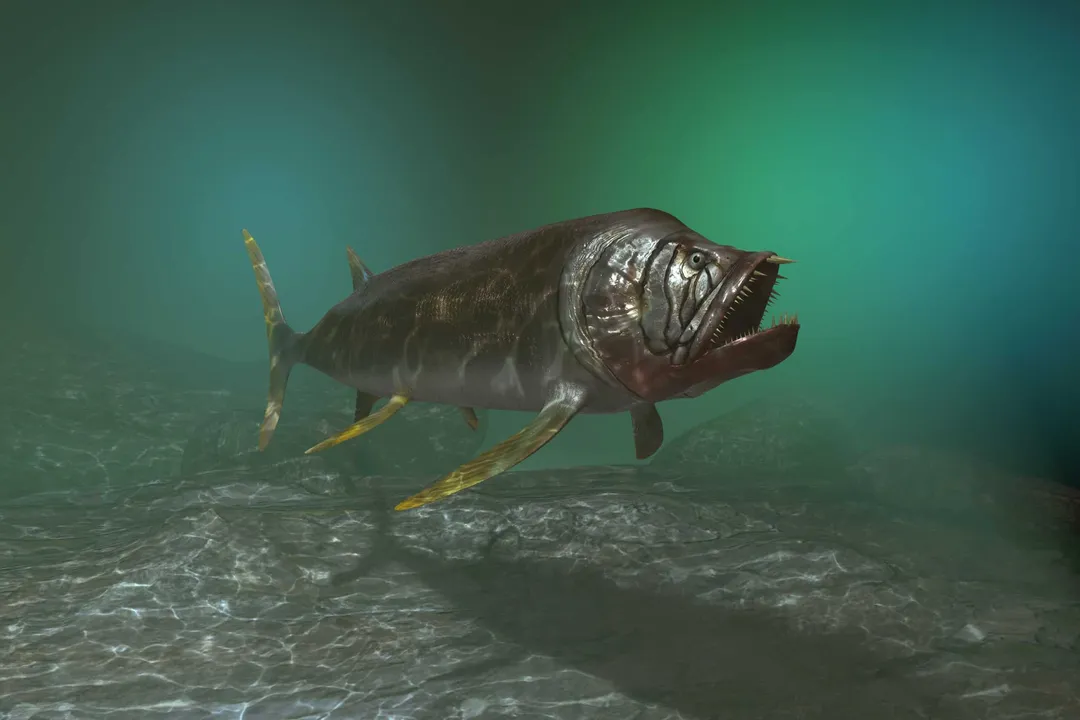
The existence and fossil record of *Xiphactinus* are intrinsically linked to the Western Interior Seaway (WIS). This massive, shallow inland sea separated the eastern and western parts of North America during the Late Cretaceous period. The seabed of this seaway, particularly in what is now the central United States, specifically Kansas, accumulated fine muds that were highly conducive to the exceptional preservation of marine life, including the remains of this apex predator. The WIS environment supported the rich biodiversity necessary to sustain such a large carnivorous fish population.
#Videos
#9 Xiphactinus- The Monster Fish - YouTube
Related Questions
What common name did Edward Drinker Cope coin for some *Xiphactinus* specimens?What specific external covering did *Xiphactinus* lack, suggesting a prioritization of maneuverability?Which specific fish species was famously found preserved whole inside a *Xiphactinus* fossil?During which geological period did *Xiphactinus* inhabit the shallow seas covering North America?What was the primary function of the sharp, conical teeth found in the jaws of *Xiphactinus*?What geological feature, now Kansas, was submerged beneath the Western Interior Seaway during the life of *Xiphactinus*?What group classification of bony fish does *Xiphactinus* belong to, linking it to modern species?What range of routine adult body lengths, in feet, were commonly attributed to *Xiphactinus*?What mechanical necessity is implied by the deep, powerful body shape and robust tail fin of *Xiphactinus*?Which specific geological layer in Kansas provided many critical fossils used to study *Xiphactinus*?