What function does the wallaby's long, muscular tail serve during high-speed saltation and while standing?
Answer
It acts as a counterbalance or even a tripod when standing still.
The tail of the wallaby is an essential element of its dynamic stability system. During its characteristic hop, known as saltation, the long, muscular tail swings opposite the body's momentum, functioning critically as a counterbalance to maintain stability during rapid changes in speed or direction. Furthermore, when the animal ceases movement and stands still, the tail often rests on the ground, forming a stable three-point base, or tripod, along with the two hind feet, providing steady support.
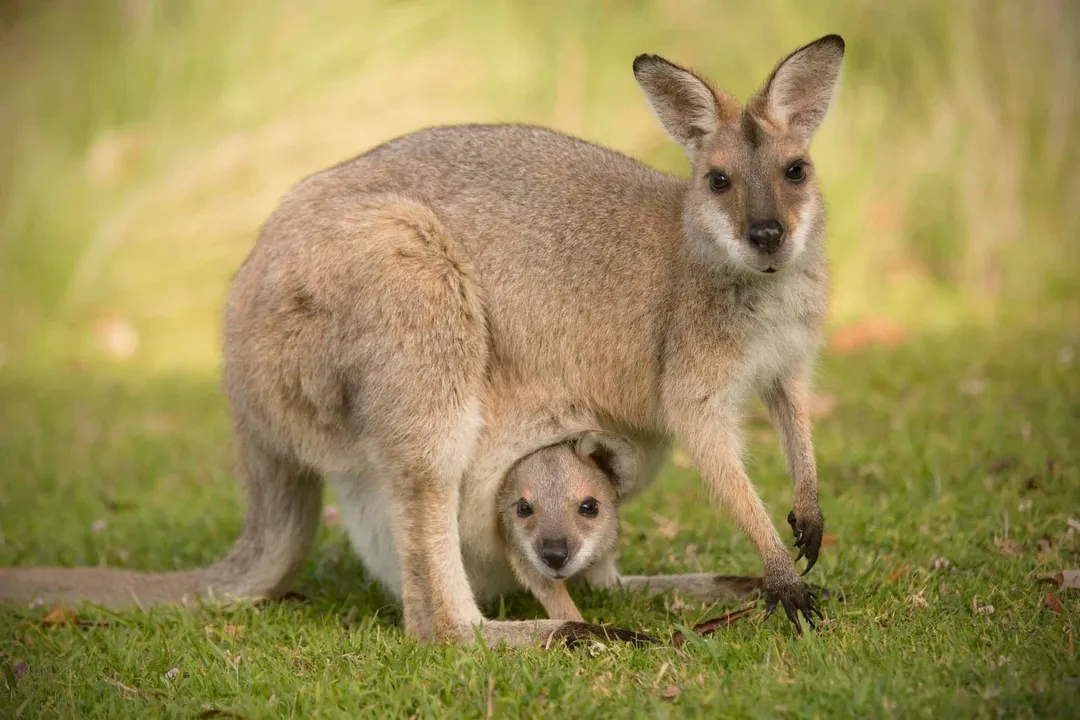
#Videos
Wallaby Facts! The Size Of A Gummy Bear At Birth! - YouTube
Related Questions
To which biological family do wallabies belong, alongside kangaroos and tree-kangaroos?What size characteristic generally separates wallabies from kangaroos, though this distinction is vernacular?What subtle physical difference aids wallabies in navigating denser terrain compared to kangaroos?What makes the diet of the Swamp Wallaby (*Wallabia bicolor*) distinct from many grass-eating relatives?What function does the wallaby's long, muscular tail serve during high-speed saltation and while standing?What is the technical term describing the signature hopping movement characteristic of wallabies?How small is a newborn wallaby joey typically upon leaving the birth canal and beginning its journey to the pouch?Which recognized species, also known as the Red-necked Wallaby, is frequently displayed in zoos globally?What habitat characteristic do wallabies seek, balancing foraging needs with immediate escape options?Which introduced predator poses a significant conservation threat to younger or smaller wallaby individuals?