What flight specialization, utilized by modern albatrosses, did immense **Pelagornithidae** birds primarily rely upon?
Answer
Dynamic soaring flight
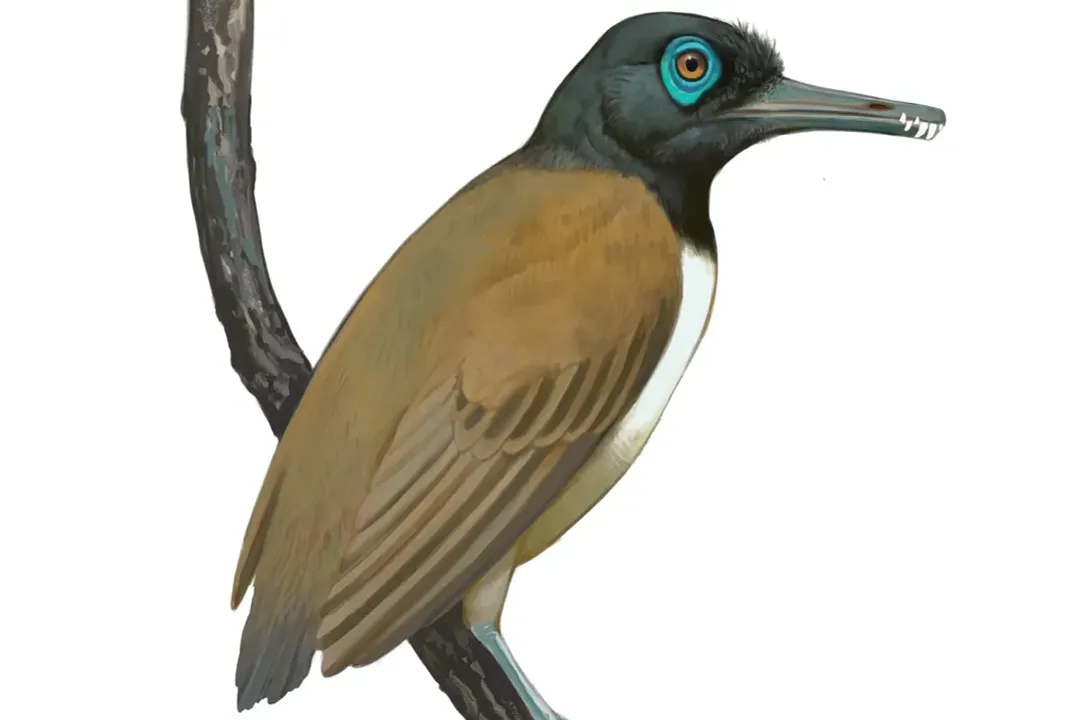
The **Pelagornithidae** lineage included some of the largest flying birds ever known, possessing wingspans up to 5 to 6 meters. Their skeletal structure, particularly the shape of the humerus, indicates a flight strategy optimized for covering immense oceanic distances efficiently. This strategy is identified as **dynamic soaring**, a technique that involves utilizing ocean currents and wind gradients near the water surface to glide vast distances without constant energy expenditure, a behavior shared with extant albatross species.
Related Questions
What reptilian characteristic did the earliest bird, *Archaeopteryx*, possess that modern birds lack?What type of prey did the Cretaceous marine bird *Hesperornis* specialize in catching in the shallow seas?What critical cranial function did most **enantiornithes** typically lack in contrast to later avian lineages?What surprising component of the diet of *Longipteryx chaoyangensis* was revealed by stomach content analysis?How robust was the tooth enamel thickness in *Longipteryx* compared to massive predators like *Allosaurus*?What characterizes the 'pseudoteeth' found on the massive Cenozoic **Pelagornithidae** birds?What flight specialization, utilized by modern albatrosses, did immense **Pelagornithidae** birds primarily rely upon?Why were Mesozoic toothed birds, like **enantiornithines** and *Hesperornis*, vulnerable during the impact winter?What adaptive advantage allowed the ancestors of modern beaked birds to survive the ecological collapse?What hypothesized dual function, beyond mashing food, might the robust teeth of *Longipteryx* have served?