What characterizes the 'pseudoteeth' found on the massive Cenozoic **Pelagornithidae** birds?
Answer
They were sharp projections that were outgrowths of the jaw bones themselves
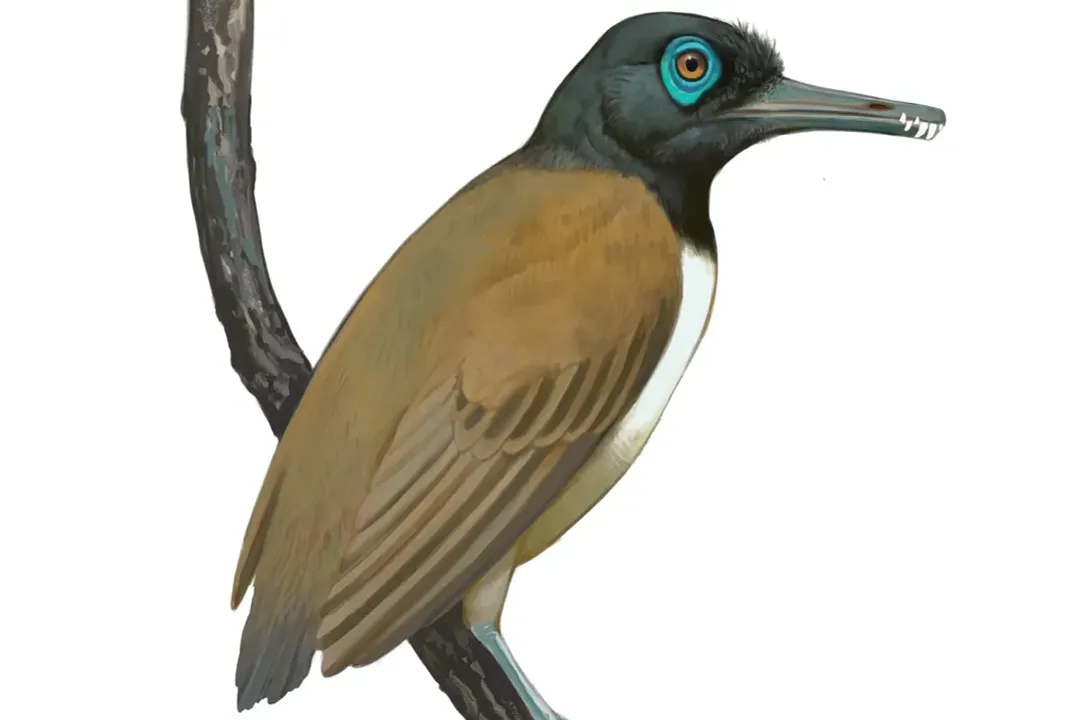
The **Pelagornithidae**, or pseudotooth birds, were immense avian flyers of the Cenozoic oceans that exhibited a spectacular dental mimicry, leading to names like 'false-toothed birds.' Crucially, these structures were fundamentally different from the true teeth of their Mesozoic predecessors. True teeth possess specific components such as specialized enamel and internal channels like Volkmann's canals. In contrast, the 'pseudoteeth' of the Pelagornithids were simply sharp, tooth-like projections formed directly as outgrowths extending from the structure of the jaw bones.
Related Questions
What reptilian characteristic did the earliest bird, *Archaeopteryx*, possess that modern birds lack?What type of prey did the Cretaceous marine bird *Hesperornis* specialize in catching in the shallow seas?What critical cranial function did most **enantiornithes** typically lack in contrast to later avian lineages?What surprising component of the diet of *Longipteryx chaoyangensis* was revealed by stomach content analysis?How robust was the tooth enamel thickness in *Longipteryx* compared to massive predators like *Allosaurus*?What characterizes the 'pseudoteeth' found on the massive Cenozoic **Pelagornithidae** birds?What flight specialization, utilized by modern albatrosses, did immense **Pelagornithidae** birds primarily rely upon?Why were Mesozoic toothed birds, like **enantiornithines** and *Hesperornis*, vulnerable during the impact winter?What adaptive advantage allowed the ancestors of modern beaked birds to survive the ecological collapse?What hypothesized dual function, beyond mashing food, might the robust teeth of *Longipteryx* have served?