Are magpies prehistoric?
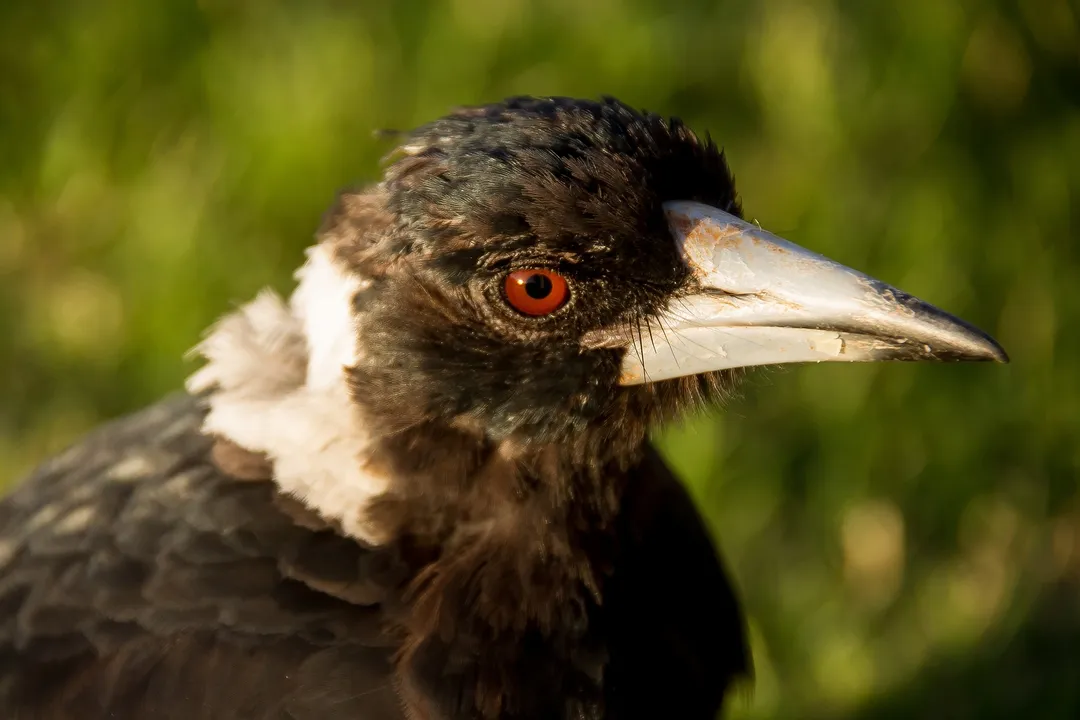
Magpies, those clever, often bold birds we see hopping across lawns or scavenging roadside fare, are not exactly prehistoric in the sense that they are dinosaurs. However, the lineage that leads directly to the modern magpies (Pica genus) possesses an astonishingly deep history, with fossil evidence pushing their ancestry back nearly 20 million years. To truly understand their age, we must distinguish between the ancestor of the entire magpie family and the ancestor of the specific genus.
# Ancient Family

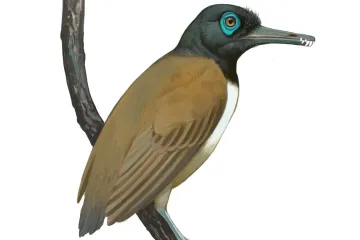
The broader group to which magpies belong, the crow family Corvidae, boasts an even more remote origin. Paleontologists have unearthed fossils in north-western Queensland, Australia, belonging to a bird called Archaeocorvus meadewaldenis (AMRI). This discovery marks the world's oldest known fossil belonging to the magpie family, dating back an impressive 25 million years to the Oligocene epoch. This finding suggests that the ecological niche filled by corvids—smart, adaptable omnivores—was established on the ancient Australian continent long before the lineage of the familiar black-and-white birds we recognize today had fully diverged. The presence of such an ancient corvid in Australia provides a fascinating starting point for tracing avian intelligence across geological time.
# Factual Ancestor
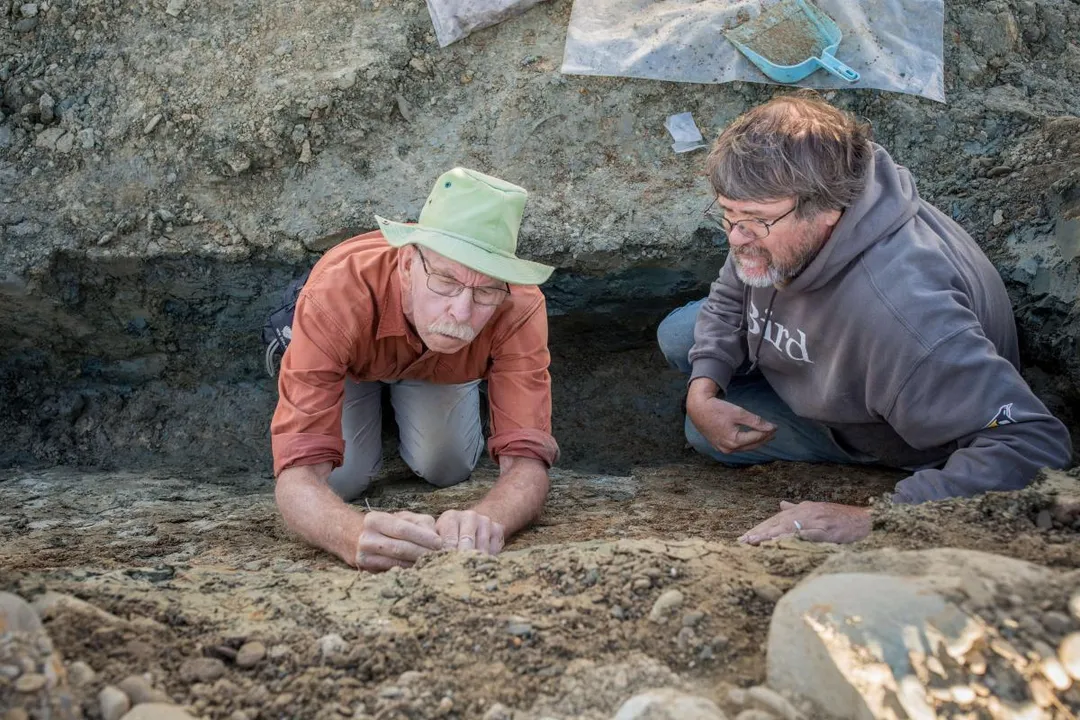
Closer to the modern bird, the direct ancestral line of the magpie genus Pica has been firmly traced to the Miocene epoch. This evidence comes from the remarkable fossil discoveries made in Aotearoa New Zealand. Scientists identified fossils belonging to a species named Pica praepica. Crucially, these fossils are dated to approximately 19 million years ago.
This New Zealand discovery is highly significant because it places a clear, recognizable ancestor of the modern magpie deep within the fossil record, long before many other contemporary bird species evolved into their current forms. The analysis of Pica praepica suggests it was an extinct species that shared characteristics with its modern descendants, solidifying its place as a direct precursor. The team studying these remains, including those recovered in Central Otago, confirmed that ancestral magpies inhabited New Zealand $19$ million years ago, pushing back previous estimates for this specific group's appearance in the region.
# Geological Context
When we compare the ages, we see a pattern of ancient bird evolution across the region. The $25$-million-year-old Archaeocorvus in Australia represents the earliest known family member, while the $19$-million-year-old Pica praepica in New Zealand represents an early genus member. One interesting way to view these finds is through the lens of ancient geography. The presence of an early corvid ancestor in Australia, followed by the Pica genus ancestor in New Zealand $6$ million years later, hints at a long-ago dispersal event across the remnant landmasses of Gondwana, perhaps indicating that the Pica lineage was already present in the region before the final separation of landmasses dictated the subsequent evolutionary paths of the two island populations.
The modern magpies we encounter today, such as the Black-billed, Yellow-billed, or Eurasian Magpie, are descendants of these deep-time ancestors. While the term "prehistoric" usually refers to the time before written records, in the context of avian evolution, having a solid fossil record dating back almost 20 million years for the direct lineage puts the Pica genus firmly in the category of ancient bird groups that have successfully navigated eons of environmental change.
# Enduring Traits
Modern magpies, regardless of the specific species, are renowned for their high intelligence, complex social structures, and adaptable, omnivorous diets. They eat everything from insects and small vertebrates to seeds and human refuse. This behavioral flexibility is likely what has allowed the lineage to persist across such vast timescales. Thinking about their inherent capabilities, the complex problem-solving required for a bird to survive through $19$ million years of shifting climates and predator pressures suggests that the foundations for their famous cunning—the ability to recognize faces or use tools, for instance—were laid very early on. We can infer that the selective pressures acting on Pica praepica $19$ million years ago were already favoring cognitive traits that we celebrate in the birds perched on our fences today [Analysis based on].
The distinction between the fossil relatives and the birds alive now can be summarized simply: The family is $25$ million years old; the genus (the specific magpie group) is confirmed as $19$ million years old.
| Bird Group | Fossil Example | Age (Approximate) | Location Found |
|---|---|---|---|
| Magpie Family (Corvidae) | Archaeocorvus meadewaldenis (AMRI) | $25$ Million Years Ago | Australia |
| Magpie Genus (Pica) | Pica praepica | $19$ Million Years Ago | New Zealand |
# Modern Identification
While the fossils provide the deep timeline, observing the present-day birds shows the legacy of that long existence. Eurasian Magpies, for example, are known across many continents. In North America, observers might be tracking the differences between the Black-billed and Yellow-billed species, each requiring slightly different ecological conditions or behavioral adaptations to thrive. Paying close attention to subtle field marks, like bill color or the iridescence of the tail feathers, helps differentiate species that all share that $19$-million-year-old ancestor. For the amateur naturalist trying to understand local bird populations, noting the specific Pica species in your area—for instance, whether you see the classic black-and-white Pica pica or a related form—is the final step in connecting modern observation back to deep evolutionary time. The resilience inherent in a lineage that survives from the Miocene suggests that these birds are extremely well-equipped for whatever the next million years brings.
Related Questions
#Citations
Magpie ancestors lived in Aotearoa New Zealand 19 million years ago
Magpie - Wikipedia
World's oldest fossil of the magpie family discovered in Queensland
NZ bird life echoes Australia – News
New Zealand fossils reveal deep roots of Australian magpie lineage
19-million-year-old fossil of magpie-related bird found in New Zealand
Study casts magpies in new light - Otago Daily Times
MAGPIES: YOU MIGHT NOT KNOW WHAT YOU'RE MISSING
Pica praepica | Prehistoric Wiki - Fandom