Are shoebill birds friendly to humans?

The shoebill, Balaeniceps rex, commands attention not just for its massive, shoe-shaped bill but also for the mystery surrounding its disposition toward people. This prehistoric-looking creature, often seen standing motionless in the swamps of central tropical Africa, presents a complex picture of seeming calmness that frequently contrasts with its formidable appearance. When observing footage or visiting areas where they reside, people often note a surprising lack of immediate flight or aggressive display, leading to the common query regarding their friendliness.
# Perceived Calmness
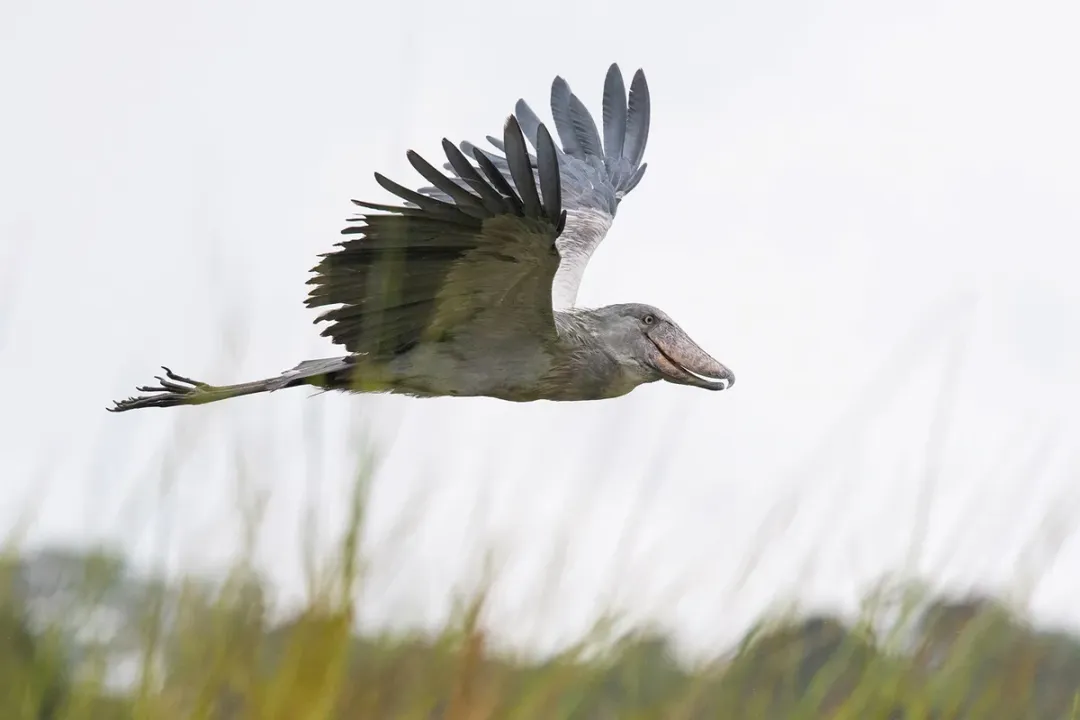
Multiple accounts from observers suggest that shoebills are, surprisingly, quite docile when people are near, especially in controlled environments or when they are accustomed to human presence. Some reports indicate that these large birds can appear very calm around humans, almost indifferent, allowing for close proximity without apparent distress or threat. This docility is often highlighted in videos and photographs shared online, where the birds might simply continue their typical activities, such as standing or perhaps even wading, while people are watching nearby. It is important to note that much of this perceived friendliness stems from interactions in captivity or from controlled, non-threatening approaches in the wild. They are generally characterized as being rather solitary birds, preferring to remain still for long periods, which might contribute to the impression that they are placid or approachable.
# Wild Versus Captive
Understanding the context of any encounter is essential when assessing the potential friendliness of a wild animal like the shoebill. While anecdotal evidence points toward docility, these birds are inherently wild creatures whose behavior is shaped by their environment and immediate needs. In their natural wetland habitats, which consist of dense papyrus and swampy areas in countries like Sudan, Uganda, and Zambia, they are primarily focused on hunting lungfish and other aquatic prey. If a human approaches too closely while the bird is focused on feeding, or if the bird feels its territory or nest is threatened, this placid demeanor can shift rapidly.
It is a crucial distinction: a bird that tolerates a distant observer is not necessarily friendly in the human sense of the word; it is merely tolerant of a non-immediate threat. The reality is that they are not domesticated animals bred for companionship. Their behavior in the wild is dictated by survival instincts, which mandate caution and the potential for defense if necessary. Think of it less as a pet greeting a familiar owner and more as a powerful predator choosing to ignore an unfamiliar object until that object infringes upon its personal space or resources.

# Beak Power
The most striking feature of the shoebill is undeniably its massive, hook-tipped bill, which functions as a specialized tool for hunting and defense, giving rise to concerns about their potential for harm. This bill is incredibly strong, capable of delivering a powerful, crushing blow. While the bird’s general demeanor might suggest it is harmless, one must respect the sheer mechanical force it possesses.
When considering their potential for aggression, it is instructive to look at documented behaviors. Shoebills are known to use their bills for what is often described as "clattering" when excited or agitated, or perhaps in social signaling. However, this action, when directed toward a perceived threat, transitions from a mere display into a genuine danger. The general consensus among those who study or work closely with these birds is that they should be treated with caution, as they are capable of inflicting serious injury if provoked. While they might not actively seek out conflict, their defensive capabilities are significant.
| Attribute | Wild Context | Captive Context | Interaction Suggestion |
|---|---|---|---|
| Disposition | Cautious, solitary, focused on hunting | Potentially more habituated to humans | Maintain respectful distance |
| Defense | Powerful bill used if threatened or nesting | Less likely to be tested, but capability remains | Never attempt to touch or feed |
| Movement | Slow, statue-like when observing prey | Can seem unnervingly still and observant | Do not startle them from stillness |
When examining photographs from sanctuaries or zoos, one can sometimes see keepers positioned quite close to the birds. The implied trust here is built over time and through established routines, rather than an inherent, unconditional friendliness toward any human presence. This difference between habituation and affection is a key point for any visitor or observer. If a bird is accustomed to humans because they bring food or don't interfere, it learns a pattern of tolerance. This is not the same as a dog wagging its tail; it is a calculated risk assessment by the bird.
# Habitat Influence on Temperament
The natural environment itself plays a role in how often human encounters occur and thus how the birds react. Shoebills inhabit vast, remote freshwater swamps and floodplains. In these remote areas, encounters with humans are infrequent, meaning the birds likely maintain a high level of wariness, as any human encountered is an anomaly requiring caution.
However, in areas where ecotourism or research involves regular, non-intrusive observation, the birds might exhibit the docility noted in the sources. If you are visiting a specific wetland reserve known for shoebill sightings, understanding the local guides' protocol is paramount. They often know the specific distance required to ensure the bird remains undisturbed while offering a rewarding viewing experience. For instance, a responsible local guide might advise guests to remain completely stationary for ten minutes before a shoebill even acknowledges their presence, turning the interaction into a waiting game based on the bird’s terms.
# Deciphering Warning Signs
Given the dual nature—docile tolerance versus powerful defense—understanding the subtle signs of agitation is vital for safety. While the sources don't provide an exhaustive checklist, recognizing when the initial calm is breaking is the most important piece of personal safety advice for anyone observing these birds in the wild. A bird that starts snapping its bill, often described as "clattering," is communicating clear irritation or excitement, and this moment should be the cue to slowly retreat.
An original consideration when observing these large waders is their field of vision versus their reaction time. Because they hunt by remaining perfectly still, sometimes for minutes on end, their stillness can lull an observer into a false sense of security. However, their large eyes and elevated position allow them to track movement efficiently. The danger lies in misinterpreting a period of intense focus on prey as passive indifference to your presence. If a shoebill is actively hunting, any unexpected movement from you could be interpreted as competition or a threat to its meal, overriding its general habit of non-confrontation.
Furthermore, one might consider the concept of learned avoidance. If a specific population of shoebills has been repeatedly harassed by fishermen or unauthorized visitors, their baseline tolerance for humans will naturally decrease, making them appear significantly more aggressive or flighty than populations in truly protected areas. Therefore, the friendliness level of a specific local group might actually reflect the recent history of human behavior in that particular stretch of swamp, adding another layer of unpredictability.
# Behavior Near Young
While specific details on nesting behavior are not richly detailed across all provided links, any discussion of wild animal friendliness must acknowledge the presence of young. Birds, generally speaking, are most protective and potentially aggressive when they are defending their offspring or a nest site. Although shoebills are known for their solitary nature for much of the year, during the breeding season, the dynamics change entirely. Approaching any bird displaying nesting behavior is a scenario where the assumption of docility must be immediately abandoned in favor of extreme caution. The powerful bill that might otherwise be aimed at a fish becomes a formidable defense against anything perceived as a threat to the next generation.
In summary, the shoebill is not friendly in the way a domesticated animal is. It is a wild bird whose tolerance of humans appears high under certain, non-threatening conditions, particularly when observed from a distance or when the bird is habituated to human presence in controlled settings. Respect for its massive size, powerful anatomy, and wild instincts should always supersede any excitement derived from its seemingly calm demeanor. Respectful distance is the only guarantee of maintaining the status quo of tolerance.
#Videos
A humble chat with a Shoebill. (Balaeniceps rex) - YouTube
Related Questions
#Citations
Shoebill storks are very docile with humans. Researchers ... - Reddit
A humble chat with a Shoebill. (Balaeniceps rex) - YouTube
Thankfully, shoebills are typically docile around humans. - Facebook
Balaeniceps rex (shoebill) | INFORMATION | Animal Diversity Web
Are Shoebills Dangerous? (All You Need To Know) - Birdfact
Are shoe bill storks aggressive? - Quora
Shoebill - Wikipedia
The Shoebill Stork: One Freaky and Formidable Bird | HowStuffWorks
Are shoebills friendly to humans? This species is docile ... - Instagram