Does the giant salamander have teeth?
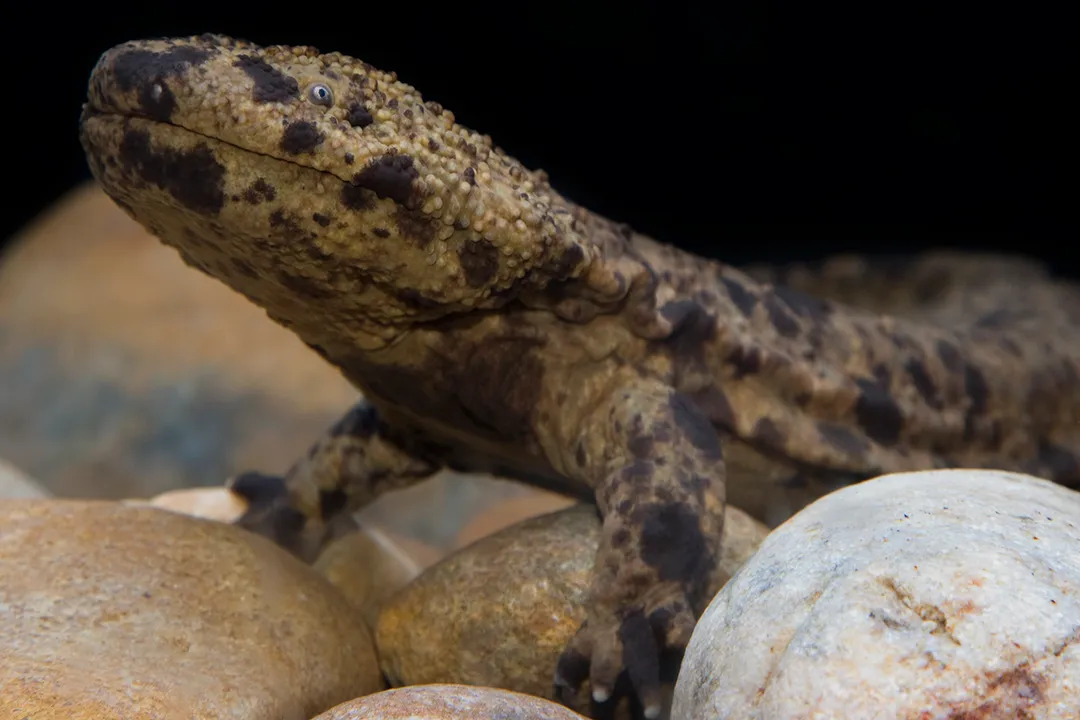
The giant salamander possesses teeth, a feature that might surprise those who picture these large, aquatic amphibians as sluggish bottom-dwellers whose primary defense is simply their imposing size or thick skin. [1] While they are not known for having teeth like a crocodile or a shark, the dental arrangement in these ancient creatures is certainly notable enough to warrant discussion, especially when considering both modern species and their extinct relatives. [2]
# True Dentition
When investigating the mouthparts of giant salamanders, particularly the extant species like the Chinese Giant Salamander (Andrias davidianus) and the Japanese Giant Salamander, the reality is that they are equipped with teeth suited to their predatory lifestyle. [5][3] These animals are carnivores, feeding on fish, frogs, insects, and crustaceans, requiring a mechanism to secure slippery prey in the water. [5][3]
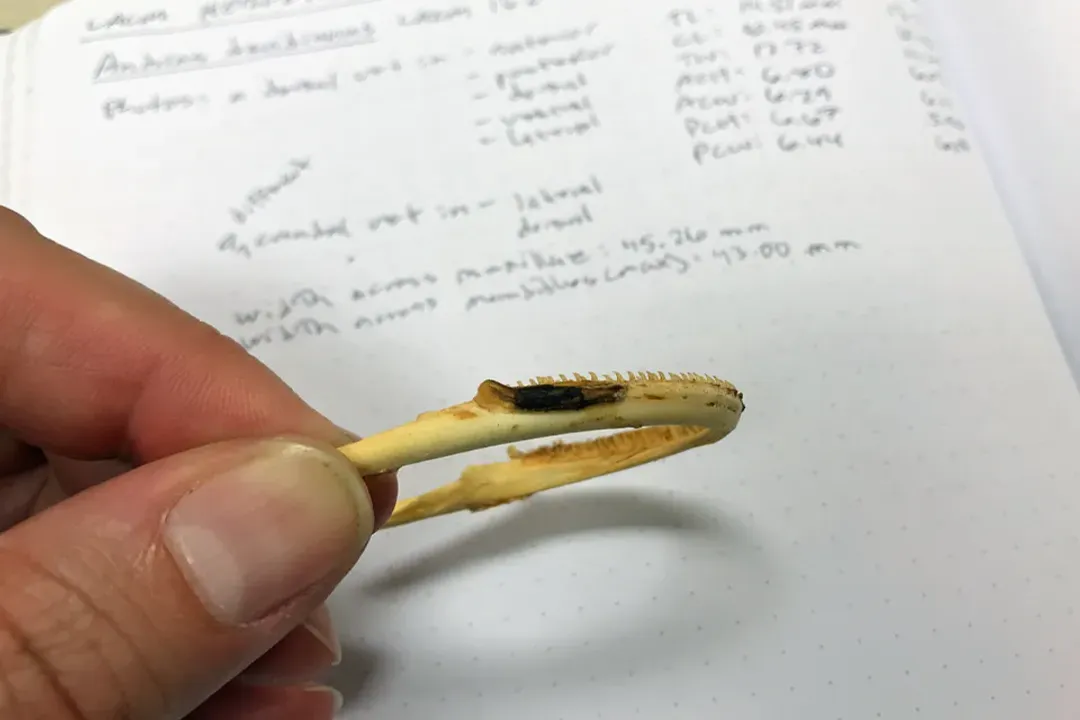
For the living giants, the teeth are generally described as being quite small. [1] They do not possess large, piercing canines, but rather numerous, minute teeth lining their jaws. [1][5] These tiny teeth are often simple, peg-like structures, designed more for grasping and holding struggling prey than for tearing large chunks of flesh. [1] The impression one gets from descriptions of their teeth is one of an array of sharp points designed to ensure that once something is caught, it is very difficult to escape the grip of the salamander's jaws. [1]
If you happen to see footage or read accounts from keepers, the term used to describe this dentition is often quite visceral—"evil teeth"—suggesting that even small teeth, when present in such a large animal's mouth, can appear formidable. [1] This characteristic reflects their nature as apex predators in their specific freshwater environments, where every advantage in securing a meal counts. [5]
# Prehistoric Fangs
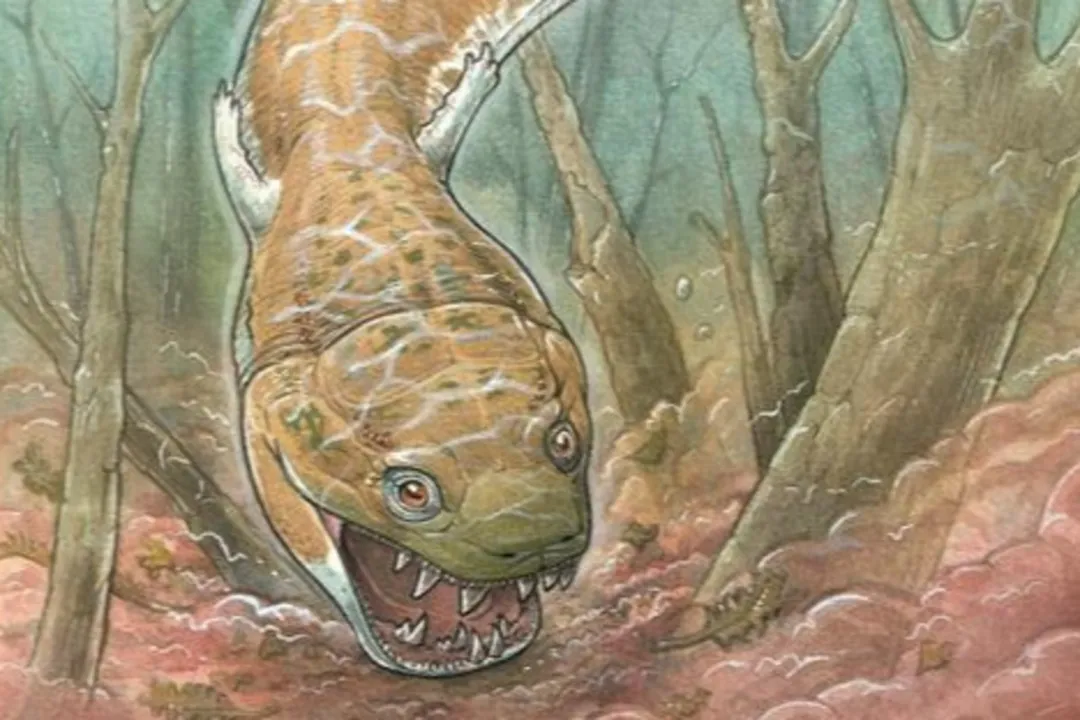
The picture becomes far more dramatic when looking back into the fossil record. The relatives of modern giant salamanders were, in some cases, even more fearsome than their current descendants. [8] Research into these ancient, giant salamander-like creatures reveals a dental structure that moves beyond the simple, peg-like teeth of today's Andrias species. [2]
Fossil evidence points to an extinct lineage that featured distinct fangs. [2] This finding is significant because it suggests an evolutionary shift in predatory strategy over millions of years. [2] A creature described as a top predator in the Ice Age, predating the rise of dinosaurs in some contexts, certainly needed a superior means of dispatching prey. [8] The presence of fangs implies a more aggressive, perhaps more specialized, method of biting and perhaps even injecting something—though the sources do not specify venom, the structure itself implies a more pronounced wounding capability than simple grasping. [2]
Comparing the modern, small-toothed gripper with the prehistoric, fanged predator highlights a fascinating divergence in evolutionary paths within the Cryptobranchidae family. [1][2] While modern giants rely on a powerful vacuum suction created by rapidly opening their mouths, the smaller teeth serve to lock in the initial capture, the prehistoric version might have initiated the kill with those pronounced spikes. [1] This suggests that environmental pressures or available prey sizes dictated a change from large, piercing weaponry to a system better suited for suction feeding combined with efficient retention. [5]
# Species Profiles
The two most commonly discussed living giant salamanders, the Japanese and the Chinese species, both fall under the genus Andrias and share this basic dental blueprint, though they are distinct species. [3][5] The Chinese Giant Salamander (A. davidianus) can reach impressive lengths, sometimes over 1.8 meters (nearly six feet). [9][5] Their size alone, combined with their aquatic ambush tactics, makes any structure within their mouth area of concern. [5]
The Japanese Giant Salamander (Andrias japonicus) is also immense, sometimes measuring around 1.5 meters long. [3] Both species have broad, flattened heads perfectly adapted for lurking near stream bottoms, waiting for unwary prey to pass by. [3] When prey comes near, their feeding mechanism is swift. They don't chew extensively; they inhale water rapidly, creating negative pressure that sucks the victim in, and those numerous, small teeth ensure the slippery meal doesn't simply slide back out. [1]
If one considers the context of someone encountering one—perhaps a researcher or an enthusiast—the bite potential is real. Anecdotal reports confirm that a bite from a large specimen can indeed cause injury, a testament to the secure grip provided by those tiny, sharp points lining the jaws. [6] Though they are not aggressive toward humans without provocation, they will defend themselves if cornered or handled improperly. [6] The resulting injury, even if superficial, is a direct consequence of the array of teeth held within their powerful jaws. [6]
# Dental Functionality
It is worth pausing to consider the function behind these different dental arrangements across the lineage. The modern giant salamander's mouth is built for engulfing and holding, rather than tearing. Their diet consists largely of slower-moving invertebrates, fish, and amphibians that are swallowed whole or in large, manageable pieces. [5] Therefore, the evolutionary pressure likely favored a large gape and a high density of small, inward-pointing teeth. [1] Think of it like the backward-facing spikes on a fishhook; they are perfect for preventing backward movement.
The ancient, fanged relatives, however, might have targeted larger, more actively escaping prey, necessitating a stronger initial puncture or hold. [2] The shift in dentition from prominent fangs to numerous small teeth across geological time offers a clear illustration of how an animal’s weaponry adapts precisely to what it needs to eat and the environment it hunts in. [2][8]
One interesting observation arising from comparing the descriptions is the difference in impact versus retention. A fang is designed for impact and deep penetration; the small, "evil" teeth are designed for friction and retention. [1][2] If a modern giant salamander bites down on a large, thrashing fish, those hundreds of tiny teeth work together, creating a surface area that resists slippage, effectively locking the fish in place until it can be maneuvered down the throat—a high-density gripping system rather than a piercing weapon. [1]

# An Evolutionary Perspective
The very existence of the giant salamander lineage in the fossil record, stretching back to formidable predators, speaks to their success as an amphibian body plan. [8] These creatures have persisted for an immense span of time, demonstrating adaptability, even if it meant radically altering their primary tools, like their teeth, over epochs. [2][8]
The discovery of fanged relatives fundamentally alters how we view the evolutionary path of modern amphibians, suggesting that some groups experimented with dental structures we typically associate with reptiles or early mammals, before settling into the specialized niche occupied by Andrias today. [2] It suggests that the amphibian branch of life was more varied in its predatory hardware than previously assumed, showcasing periods where they competed at the highest level, even pre-dinosaurian eras. [8] To put this in perspective, imagine an animal that superficially resembles a massive, smooth-skinned newt, but is armed with structures akin to specialized hypodermic needles or steak knives—that was the evolutionary cousin of the salamander you might find in a zoo today. [2]
# Handling and Safety
For those involved in the care or study of these large amphibians, understanding the mouth structure is essential for safety and successful husbandry. [6] While the primary goal is conservation and observation—especially given the critically endangered status of some species—accidental contact is a possibility. [5]
It is crucial to remember that while their teeth are small, the sheer musculature and size of the jaw assembly are significant. [1] A bite is rarely delivered with malicious intent; it is usually a reflex when the animal feels threatened or is being fed. [6] Due to their poor eyesight, giant salamanders often rely on tactile cues, mistaking a finger for prey or assuming a hand holding them is a threat. [3] Knowing that the mouth is lined with these numerous, slightly recurved dental points underscores why handling, when necessary, must be done with extreme caution, often requiring two people and specialized equipment to safely support the animal's bulk and avoid injury to both handler and amphibian. [6]
Ultimately, the answer to whether the giant salamander has teeth is a firm yes, but with important nuance. The modern giant is equipped with hundreds of minute, efficient grasping teeth, a significant departure from the prominent fangs sported by their ancient ancestors, demonstrating a successful evolutionary optimization for life as a suction-feeding ambush predator in the cold, clear waters they inhabit. [1][2][3][1]:: [2][3]:: [4][5]:: [6][7]:: : [8][9]
Related Questions
#Citations
Giant salamanders have evil teeth
A Prehistoric Giant Salamander With Fangs May Redraw an ...
Japanese giant salamander - National Zoo
Chinese Giant Salamander? - The Fossil Forum
Andrias davidianus | INFORMATION - Animal Diversity Web
My 1st Giant Salamander spotting (and bite)! : r/herpetology - Reddit
Does anyone have a photo of an adult Pacific Giant Salamander ...
Giant salamander-like creature was a top predator in the ice age ...
Chinese giant salamander - Wikipedia