How robust was the tooth enamel thickness in *Longipteryx* compared to massive predators like *Allosaurus*?
Answer
It was an incredible 50 microns thick, matching the density found on *Allosaurus*
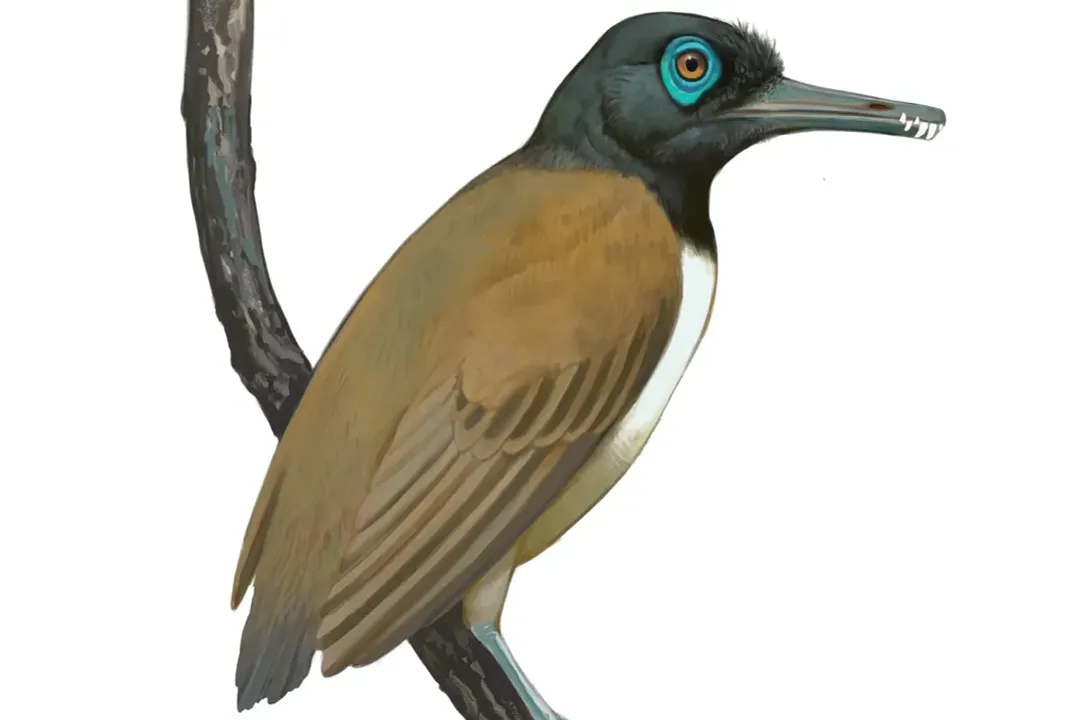
*Longipteryx chaoyangensis* evolved a unique anatomical adaptation to process its discovered diet, which included seeds and tough fruit husks. To effectively manage this kind of resource, its tooth enamel developed an extreme level of density and thickness, measured at 50 microns. Remarkably, this thickness was equivalent to the enamel density observed in enormous predatory dinosaurs, such as *Allosaurus*. This high degree of mechanical reinforcement on such a small bird, comparable to that of a giant predator, suggests an extreme adaptation for crushing challenging food items.
Related Questions
What reptilian characteristic did the earliest bird, *Archaeopteryx*, possess that modern birds lack?What type of prey did the Cretaceous marine bird *Hesperornis* specialize in catching in the shallow seas?What critical cranial function did most **enantiornithes** typically lack in contrast to later avian lineages?What surprising component of the diet of *Longipteryx chaoyangensis* was revealed by stomach content analysis?How robust was the tooth enamel thickness in *Longipteryx* compared to massive predators like *Allosaurus*?What characterizes the 'pseudoteeth' found on the massive Cenozoic **Pelagornithidae** birds?What flight specialization, utilized by modern albatrosses, did immense **Pelagornithidae** birds primarily rely upon?Why were Mesozoic toothed birds, like **enantiornithines** and *Hesperornis*, vulnerable during the impact winter?What adaptive advantage allowed the ancestors of modern beaked birds to survive the ecological collapse?What hypothesized dual function, beyond mashing food, might the robust teeth of *Longipteryx* have served?