What features do experts examine to definitively distinguish L. capucinus from L. aulicus?
Answer
Subcaudal scale count or head scale arrangement.
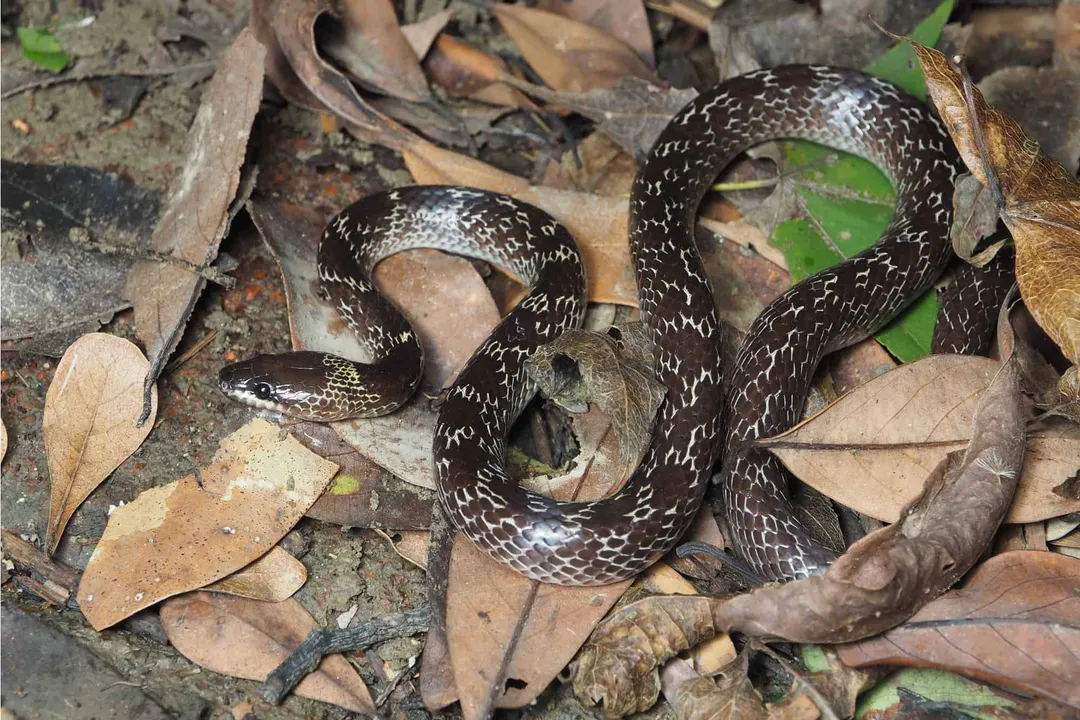
Distinguishing between the Common Wolf Snake (*L. capucinus*) and the Oriental Wolf Snake (*L. aulicus*) is often challenging for the average person due to overlapping color and pattern variations. Experts, however, rely on minute morphological details that are typically invisible to the casual observer. These definitive characteristics usually involve counting and assessing the precise arrangement of scales located on the underside of the tail (subcaudal scales) or the specific pattern and configuration of scales around the snake's head region.
#Videos
Wolf Snake Facts: the SNAKE with WOLF TEETH Animal Fact Files
Related Questions
Are L. capucinus and L. aulicus venomous to people?What is a primary food source for wolf snakes, often making them pest controllers?Which region is the Common Wolf Snake (Lycodon capucinus) widely recorded in Southeast Asia?What features do experts examine to definitively distinguish L. capucinus from L. aulicus?Where do generally small, nocturnal wolf snakes hide during daylight hours?What is the typical range for the maximum length of moderately sized wolf snakes?Which species demonstrates that the "wolf snake" common name crosses taxonomic boundaries in southern Africa?How do non-venomous wolf snakes typically subdue their prey before consumption?What does the term "wolf snake" likely hint at, rather than shared predatory style?What specific characteristic described the unique wolf snake found on Great Nicobar Island?What phenomenon compounds the difficulty in identifying L. capucinus based on appearance alone?