Wolf Snake Facts
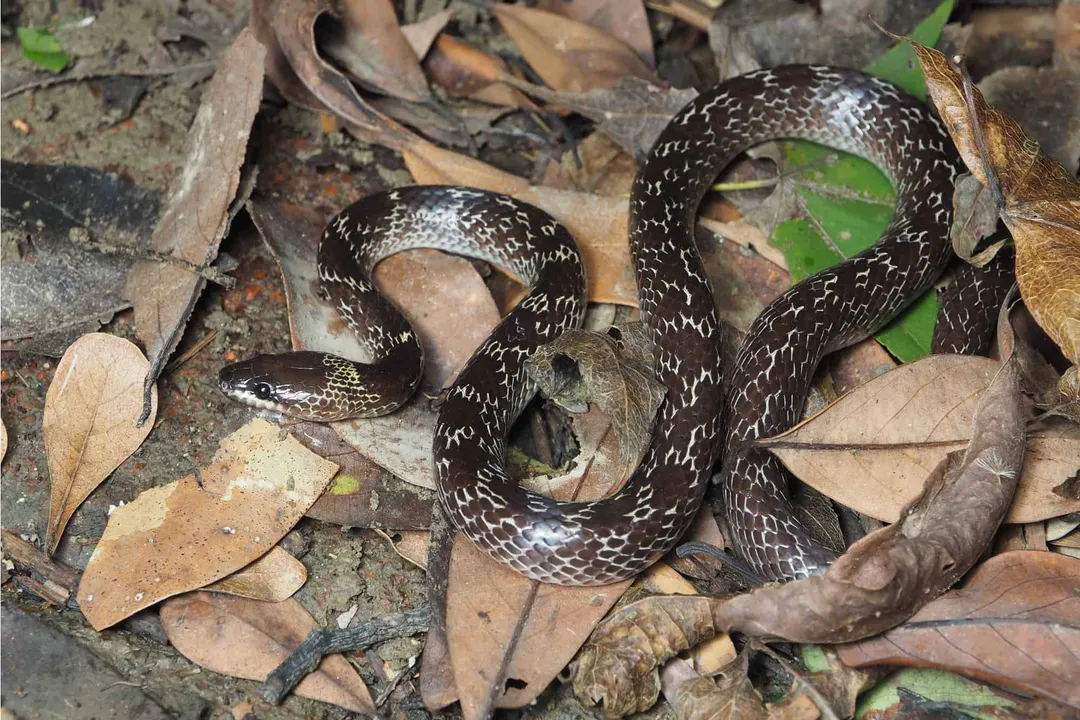
The term "wolf snake" might conjure images of the large canids, but in the herpetological world, it refers to a group of generally small, nocturnal snakes found across Asia and Africa, known for their often cryptic, mottled patterns. [1][3] These are snakes that frequently make their homes near human settlements, leading to frequent, and sometimes startling, encounters for residents. [2][4] The name itself is somewhat of a misnomer when considering the group's diversity; it certainly doesn't imply a shared predatory style with true wolves, but rather hints at their perhaps somewhat secretive nature or perhaps an older vernacular naming tradition. [1] Recognizing which wolf snake species one might encounter is key, as the name is applied to several distinct types across different continents. [9]
# Snake Identity
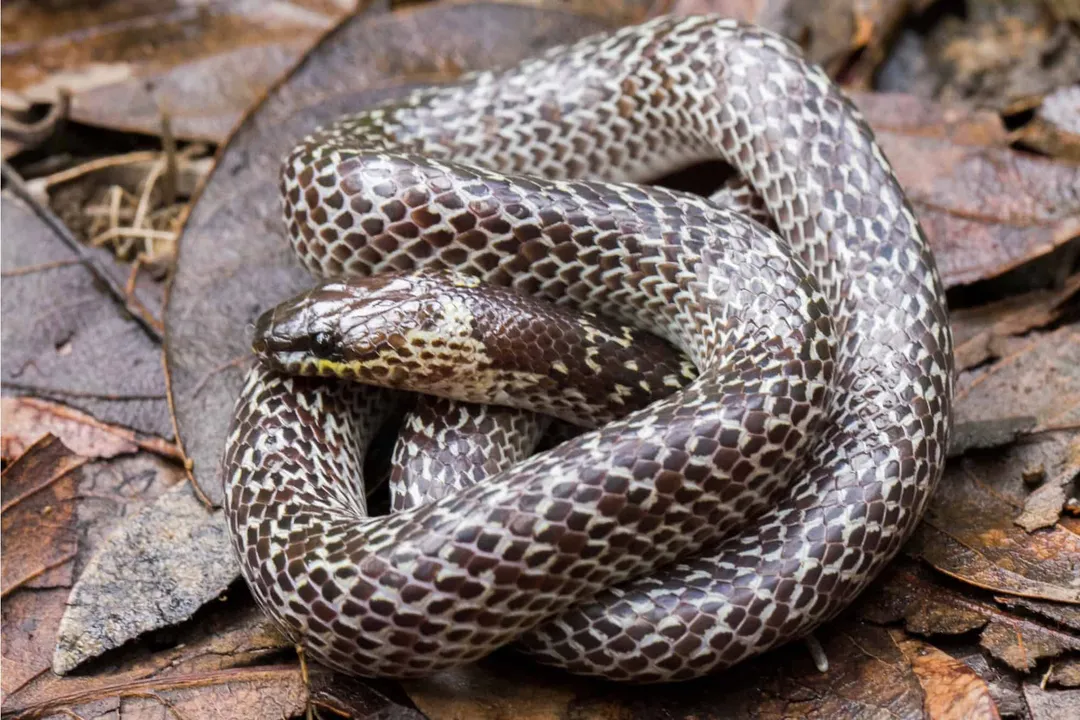
The classification of snakes commonly called "wolf snakes" shows a complex picture, primarily involving species from the genus Lycodon. [2][6] In much of Southeast Asia, the Common Wolf Snake, scientifically known as Lycodon capucinus, is the species most frequently encountered. [2][7] This species is well-established across a wide range, thriving in habitats that often overlap with human activity. [2]
Contrast this with the Oriental Wolf Snake, often identified as Lycodon aulicus. [6] While both share similar common names and appearances, their specific ranges and minor morphological differences set them apart. [2][6] Distinguishing between L. capucinus and L. aulicus can be challenging for the casual observer, as both exhibit variations in color and pattern that can overlap, leading to regional confusion or misidentification. [4] For instance, in places like Bali, the Common Wolf Snake (L. capucinus) is a familiar sight, often found inside buildings. [7]
Further complicating the picture is the existence of the Cape Wolf Snake found in southern Africa. [9] Although sharing the common name, this species belongs to a different lineage, illustrating how vernacular names can cross taxonomic boundaries based on superficial similarity or shared nocturnal habits. [9] Scientists are continually refining our understanding; for example, specific regional populations or recently described species, such as a "shiny, slender black wolf snake" found on Great Nicobar Island, highlight the ongoing discovery within this group. [8] This particular discovery underscores that "wolf snake" is a broad label that captures several unique evolutionary stories. [8]
# Physical Descriptions
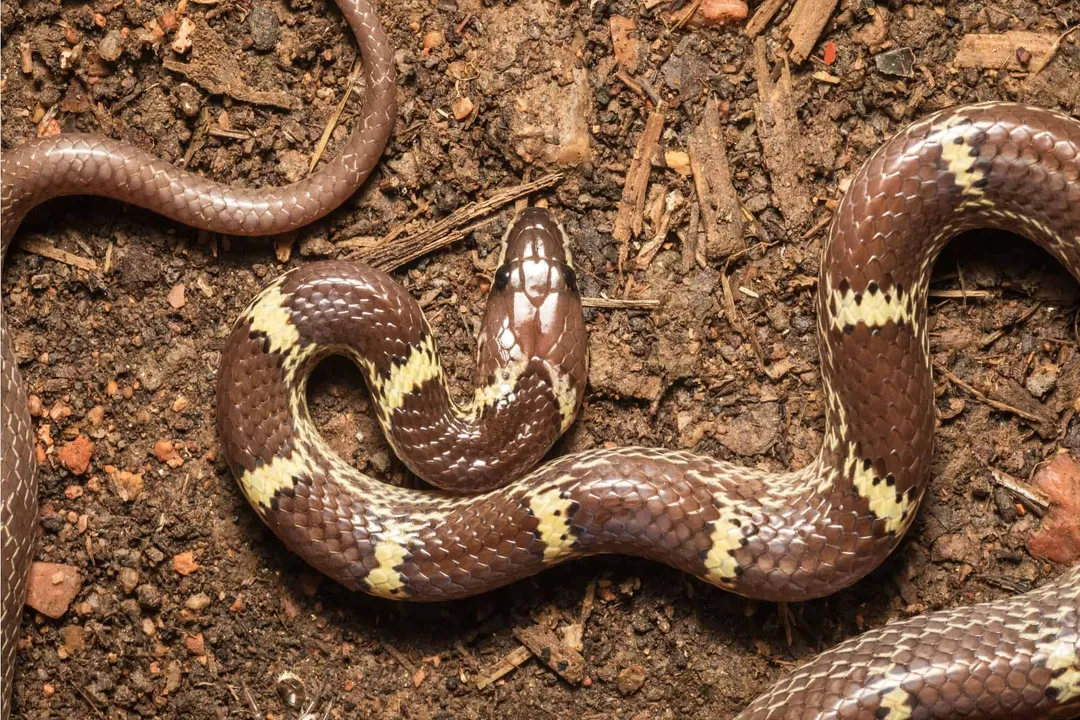
Wolf snakes are generally slender and moderately sized, though exact dimensions vary significantly depending on the specific species and the maturity of the individual. [1][3] Maximum lengths tend to fall in the range of about 70 to 80 centimeters, though some sources suggest larger specimens are possible. [3] A key feature often noted is the smooth texture of their scales, which contributes to their sleek appearance. [2]
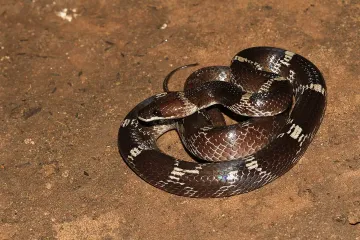
Coloration is where the commonality often ends and variety begins. Many species exhibit a base color of brown or grayish-brown, overlaid with darker brown or black crossbands or blotches. [1] The Common Wolf Snake, L. capucinus, is frequently described as having a pattern of dark, irregular crossbands on a lighter background, which can sometimes look almost like saddles. [2] These patterns serve as excellent camouflage against leaf litter or dark backgrounds, which is essential for a nocturnal hunter. [4]
The head shape is another distinguishing characteristic. Wolf snakes typically possess a relatively narrow head that is distinct from the neck. [1] In some populations, particularly those in island settings or specific locales, unique color morphs appear. The report of a "shiny, slender black wolf snake" suggests a melanistic or particularly dark variant exists in certain limited geographical areas, standing out against the more common patterned types. [8] While L. aulicus (Oriental Wolf Snake) might be mistaken for its cousin, minute details in scale counts or the precise arrangement of its dorsal markings are often the keys experts use for definitive identification. [6] Observing an individual snake, especially one found indoors, requires looking closely at the combination of body shape, pattern consistency, and overall size to hazard a guess at its identity. [4]
# Geographical Distribution
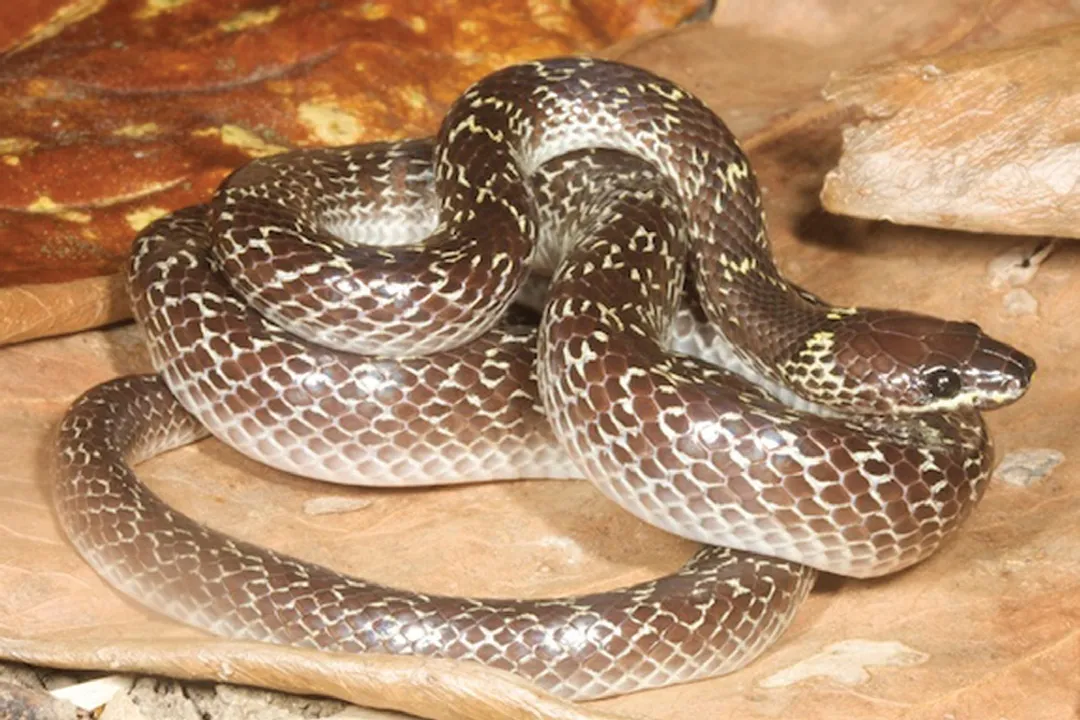
The geographical spread of snakes categorized as wolf snakes is extensive, covering large swathes of the Old World tropics and subtropics. [1] The Common Wolf Snake, Lycodon capucinus, demonstrates an impressive range across Southeast Asia, being recorded in countries like Indonesia, Malaysia, the Philippines, and Thailand. [2][7] Its success in inhabiting areas populated by humans means it is often found in gardens, rural homes, and even within the walls of urban structures. [4][7] This adaptability allows it to thrive where other, more specialized snakes might struggle. [2]
In contrast, the Oriental Wolf Snake (Lycodon aulicus) is chiefly associated with the Indian subcontinent and surrounding regions. [6] While their ranges can sometimes approach each other, they generally occupy slightly different ecological niches or geographic territories. [6] The presence of the Cape Wolf Snake anchors a distinct population in Southern Africa, showcasing that the convergent evolution of this "wolf snake" morphology has occurred independently in different parts of the world. [9]
A fascinating observation derived from these distributions is how island chains influence speciation. The discovery of a distinct, shiny black variety on Great Nicobar Island suggests that geographical isolation—being separated by water—can quickly lead to the development of unique regional characteristics within a widespread genus like Lycodon. [8] For anyone living within these tropical zones, understanding the local dominant species is important for accurate wildlife identification, as what one neighbor calls a "house snake" might be L. capucinus, while another might be seeing L. aulicus depending on their precise location. [4]
# Nocturnal Habits
Wolf snakes are predominantly nocturnal creatures, which is a major factor in why they are often encountered near human dwellings. [1][4] They spend the daylight hours hidden away, seeking shelter in cool, dark places such as under debris, piles of wood, loose bark, or within the structure of buildings themselves. [2][7] This behavior minimizes exposure to high daytime temperatures and potential predators. [4]
As dusk settles, these snakes become active hunters. [1] Their vision, adapted for low-light conditions, allows them to navigate and locate prey effectively during the night. [4] This nocturnal schedule means that if you see one moving across a floor or climbing a wall after sunset, you are observing its prime activity period. [7] In human environments, they are often drawn to areas where their prey is abundant, such as spaces near kitchens or storage areas where small rodents might congregate. [4]
Their hunting strategy is generally one of stealth and pursuit rather than ambush, though they are capable of both depending on the opportunity. [1] They are known for their relatively brisk movement when startled or actively hunting, contributing to the sudden, startling nature of an indoor sighting. [3]
# Diet and Predation
The diet of wolf snakes is largely consistent across the different Lycodon species and aligns with their status as small, non-venomous predators of the night. [1][3] Their primary food source consists of small vertebrates and invertebrates. [3]
Key dietary components include:
- Lizards: Small geckos and skinks are frequently taken, making wolf snakes natural pest controllers in many tropical homes. [2][4]
- Insects: Larger insects can form a part of the diet, especially for younger snakes. [3]
- Small Mammals: Mice and shrews are common prey items, particularly for larger adults. [1][6]
They subdue their prey through constriction, wrapping their bodies around the meal before swallowing it whole. [1] Because they are non-venomous, this method is necessary to prevent the prey from escaping or fighting back. [3] While they are predators, they pose virtually no threat to humans. [1] The venom status is critically important for public perception; all major wolf snake types, including L. capucinus and L. aulicus, are harmless to people. [2][6] Their bite is generally not medically significant, though any bite should be cleaned to prevent secondary infection, much like any minor scratch. [3]
It is interesting to consider how their diet might influence their habitat preference. A household with a consistent, low-level rodent issue is inadvertently creating an attractive hunting ground for a resident wolf snake, which is why they are so commonly associated with human dwellings in places like Bali or other parts of Southeast Asia. [7] If a snake is found inside, it is likely either hunting or seeking shelter, rather than deliberately seeking out human interaction. [4]
# Identification Challenges
For the general public, distinguishing between the two most common Asian species, Lycodon capucinus and Lycodon aulicus, often proves difficult without expert knowledge or a preserved specimen. [2][6] This identification challenge is compounded by Lycodon snakes' ability to exhibit significant variation in their dorsal patterns even within the same species, a phenomenon known as polymorphism. [4]
One way researchers attempt differentiation is by examining the number and arrangement of scales on the underside of the tail (subcaudal scales) or the arrangement of scales around the head, features invisible to a casual observer. [6] For a homeowner, however, the practical reality is that if the snake is slender, nocturnal, patterned, and non-venomous, it fits the common profile of a wolf snake, and assuming it is harmless is the safest course of action. [3]
To illustrate the pattern variability, imagine two scenarios in a garden in Malaysia:
| Feature | Snake A (L. capucinus likely) | Snake B (L. aulicus likely) |
|---|---|---|
| Pattern | Bands are more irregular, sometimes broken into spots. | Bands tend to be more distinct and uniform, though variations exist. |
| Head Markings | Often has a distinct dark streak or marking on the snout. | Markings can be more diffuse or concentrated towards the back of the head. |
| Typical Location | Often found near outer walls or in woodpiles. | May favor slightly drier, more open terrain depending on local pressures. |
This simple table highlights that relying solely on pattern can be misleading because both species share the characteristic of having dark markings on a lighter background. [2][6] What this variability suggests to a wildlife enthusiast is that Lycodon species are highly adaptable, modifying their appearance subtly to match the specific background texture of their immediate locale, whether that is rough tree bark or smooth concrete. [4] This visual plasticity is a superb survival mechanism.
# Conservation Status and Human Interaction
Generally, the widespread and adaptable Common Wolf Snake (Lycodon capucinus) is not currently listed as threatened across its vast range. [2] Its ability to inhabit modified environments—urban settings, agricultural areas, and secondary growth forests—suggests a degree of resilience against habitat loss, provided there are still sufficient sources of prey like lizards and rodents. [4] This is why they persist near humans, rather than disappearing when forests shrink. [7]
The persistence of these snakes near human habitation necessitates a calm and respectful approach when they are discovered indoors. Since they are non-venomous and actively consume pests, they are arguably beneficial residents. [3] If one finds itself sharing space with a wolf snake, the best course of action is usually to let it be, or if relocation is necessary, to gently guide it into a container using a broom or towel and release it outside, preferably near a secure hiding spot like a shed or thick shrubbery. [7] Trying to handle unknown snakes without experience is always risky, even if they are known to be non-venomous, because a defensive bite can still occur. [3]
The case of the newly noted black snake from Great Nicobar Island brings up an important conservation consideration: rapid scientific documentation. [8] Discoveries of unique, potentially localized morphs or species emphasize the need to protect the specific microhabitats where these snakes are found before they are altered or destroyed. [8] While the widespread species are secure for now, endemic populations on smaller islands are always more vulnerable to sudden shifts in their environment.
# Beyond the Basics
Considering the longevity of these reptiles, while specific captive lifespans vary, snakes in general, especially small ones that avoid predation and environmental stress, can live for a surprising number of years in the wild, though hard data on wild longevity for these specific species is often scarce compared to captive records. [1] In captivity, with stable food sources and appropriate temperature gradients, they can often surpass a decade in age. [3]
Another interesting aspect relates to their activity cycle. Because they are strictly nocturnal, if an observer happens to spot a wolf snake moving during the day, it often suggests a disturbance. Perhaps its hiding spot—a cool log, a pile of debris—was moved or destroyed, forcing it to seek a new, immediate refuge in daylight hours. [4] Seeing one out in the sun warrants a bit more caution in observation, as it is temporarily outside its comfort zone and might react defensively if cornered, even though it is not venomous. [3] This temporary displacement is a frequent trigger for human-snake conflict, even with benign species. Observing where people commonly see them—near ceiling gaps, under floorboards, or near garbage—offers a practical map of where they are successfully establishing small, private territories within a human structure. [7] This knowledge can help homeowners manage their immediate surroundings to discourage pests without resorting to harming the beneficial snake occupants.
#Videos
Wolf Snake Facts: the SNAKE with WOLF TEETH Animal Fact Files
Related Questions
#Citations
Wolf snake | venomous, nocturnal, colubrid - Britannica
Lycodon capucinus - Wikipedia
Wolf Snake - Lycodon capucinus - A-Z Animals
Common Wolf Snake - Lycodon capucinus - Ecology Asia
Wolf Snake Facts: the SNAKE with WOLF TEETH Animal Fact Files
Oriental Wolf Snake - Facts, Diet, Habitat & Pictures on Animalia.bio
Common Wolf Snake - Non-Venomous Snake in Bali
Scientists have discovered a shiny, slender black wolf snake on ...
Cape Wolf Snake - Reptiles and Snakes - Africa - Kruger National Park