Vine Snake Facts
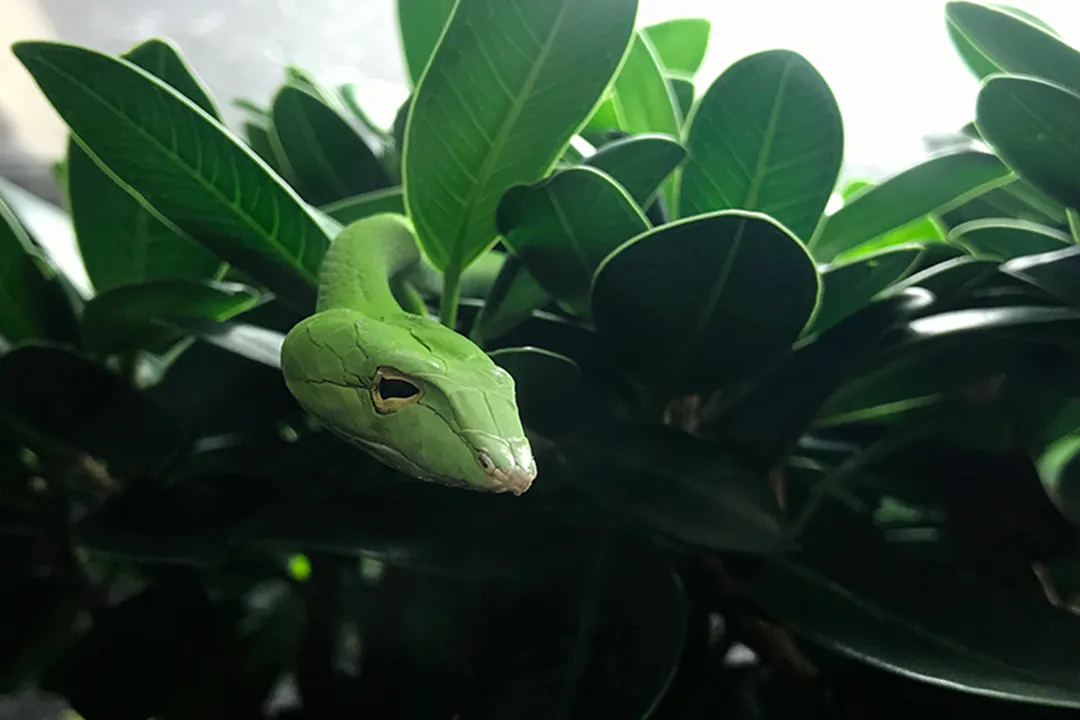
The world of slender, arboreal snakes holds a master of disguise whose appearance alone warrants a second, much closer look: the vine snake. So perfectly adapted to their leafy environments, it can be genuinely difficult to discern where the branch ends and the reptile begins. [3] These snakes are not defined by a single species but rather by a collection of genera within the Colubridae family, united by their striking, elongated bodies and narrow heads, making them look exactly like the vines or twigs upon which they rest. [5][7]
# Geographic Split
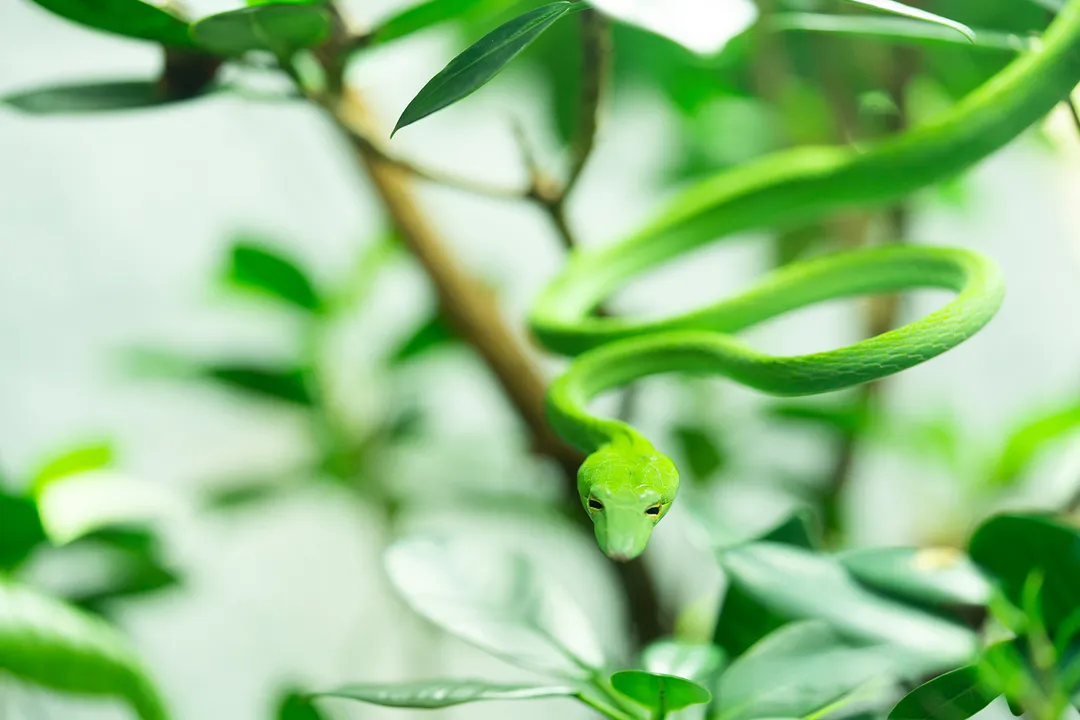
While the common name "vine snake" applies broadly, the snakes typically grouped under this term are separated by continents, primarily falling into three major groups: the Asiatic, the New World, and the African lineages. [5][7]
The Asian vine snakes belong to the genus Ahaetulla. [4][7] These snakes are found across tropical Asia, including areas like India, Southeast Asia, and the Philippines. [5] An important member, Ahaetulla prasina, is frequently cited, sometimes known by names like the Oriental whip snake or Jade vine snake. [6] A fascinating characteristic of some Asian species, such as A. prasina, is their ability to shift coloration; they can be found as vibrant green in their juvenile stages but may transition to brown or even yellow as adults. [9] This isn't just a random pattern change; it represents an adaptive strategy where the snake's pigmentation matches the general appearance of the surrounding foliage throughout different seasons or life stages, optimizing its camouflage for the current conditions. [9]
Contrastingly, the New World vine snakes reside in the Americas, ranging from the southern United States down through Central and South America. [3][5] The genus Oxybelis is prominent here. [7] The Green Vine Snake, Oxybelis fulgidus, is one of the most recognized species in this region, inhabiting rainforests and gallery forests from Mexico south toward Bolivia. [2][8] Another American species is Oxybelis aeneus, commonly known as the brown vine snake, which blends into drier environments, stretching its range from the southern US to northern South America. [3] The genus Imantodes, also found in the Neotropics, is noted for its exceptionally slender form. [5][7]
The third major group resides in sub-Saharan Africa: the Thelotornis genus, often called Twig Snakes. [5][7] These African variants present a slightly different camouflage, typically appearing greyish-brown with faint markings. [4]
# Slender Build
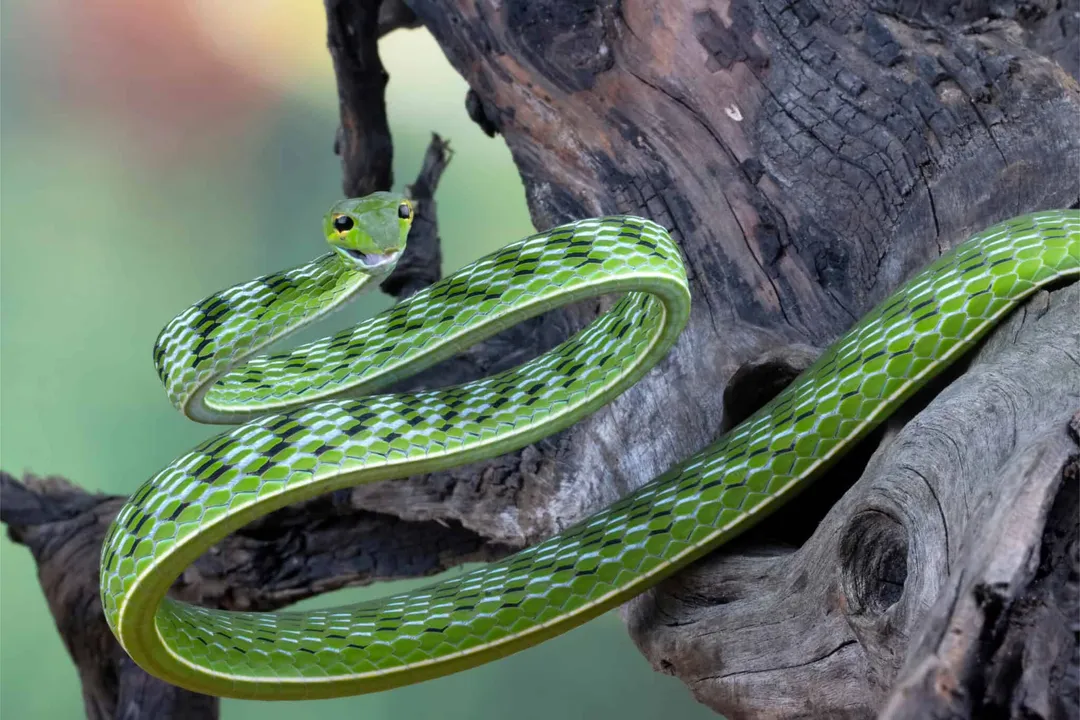
The defining feature across all vine snake groups is their incredibly attenuated physique. [3] Their bodies are long, thin, and laterally compressed—meaning they appear flattened from side to side—which aids their movement through foliage. [3][5] While they can achieve considerable length, often reaching between 1.5 to 2 meters (5 to 6.6 feet) total length in some Oxybelis species, [2][8] their thin girth means they rarely look wider than a penny. [4] The tail is also disproportionately long, sometimes making up more than a third of the total length. [5] In some species, like the Narrow-headed Vine Snake (Oxybelis aeneus), the tail can account for up to half the total measurement, and it is not uncommon for predators to remove sections of it, leaving an incomplete tail. This length provides necessary counter-balance while navigating the high canopy where they spend their lives. [3]
# Ocular Differences
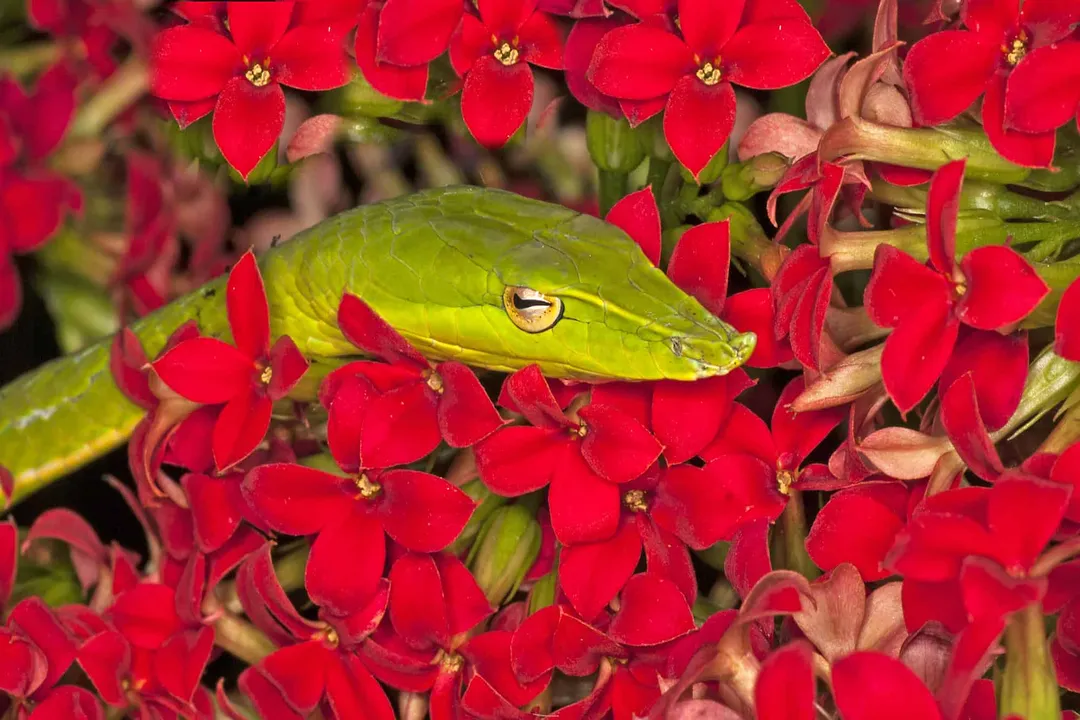
While all vine snakes rely on phenomenal camouflage, the structure of their eyes offers a distinct way to differentiate between the major genera, which correlates with their precise visual requirements in their specific habitats. [5] Ahaetulla species possess a unique horizontal, keyhole-shaped pupil. [5] This structure is highly effective in regulating light, which is crucial when hunting in the dappled, shifting light of dense Asian tropical forests. [5] In comparison, New World Oxybelis species, like O. fulgidus, are characterized by round pupils. [2][5] Furthermore, O. fulgidus often features a striking golden iris. [2] The African Thelotornis snakes typically have a horizontally elliptical pupil. [5] This ability for binocular vision, where the eyes work together to focus on a single image, is essential for snakes that must judge distance accurately while reaching for fast-moving prey high off the ground. [2][8]
# Arboreal Tactics
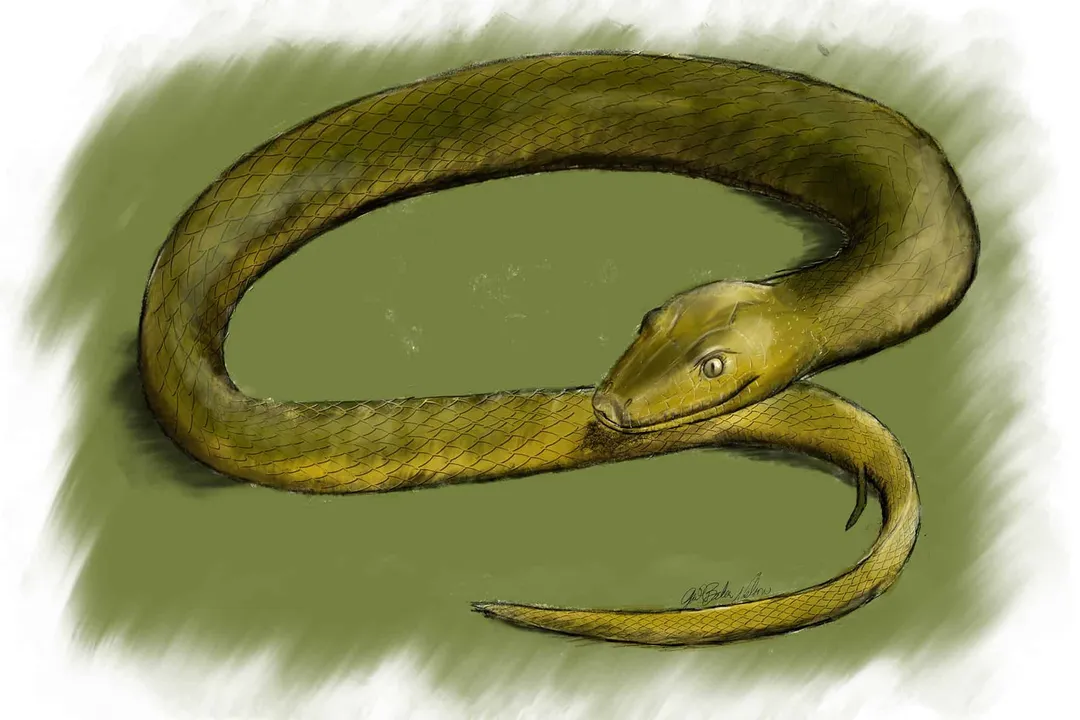
Vine snakes are fundamentally arboreal, spending the vast majority of their time coiled around branches or stretched out along vines high in the trees. [3][8] They are typically diurnal, meaning they are active during the daytime hours when light is available for their visual hunting style, although some sources suggest certain groups may exhibit nocturnal habits depending on the species. [2][5][8]
They are solitary animals, preferring to hunt and move alone. [3][8] Their primary defense mechanism involves remaining motionless, using their coloration to vanish into the vegetation. [5] When directly threatened, several defensive behaviors have been observed. Some species, like the Green Vine Snake, will flatten their head laterally to present a broader, more intimidating profile to a potential predator. [2] Others, particularly the African Twig Snakes, will inflate their neck region, revealing bright, startling patterns hidden between their scales—a sudden burst of color designed to shock an attacker. [5] Intriguingly, some species can even detect infrared light, which aids in locating warm-blooded prey like birds hidden within the canopy. [9]
Movement in this environment requires incredible agility, yet they are not constrictors. [9] Instead, they rely on ambush predation. [2][8] When hunting, they often extend a bright, forked tongue, flickering it back and forth to mimic a worm or insect landing on a branch, luring unsuspecting prey closer. [5] Once prey—usually lizards, frogs, or birds—is within striking distance, the attack is swift. [3][4]
When Oxybelis fulgidus successfully captures prey, especially if it is a larger lizard or small mammal, it employs a specialized technique: it bites the head and then lifts the prey 20 to 40 centimeters off the ground. [8] This maneuver effectively prevents the captive from using its physical strength to fight back while the snake prepares to swallow it whole, utilizing a highly flexible jaw structure. [3][8]
# Venom Mechanics
It is important to clarify that almost all recognized vine snakes possess venom, making them rear-fanged, or opisthoglyphous, colubrids. [4][5][6] However, the danger level varies significantly by genus. [4] In most New World and Asian species, like Ahaetulla or Oxybelis, the venom is considered mild to humans, usually resulting in nothing more than localized irritation or, rarely, an allergic reaction. [4][5]
The delivery system is key to understanding this relative mildness. Their fangs are located toward the back of the upper jaw and are grooved, rather than hollow like those of elapids or vipers. [6] This means the venom must drip down the outside grooves into the wound. [4] For an effective delivery, the snake often needs to hold and chew on the victim rather than deliver a quick piercing bite. [4][6] This mechanical requirement often means defensive bites against a human who pulls away quickly might yield very little venom. [4]
The major exception to this relative harmlessness is the African Twig Snake (Thelotornis spp.). [4] These snakes possess a potent hemotoxic venom that interferes with the blood's ability to clot, potentially leading to severe internal hemorrhaging and death if not treated. [4][5] Even in these dangerous snakes, however, the fang placement means that bites causing severe envenomation are generally limited to areas where the snake can get a sustained grip, such as the soft tissue webbing between the fingers. [4]
# Life Cycles
Most documented vine snake species reproduce by laying eggs, making them oviparous. [2][6] Clutch sizes typically range from six to ten eggs, though this can vary based on the female's size. [4][8] The eggs are carefully hidden in foliage or tucked securely among branches. [3] Following an incubation period that can last around 100 days in species like Oxybelis fulgidus, the young emerge. [8] These hatchlings are precocial—meaning they are fully developed and independent from the moment they break free from the egg. [8] They immediately possess the necessary camouflage and body shape to begin hunting small prey on their own. [3]
While most vine snakes are listed as Least Concern on the IUCN Red List due to stable populations and adaptability, they are not immune to environmental pressures. [6][9] Habitat destruction, particularly deforestation in tropical regions, remains a significant threat to these specialized canopy dwellers. [3][6] In some areas, like for the Vietnamese populations of Asian vine snakes, overharvesting for traditional medicine also poses a risk. [6] It is worth noting that some specific species, such as Chironius vincenti, face much higher risk, being classified as critically endangered. [4] If you observe these incredible reptiles in their natural habitat, remember that their very survival hinges on the complexity and health of the trees they call home. [3]
Related Questions
#Citations
Vine Snake Animal Facts
Vine snake | Tree-dwelling, nocturnal, slender. | Britannica
The Vine Snake Is a Slender, Tree-climbing Carnivore
Green Vine Snake - Facts, Diet, Habitat & Pictures on Animalia.bio
Asian Vine Snake - The Living Planet Aquarium
Vine snake - Wikipedia
Oxybelis fulgidus (Green Vine Snake) - Animal Diversity Web
Vine Snake Facts & Photos | Wowzerful
Narrow-headed Vine Snake - Anywhere Travel