What evolutionary process explains why woodrats developed traits similar to Old World rats despite their earlier taxonomic separation?
Answer
Convergent evolution
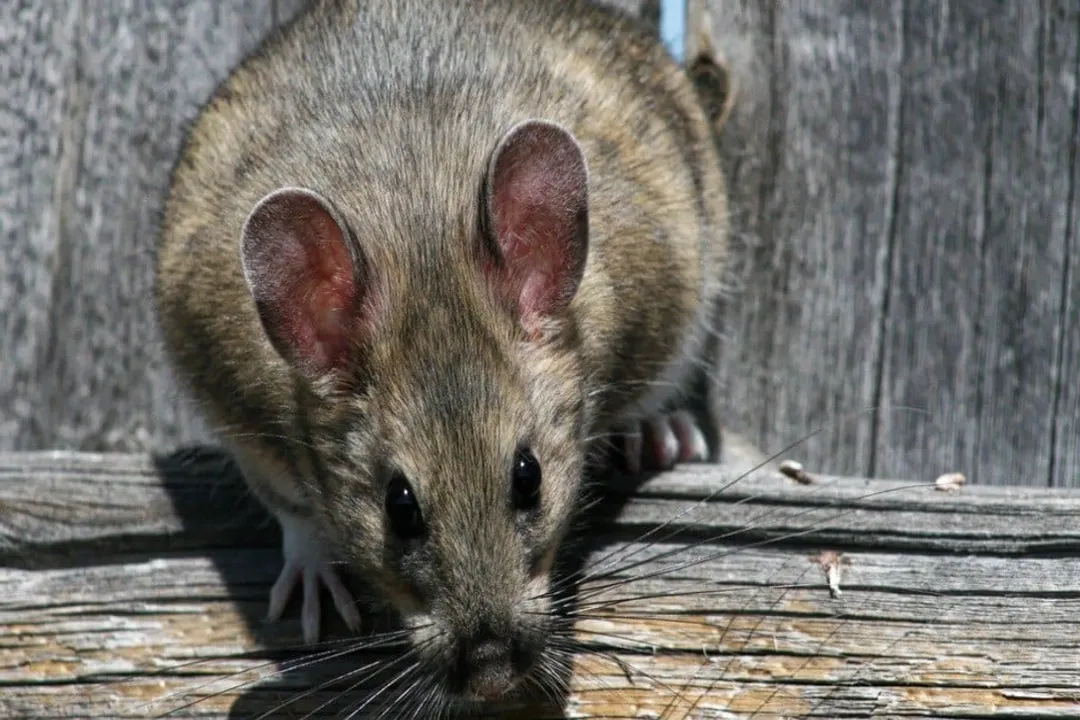
The observation that woodrats, belonging to the Cricetidae family, share traits like body structure and hoarding behaviors with the Old World rats from the Muridae family illustrates the principle of convergent evolution. This occurs when unrelated or distantly related organisms independently evolve similar traits or features as a result of having to adapt to similar environments or ecological niches. Because both groups faced similar selective pressures—such as needing to gather and store resources—they developed similar solutions, like building large nests or exhibiting hoarding tendencies, even though their recent shared ancestry is separated by a significant span of evolutionary time.
Related Questions
What characteristic uniquely identifies members of the Order Rodentia?What causes the evolutionary distance between woodrats (Family Cricetidae) and the common house rat (*Rattus rattus*)?How does the tail length of the Dusky Woodrat (*Neotoma cinerea*) typically compare to its head and body combined?Which species, *N. cinerea* or *N. floridana*, is defined by having a tail often noticeably shorter than the head and body length?What is the name given to the conspicuous, large stick nests built by members of the genus *Neotoma*?Besides possessing hair or fur, what other two key shared characteristics define the Class Mammalia?What geographic area does the species epithet *floridana* in *Neotoma floridana* reference?Which subfamily contains the genera *Neotoma* (woodrats) and *Peromyscus* (deer mice)?What is the general coloration described for the Dusky Woodrat, *Neotoma cinerea*?What evolutionary process explains why woodrats developed traits similar to Old World rats despite their earlier taxonomic separation?