Woodrat Scientific Classification
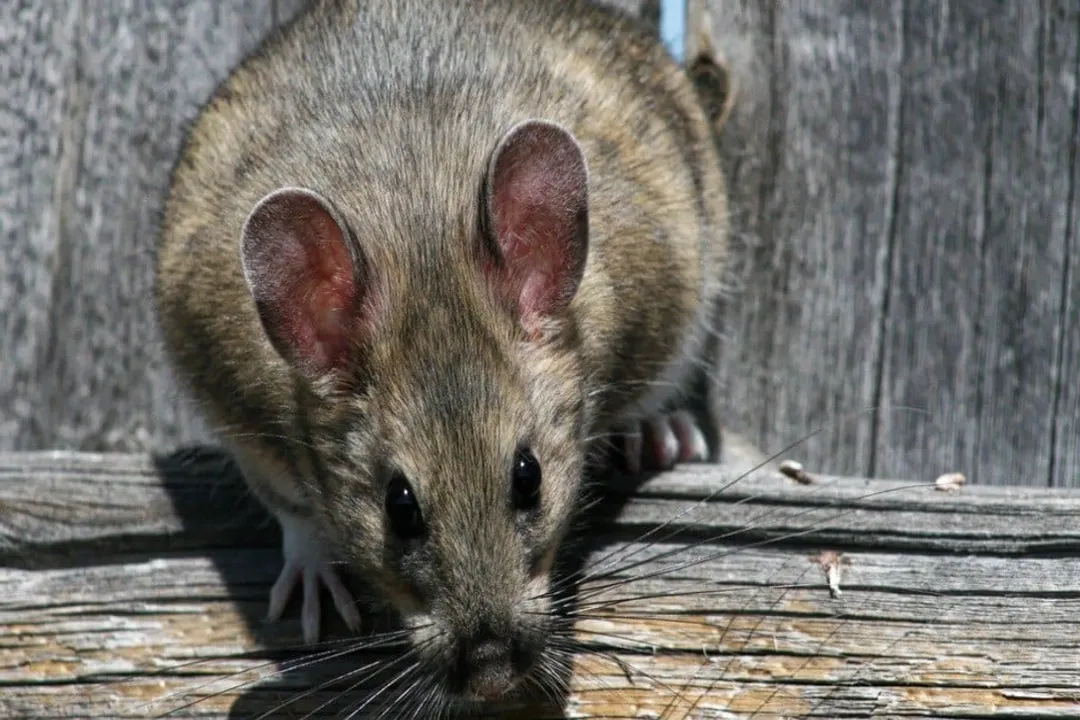
The classification of a woodrat, a small to medium-sized rodent, reveals its true place within the vast order of mammals, placing it much closer to animals like mice and voles than to the rats commonly associated with urban environments in the Old World. Scientifically, the term "woodrat" generally refers to members of the genus Neotoma, though this common name is sometimes applied loosely to other related species in the subfamily Neotomiinae. [6] Understanding their scientific placement requires tracing the lineage from the broadest taxonomic ranks down to the specific species level, a process that illuminates their evolutionary history and relationships with other rodents.
# Kingdom Animalia
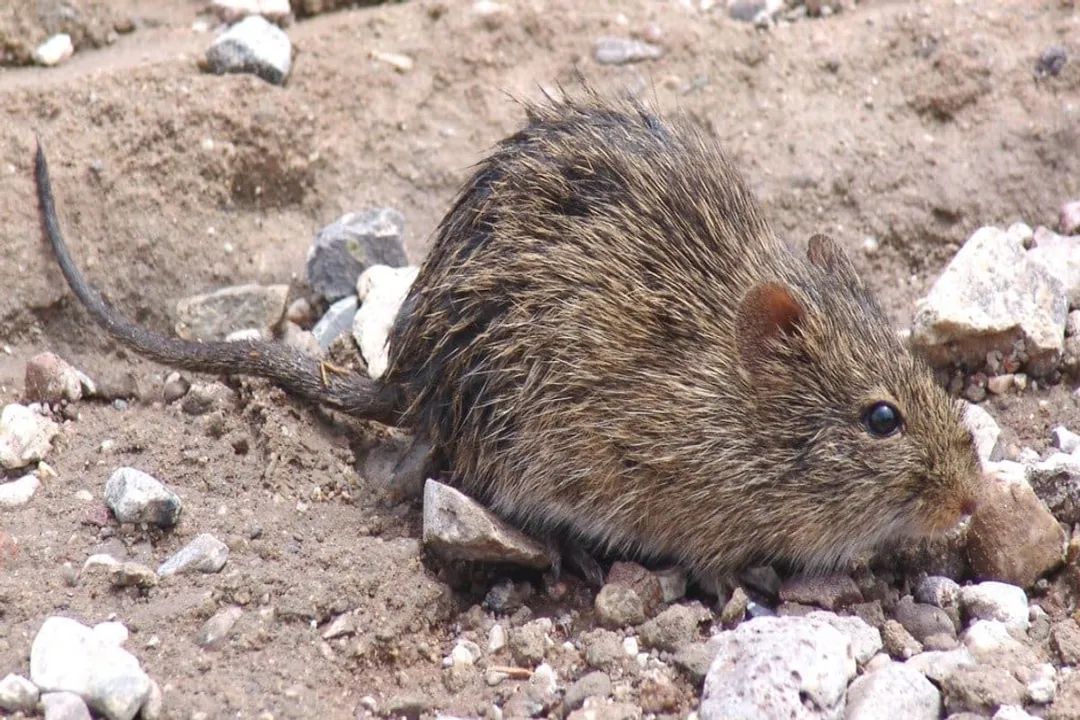
Like all familiar organisms, the woodrat begins its classification within the Kingdom Animalia. [6] This broad grouping signifies that the animal is multicellular, heterotrophic (obtaining nutrition by consuming other organisms), and generally exhibits mobility during at least one stage of its life. [6] This is the starting point for all furry, four-legged creatures we commonly recognize as mammals.
# Phylum Chordata
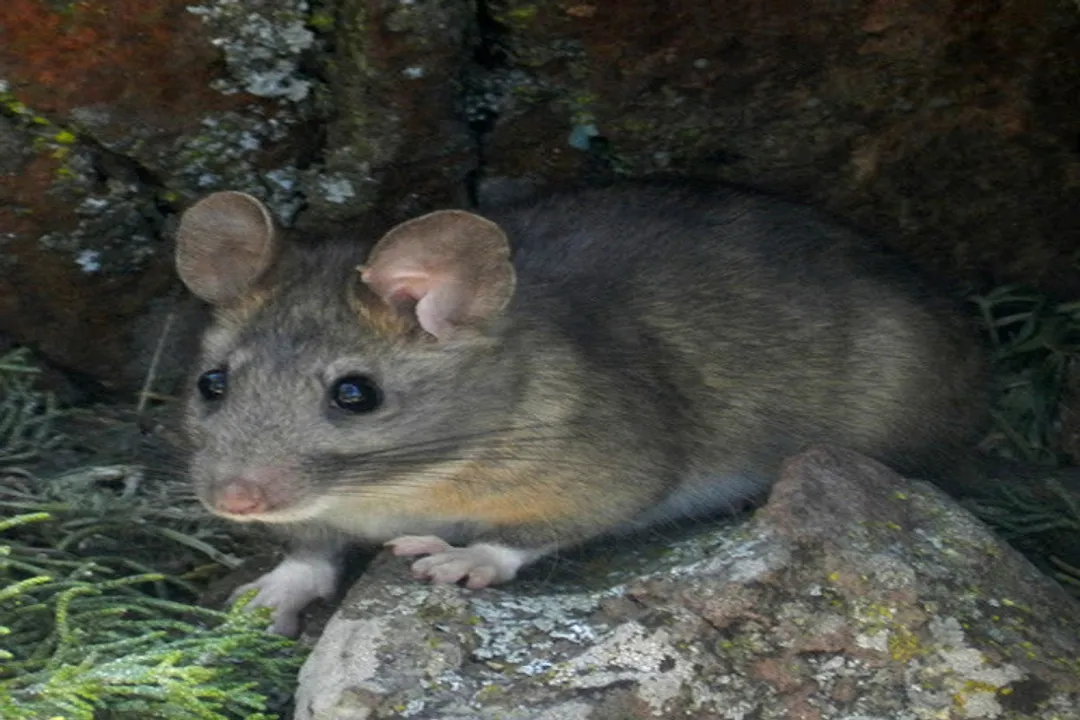
Moving down the hierarchy, woodrats belong to the Phylum Chordata. [6] This places them among animals possessing a notochord at some stage of development, which eventually develops into the backbone in vertebrates. All mammals, birds, reptiles, amphibians, and fish fall under this phylum. [6]
# Class Mammalia
The next major step is the Class Mammalia. [6] This classification is defined by key shared characteristics: the presence of hair or fur, the production of milk by mammary glands to feed their young, and being warm-blooded (endothermic). [6] Woodrats, being true mammals, possess these traits, which are vital for their survival across varied habitats ranging from arid deserts to high-elevation forests. [1][5]
# Order Rodentia
Within the mammals, woodrats are members of the Order Rodentia. [6] This is the largest order of mammals, easily identified by the single pair of continuously growing, self-sharpening incisors in both the upper and lower jaws. [6] These rodents rely on gnawing to keep their teeth worn down, a necessity for survival whether they are chewing bark, seeds, or nesting materials. [3]
# Family Cricetidae
The classification deepens into the Family Cricetidae. [6] This family is vast and includes many common North American rodents such as voles, hamsters, lemmings, and, importantly, the New World rats and mice belonging to the subfamily Neotomiinae. [6] It is worth noting that while the common name might suggest a close relationship to rats found globally, belonging to the family Muridae (like the common house rat, Rattus rattus), woodrats are evolutionarily distant from those groups, separated much earlier in their taxonomic history. [6] This separation highlights that their bushy-tailed appearance and nest-building behaviors are examples of convergent evolution—developing similar traits independently due to similar ecological pressures, rather than shared recent ancestry with Old World rats.
# Subfamily Neotomiinae
The woodrat sits specifically within the Subfamily Neotomiinae. [6] This group contains the genera Neotoma (woodrats) and Peromyscus (deer mice and white-footed mice), indicating a relatively close relationship between these types of New World rodents. [6]
# Genus Neotoma
The genus Neotoma is where the specific identification of the "woodrat" begins in earnest. [6] This genus comprises numerous species spread across North and Central America. [6] Members of Neotoma are often characterized by their relatively long, heavily furred tails, which frequently equal or exceed the length of their head and body combined. [4][5] They are also renowned for their conspicuous building habits, constructing large, elaborate stick nests, or "middens," which can sometimes reach impressive sizes, occasionally exceeding one meter in height. [3][4] While not all woodrats strictly live in wood structures, the genus is unified by these morphological and behavioral traits. [1] The genus Neotoma itself is quite diverse, featuring several common species across various regions. [6]
# Species Diversity in Neotoma
To truly grasp the classification, we must look at specific species, as the term "woodrat" covers more than one entity. Two prominent examples illustrate the variations within the genus: the Dusky Woodrat and the Eastern Woodrat.
# Dusky Woodrat: Neotoma cinerea
The Dusky Woodrat, scientifically designated as Neotoma cinerea, is a widespread species found throughout western North America, ranging from British Columbia south into Mexico, and east into the Rocky Mountains. [1][5][2] Its classification is well-established across different regional surveys. [1][2]
Key characteristics used to define N. cinerea often relate to its size and tail:
- Tail: Typically longer than the head and body combined. [1]
- Coloration: Generally gray to smoky brown, sometimes appearing darker, often with whitish feet and a whitish underside. [1][5]
- Habitat: It is adaptable, inhabiting rocky cliffs, talus slopes, stream banks, and sometimes old cabins or abandoned buildings across elevations, sometimes reaching high alpine areas. [1][5] In British Columbia, for example, it is recognized as a species of conservation concern, although its global status might differ slightly depending on the assessment body. [2]
# Eastern Woodrat: Neotoma floridana
In contrast, the Eastern Woodrat, Neotoma floridana, occupies the eastern and southeastern United States, as well as parts of Central America. [4] While sharing the genus, this species shows distinct differences:
- Tail: The tail is often noticeably shorter than the head and body length, which serves as a useful differentiating feature in regions where their ranges might be close or overlapping in historical records. [4]
- Coloration: Tends to be browner or yellowish-brown above, with white underparts. [4]
- Nests: Like its western cousin, it builds large stick nests, often located in hollow logs, rock crevices, or under brush piles. [4]
The distinction between these two species, N. cinerea and N. floridana, underscores a fascinating point about taxonomy: common names can obscure significant geographic separation and minor morphological divergence within a single scientific genus. If one were tracking populations across the central plains where neither species is dominant, the classification system prevents the assumption that a localized rat must belong to the cinerea or floridana group without specific locality data and physical examination. [4][5]
# Taxonomic Group Comparison
To appreciate how these two common woodrats fit within the broader rodent scheme, consider this simplified breakdown based on their established hierarchy:
| Rank | Neotoma cinerea (Dusky Woodrat) | Neotoma floridana (Eastern Woodrat) |
|---|---|---|
| Kingdom | Animalia | Animalia |
| Phylum | Chordata | Chordata |
| Class | Mammalia | Mammalia |
| Order | Rodentia | Rodentia |
| Family | Cricetidae | Cricetidae |
| Subfamily | Neotomiinae | Neotomiinae |
| Genus | Neotoma | Neotoma |
| Species | N. cinerea | N. floridana |
The key functional difference for field identification often hinges on the tail-to-body ratio and local distribution, emphasizing that for general readers, knowing the genus Neotoma identifies the characteristic nest-builder, while specific species names reveal the geographic context of the animal. [1][4]
# Nomenclature and Naming Conventions
The scientific naming system, binomial nomenclature established by Linnaeus, provides the stability that common names lack. The genus name, Neotoma, originates from Greek words meaning "new cutting" or "new burrower," perhaps referring to their persistent gnawing or their tendency to excavate sheltered spots. [6] The species epithets are descriptive of location or appearance: cinerea relates to ash or gray color, fitting the Dusky Woodrat, while floridana refers generally to Florida, the region where the Eastern Woodrat was first formally described. [4]
This reliance on Latinized names is critical when observing populations across borders or remote areas, such as the presence of N. cinerea in areas of Utah or the western provinces of Canada. [5][2] The scientific name acts as a universal constant, transcending local dialects that might use terms like packrat, trade rat, or catch-all terms like Neotoma. [3]
When studying these creatures, one quickly realizes that while the genus Neotoma implies a degree of uniformity in behavior—especially the trait of hoarding shiny or novel objects in their middens—the ecological niche separation between species is significant. [3] For instance, N. cinerea often occupies harsher, rockier, or higher-elevation environments compared to the often more structurally sheltered areas used by N. floridana. [1][4]
A helpful way to conceptualize the importance of this classification is to consider the US Fish and Wildlife Service's efforts. Their systems track species like the Woodrat by their scientific names to manage conservation status, which might differ from state to state or for different populations within the same species, such as the potential listing or review status for certain subspecies that fall under the Neotoma umbrella. [7] Accurate classification directly translates to accurate conservation management and ecological study, preventing resources from being misallocated based on common names alone.
# Insights into Woodrat Ecology and Classification
Observing the classification helps frame expectations about the animal’s lifestyle. Because they are Cricetids, we expect high reproductive rates typical of rodents, though woodrats are often less prolific than smaller mice species. Furthermore, the strong reliance on the midden—the nest—is a behavior so strongly tied to the Neotoma genus that its presence is almost diagnostic, regardless of minor physical variations between species. [3]
If you encounter a large, well-maintained stick nest in the American West, the high probability points toward Neotoma cinerea, especially if the surrounding terrain is rocky or arid. [5] Conversely, finding a similar structure in a swampy lowland in the Southeast strongly suggests Neotoma floridana. [4] This local application of the scientific classification—using the genus as the behavioral baseline and the species name to pinpoint the precise ecological adaptation—is where the academic system provides immediate practical value in the field. The fact that these animals have persisted across such varied North American biomes, from sea level to high mountains, solely within the framework of the Cricetidae family, speaks volumes about the adaptability inherent in the Neotoma genus design.
Related Questions
#Citations
Neotoma cinerea (bushy-tailed woodrat) - Animal Diversity Web
Neotoma cinerea | NatureServe Explorer
Neotoma cinerea - USDA Forest Service
Eastern woodrat - Wikipedia
(species) neotoma cinerea - Utah Natural Heritage Program Field ...
Woodrats (Genus Neotoma) - iNaturalist
riparian woodrat (= San Joaquin Valley) (Neotoma fuscipes riparia)
Woodrat - Neotoma cinerea - A-Z Animals
Neotoma cinerea Bushy-tailed Woodrat - Species Summary