What ecological role do zebras often fill in mixed-species herds by cropping the grass layer?
Answer
They leave behind stems that are too coarse, allowing other species to follow
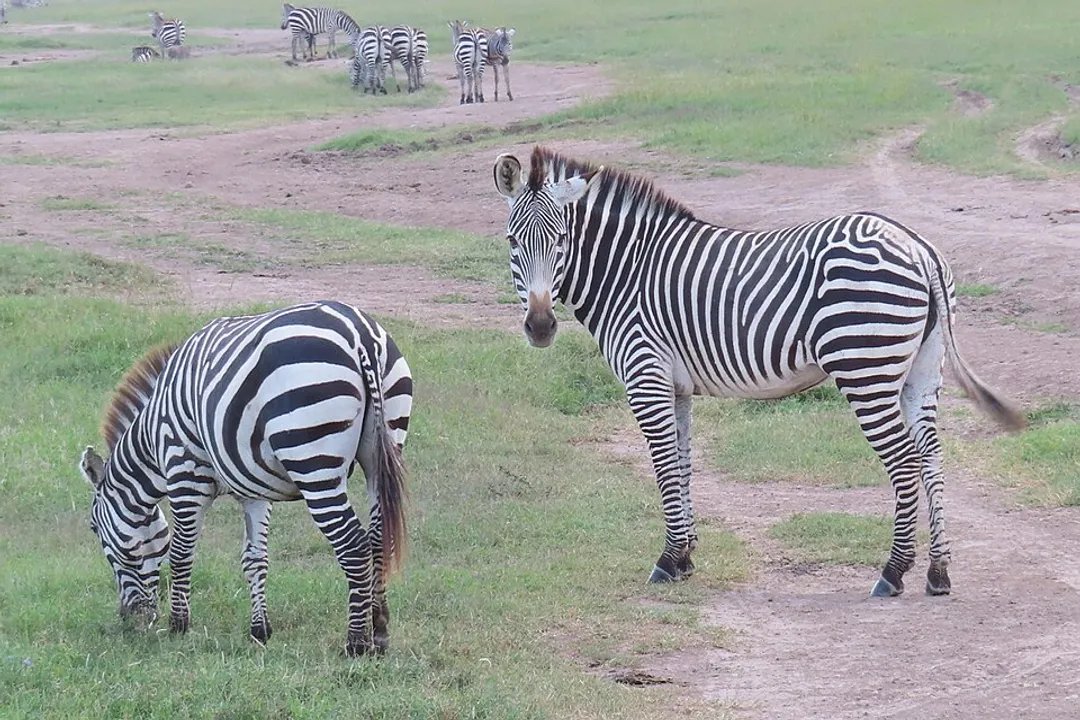
When grazing alongside other animals, such as wildebeest, zebras actively participate in maximizing biomass extraction from a single patch through coordinated utilization. Zebras readily clip down the grass mat, and in doing so, they frequently leave behind stems that are currently too coarse or too tall for their immediate consumption needs. This action benefits subsequent grazers or browsers, essentially clearing the way by processing the upper or coarser layers, which leads to a multi-stage mowing effect across the savanna over time.
Related Questions
What classification defines the zebra's diet as being exclusively composed of plant matter?What term describes the zebra's specialized digestive system where cellulose breakdown occurs in the large intestine and cecum?What is the geographical constraint imposed by the zebra's frequent need to drink water?What typical structural characteristic defines the grasses preferred by the most widespread Plains Zebra species?What nutritional yield, expressed as crude protein percentage, characterizes much of the bulk grass zebras must consume for sustenance?What key behavioral flexibility allows zebras to survive when fresh, short grasses are unavailable?How does the hindgut fermentation process in zebras differ from the digestive method used by ruminants like cattle?What ecological role do zebras often fill in mixed-species herds by cropping the grass layer?What distinguishing dietary characteristic separates Grevy's zebras from the Plains Zebra regarding grass selection?What must a zebra manage internally to compensate for the lower efficiency of nutrient absorption in hindgut fermenters?