What ecological role did the success of *Gastornis* imply about the Paleocene ecosystem?
Answer
The presence of dense, durable food sources inaccessible to smaller herbivores.
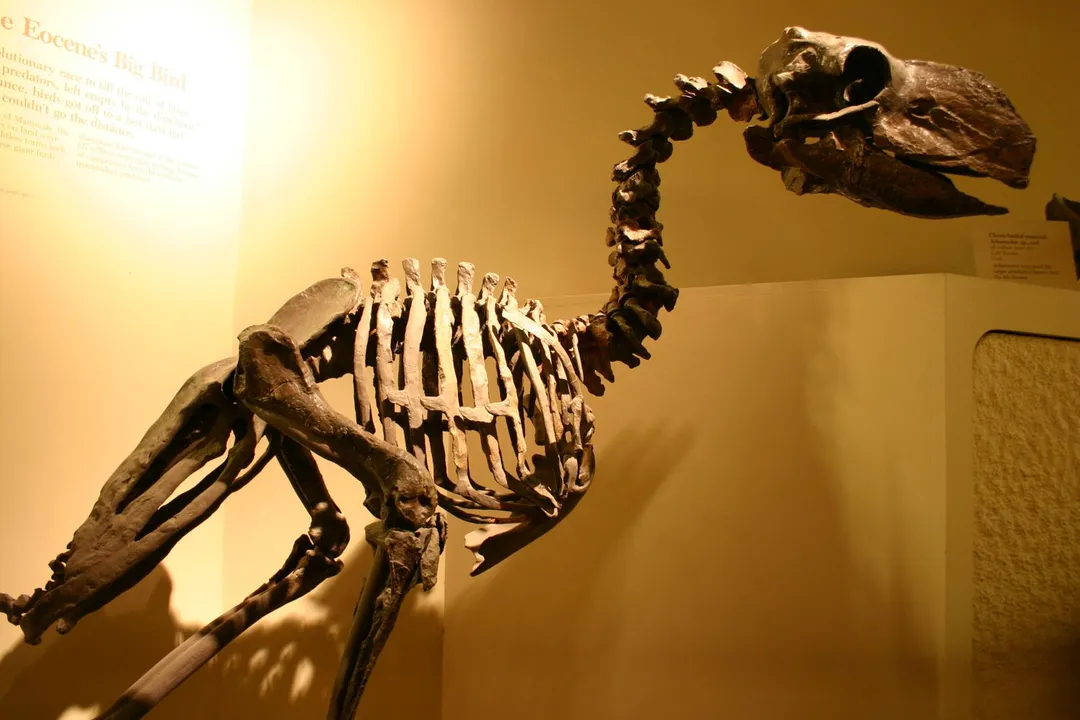
If *Gastornis* specialized in crushing the toughest available plant seeds, its success indicates a world rich in dense, durable food sources that other animals could not effectively exploit, highlighting dominance through mechanical advantage.
Related Questions
What was the previous scientific name for *Gastornis* recognized before the current consensus?During which geological epochs did *Gastornis* dominate terrestrial environments?What is the modern favored hypothesis regarding the primary diet of *Gastornis*?How did the estimated mass of *Gastornis* compare to the modern ostrich?What structural feature of *Gastornis* is the primary clue used to infer its feeding habits?What ecological role did the success of *Gastornis* imply about the Paleocene ecosystem?To which modern avian group does current thinking suggest *Gastornis* might have a closer skeletal affinity?What major global event immediately preceded the time period when *Gastornis* flourished?What anatomical feature led paleontologists to initially popularize the idea that *Gastornis* was a formidable predator?What evolutionary risk is demonstrated by the specialized nature of *Gastornis*'s highly specific diet?