What characteristic of Cebus capucinus habitat use helps explain its IUCN Least Concern listing?
Answer
Capability to utilize secondary growth and edge habitats
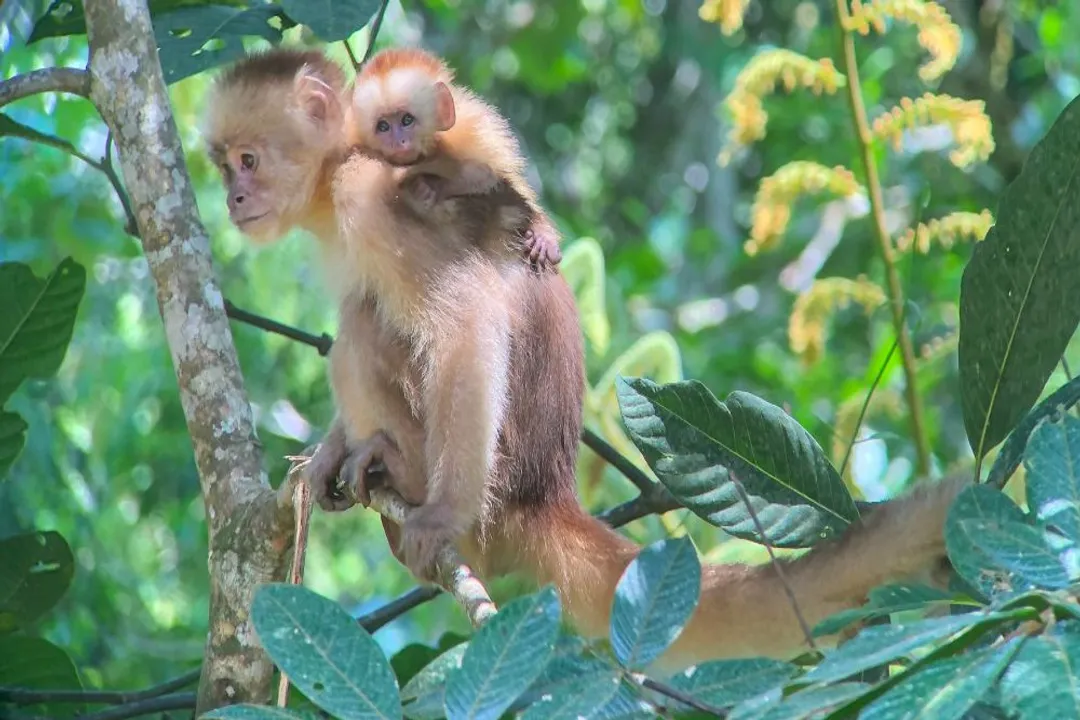
Despite facing environmental pressures across its multi-national distribution, *Cebus capucinus* is currently listed by the IUCN as Least Concern. A key observation supporting this assessment is the species' remarkable ability to utilize habitats that have experienced human impact. Specifically, they are capable of thriving in secondary growth and edge habitats more readily than many other tropical primates that require pristine, undisturbed primary forests, contributing to their persistence.
Related Questions
Which Central American nation marks the documented northern extent of the Cebus capucinus range?Where does the continuous geographical range of the white-faced capuchin terminate southward?What two distinct forest types does the white-faced capuchin inhabit in Costa Rica?Which countries are listed as part of the much broader range of Cebus albifrons?What does the ability of Cebus capucinus to utilize deciduous forests imply about its behavior?Which five countries confirm the continuous distribution spanning the isthmus and northwestern South America?What specific geographical region in Colombia overlaps with the Pacific coast presence of the white-faced capuchin?What characteristic of Cebus capucinus habitat use helps explain its IUCN Least Concern listing?Which distinct species sometimes constitutes the northern part of the traditional C. capucinus territory?What habitat type, besides wet rainforests and disturbed areas, is documented for Cebus capucinus?