What breeding technique is commonly employed when breeders aim for a Whoodle with truly minimal shedding?
Answer
Breeding an F1 Whoodle back to a purebred Poodle (F1b cross)
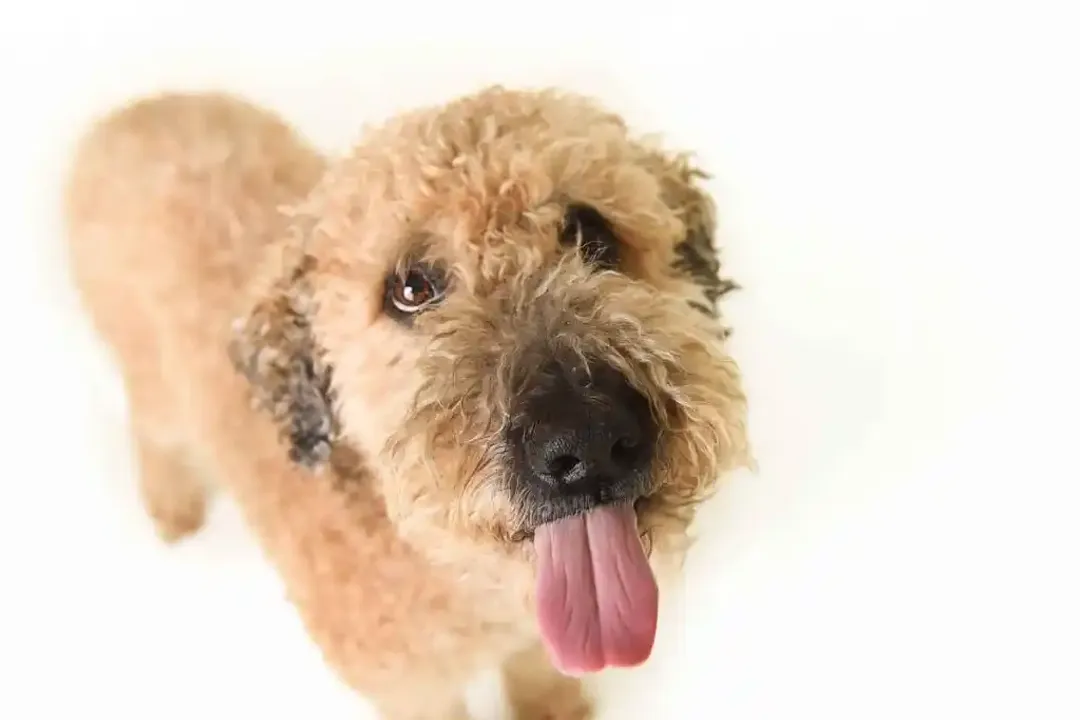
Achieving the goal of a very low-shedding dog often requires moving beyond the initial F1 generation because of the 50/50 inheritance probability. To significantly increase the genetic concentration of the desired trait, breeders utilize a backcross strategy. Specifically, breeding an F1 generation Whoodle back to a purebred Poodle results in an F1b generation. This generation shifts the genetic balance significantly, resulting in approximately 75% Poodle genetics and only 25% Wheaten genetics, which correlates with a much higher predictability and a tendency toward very low shedding levels, as demonstrated in the comparative table.
Related Questions
What two purebred lines are deliberately blended to create the Whoodle?What distinct characteristic associated with the Poodle parent influences allergy sufferers seeking a Whoodle?What specific geographic origin and primary temperament traits are attributed to the Soft Coated Wheaten Terrier parent?What did breeders specifically target when intentionally crossing the Poodle with the Wheaten Terrier?What is the chance of an initial F1 generation Whoodle inheriting the dominant low-shedding gene from the Poodle parent?What breeding technique is commonly employed when breeders aim for a Whoodle with truly minimal shedding?What factors determine the structural size variations, such as Toy, Miniature, and Standard, seen in the Whoodle population?What behavioral risk can manifest if the combination of Poodle intelligence and terrier drive in a Whoodle is not met with adequate mental exercise?Which coat trait is inherited from the Wheaten Terrier, contrasting with the tight curl of the Poodle parent?Why must owners exercise careful portion control regarding nutrition for the Whoodle, even in Standard variations?